Info
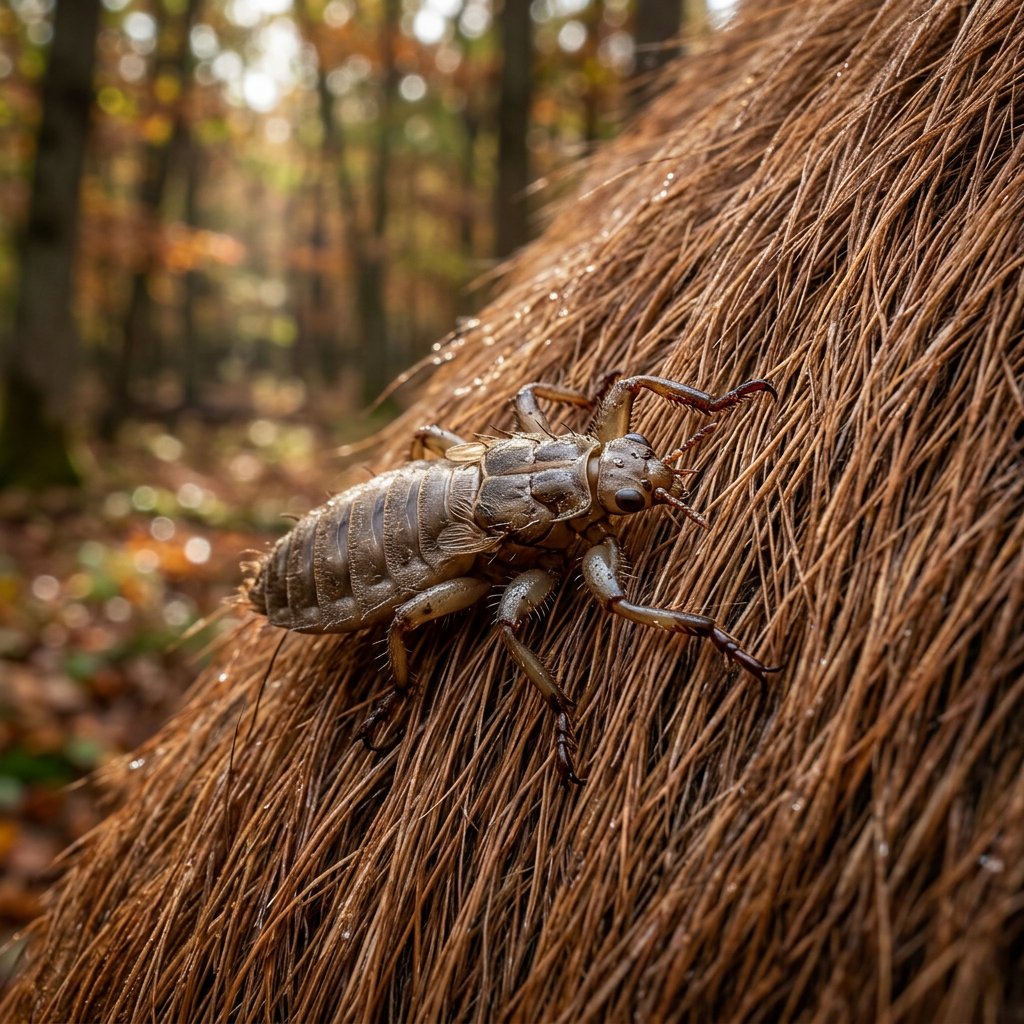
Often called the Deer Ked or "Flying Tick," Lipoptena cervi is a master of commitment. This hitchhiker starts its adult life with wings, searching the forest for a host, only to shed them permanently the moment it lands on a deer or elk. While they are technically flies, their flat bodies and scuttling movement often lead hikers to mistake them for fast-moving ticks.
🔍 How to Identify
- 🪰 The "Tick-Fly" Shape: They have a remarkably flat, leathery, brownish-red body designed to glide through dense fur without getting crushed or snagged.
- ✂️ Removable Wings: Young adults possess transparent, veined wings; however, you will most often see them "wingless" with only small, jagged stubs left behind after they've found a host.
- 🦵 Strong Grippers: Their six legs are thick and splayed to the sides, tipped with powerful claws that act like grappling hooks to anchor them to hair and skin.
🌲 Habitat & Ecology
- 🦌 Forest Hitchhikers: These insects are most common in temperate forests where large mammals like deer, moose, or elk roam. They typically wait on low-hanging branches or shrubs, ready to "launch" themselves at a passing shadow.
- 🩸 Life in the Fur: Once they find a host, they become permanent residents. Both males and females feed on blood and spend their entire adult lives mating and living deep within the animal's coat, eventually dropping their larvae into the soil to pupate.
⚠️ Safety & Toxicity
- 🐜 Nuisance Biters: While humans are "accidental" hosts, Deer Keds will occasionally land on people. The bite is often unfelt at first, but it can develop into a hard, itchy, and persistent welt that may last for several weeks.
- 🐕 Pet Presence: They may hitch a ride on dogs or horses during woodland walks. While they cannot complete their life cycle on non-deer hosts, they can still cause significant skin irritation and allergic reactions in sensitive animals.
✨ Fun Fact
🧬 A One-Way Ticket: The moment a Deer Ked touches a suitable host, it triggers a biological "self-destruct" of its flight muscles and wings. It is one of the few insects in the world that willingly chooses to become flightless forever to ensure its success as a parasite!
More Details








