Info
Often called the "GALS" by enthusiasts, the Giant African Land Snail is one of the largest and most ambitious mollusks on the planet. Though you've categorized it as an insect, it is actually a gastropod, famous for its massive size and its ability to eat through almost anything—including the stucco on houses! While they are popular in the pet trade in some regions, they are also considered one of the most invasive species globally.
🔍 How to Identify
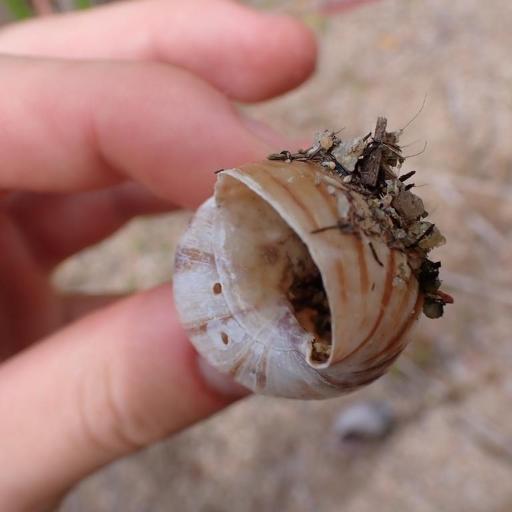
- 🐚 The Shell: A large, conical (cone-shaped) shell that is noticeably taller than it is wide. It usually features beautiful, variegated stripes in shades of chocolate brown, cream, and reddish-tan.
- 🐌 The "Foot": A massive, muscular body that is typically light brown or grey. It leaves a thick, shimmering trail of mucus wherever it travels.
- 👀 Retractable Tentacles: It has two sets of tentacles on its head; the longer upper pair holds its eyes, while the shorter lower pair is used for smelling and feeling its way around.
🌿 Habitat & Ecology
- 😋 A Universal Diet: These giants are not picky. They are known to consume over 500 different types of plants, fruits, and even cocoa or rubber crops, making them a significant threat to local agriculture.
- 🏚️ Calcium Seekers: To maintain their heavy shells, they actively seek out calcium. In urban areas, they have been known to rasp away at limestone, chalk, or the concrete walls of buildings to get their mineral fix.
- 🌍 High-Speed Breeding: A single snail can lay up to 1,200 eggs a year. Because they are hermaphrodites (having both male and female reproductive organs), they can populate a new environment with staggering speed.
⚠️ Safety & Toxicity
- 🦠 Pathogen Carrier: CAUTION. Wild specimens are known carriers of the rat lungworm parasite, which can cause eosinophilic meningitis in humans if the snail or its slime is accidentally ingested.
- 🧤 Safe Handling: Never touch a wild snail with bare hands. If you are keeping a captive-bred snail as a pet, always wash your hands thoroughly after handling to remove mucus and bacteria.
- 🚫 Legal Status: In many countries, including the United States, it is illegal to own or transport these snails because of the extreme risk they pose to the environment.
✨ Fun Fact
Giant African Land Snails don't just eat plants; they are "nature’s recyclers." When food is scarce, they can enter a state of aestivation (a type of summer hibernation), sealing themselves inside their shells with a thin layer of dried mucus to survive droughts for several months!
More Details








