Info
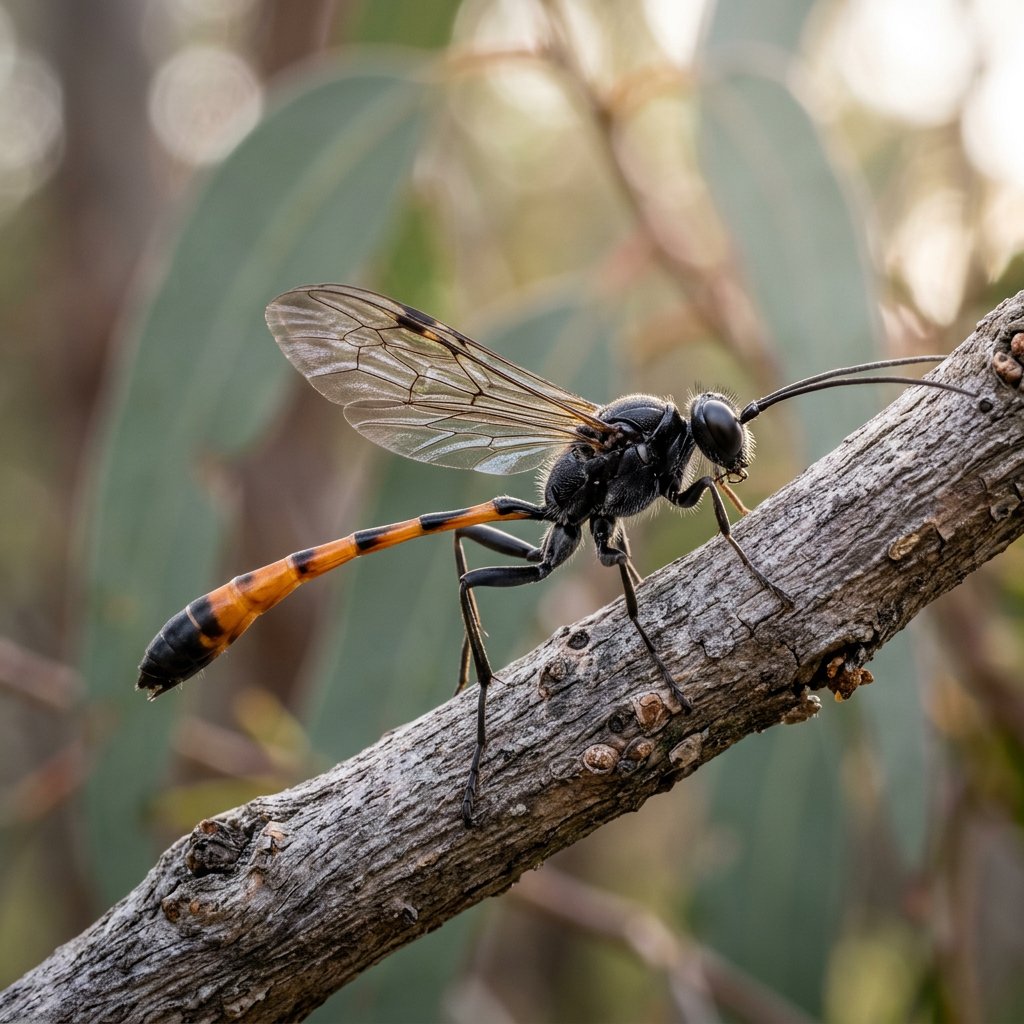
Meet the Orchid Dupe Wasp, the insect famous for being "catfished" by nature! This sleek, reddish wasp is a vital part of the Australian and New Zealand landscape, known for a hilarious—yet effective—evolutionary trick. It is a slender, fast-moving beauty that plays a lead role in the secret life of orchids.
🔍 How to Identify
- 🎨 Rich Coloration: A striking mahogany or reddish-orange body that often has a polished, metallic sheen in direct sunlight.
- 🪶 Smoky Wings: Dark-tinted wings that feature two very distinct, bright white spots (one on each wing), making them easy to spot mid-flight.
- 📏 The Long "Tail": Females possess a long, needle-like ovipositor protruding from the abdomen, which is often mistaken for a giant stinger.
🌲 Habitat & Ecology
- 🌸 The Great Trick: This wasp is the primary victim of "pseudocopulation." Certain orchids (Cryptostylis) mimic the scent and appearance of a female wasp. The male wasp, fooled by the disguise, tries to mate with the flower and inadvertently becomes the orchid's personal delivery service for pollen.
- 🐛 Natural Pest Control: Beyond its relationship with flowers, it is a parasitoid. It helps keep your garden balanced by laying its eggs in the larvae of moths and beetles, naturally reducing the population of leaf-eating caterpillars.
⚠️ Safety & Toxicity
- 🛡️ Low Risk: Despite their intimidating "tail," Orchid Dupe Wasps are generally harmless to humans. They are solitary wasps, meaning they don't have a hive to defend and are not aggressive.
- 🚫 The "Stinger": The long appendage at the back is for laying eggs, not for attacking. While they can technically give a tiny, non-venomous prick if squeezed or handled roughly, they do not possess the painful, swelling-inducing venom found in social wasps or hornets.
✨ Fun Fact
The male Orchid Dupe Wasp is so convinced by the orchid's pheromones that it will often choose a flower over a real female wasp! This is one of the most famous examples of "floral mimicry" in the scientific world.
More Details








