Info
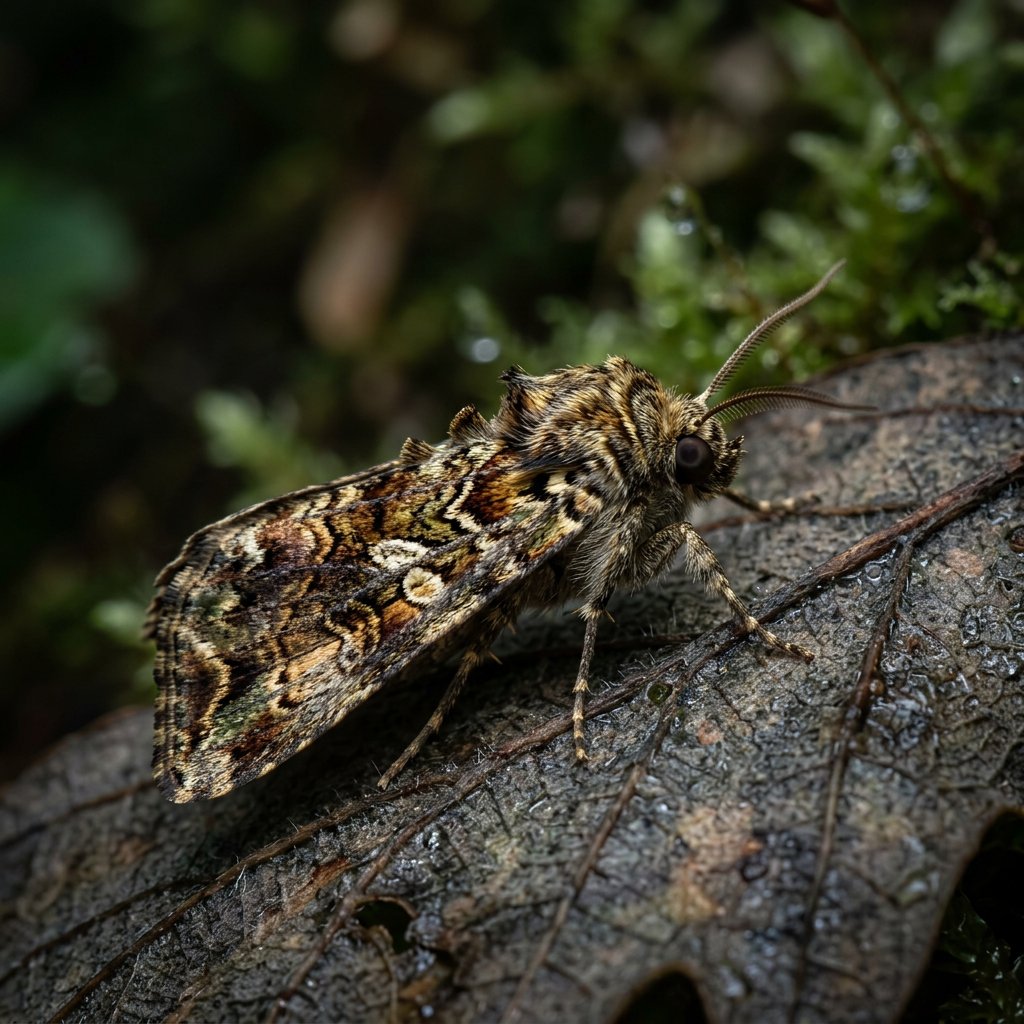
Often called the Black-dotted Maliattha, this tiny moth is a master of biological "masquerade." While it might look like a simple splash of color at first glance, its pattern is evolved to mimic bird droppings—a clever trick that makes it look unappetizing to hungry birds. It is a quiet, neutral resident of the garden that plays its part in the nocturnal ecosystem.
🔍 How to Identify
- 🎨 Camouflage Pattern: Its wings feature a creamy white base with marbled patches of olive-green, gray, and brownish-tan, concentrated toward the bottom edge.
- ⚫ Signature Dots: Look for the distinct, tiny black spots near the "shoulders" and center of the wings that give the insect its common name.
- 📐 Tent Shape: When at rest, it holds its wings in a neat, triangular "tent" shape, measuring only about 18–20mm across.
🌲 Habitat & Ecology
- 🌾 Grassland Lovers: You are most likely to find them near meadows, forest edges, or suburban lawns, as their larvae (caterpillars) feed almost exclusively on various species of wild grasses.
- 🌙 Nighttime Visitors: Being strictly nocturnal, they spend their days hiding on the undersides of leaves. At night, they are highly attracted to artificial lights, making them common visitors to porch lamps in mid-to-late summer.
⚠️ Safety & Toxicity
- ✅ Completely Harmless: The Black-dotted Lithacodia is a "friend" to the gardener. It does not bite, sting, or possess any irritating hairs like some other moth species.
- 🐾 Pet Friendly: It is non-toxic to cats and dogs who might try to chase it, and it is not considered a garden pest as its feeding habits don't damage ornamental flowers or crops.
✨ Fun Fact
This moth’s strategy of looking like bird poop is a specific type of camouflage called masquerade. Unlike "crypsis," where an animal tries to blend into the background, masquerade involves looking like a specific, boring object that a predator has no interest in eating!
More Details






