Info
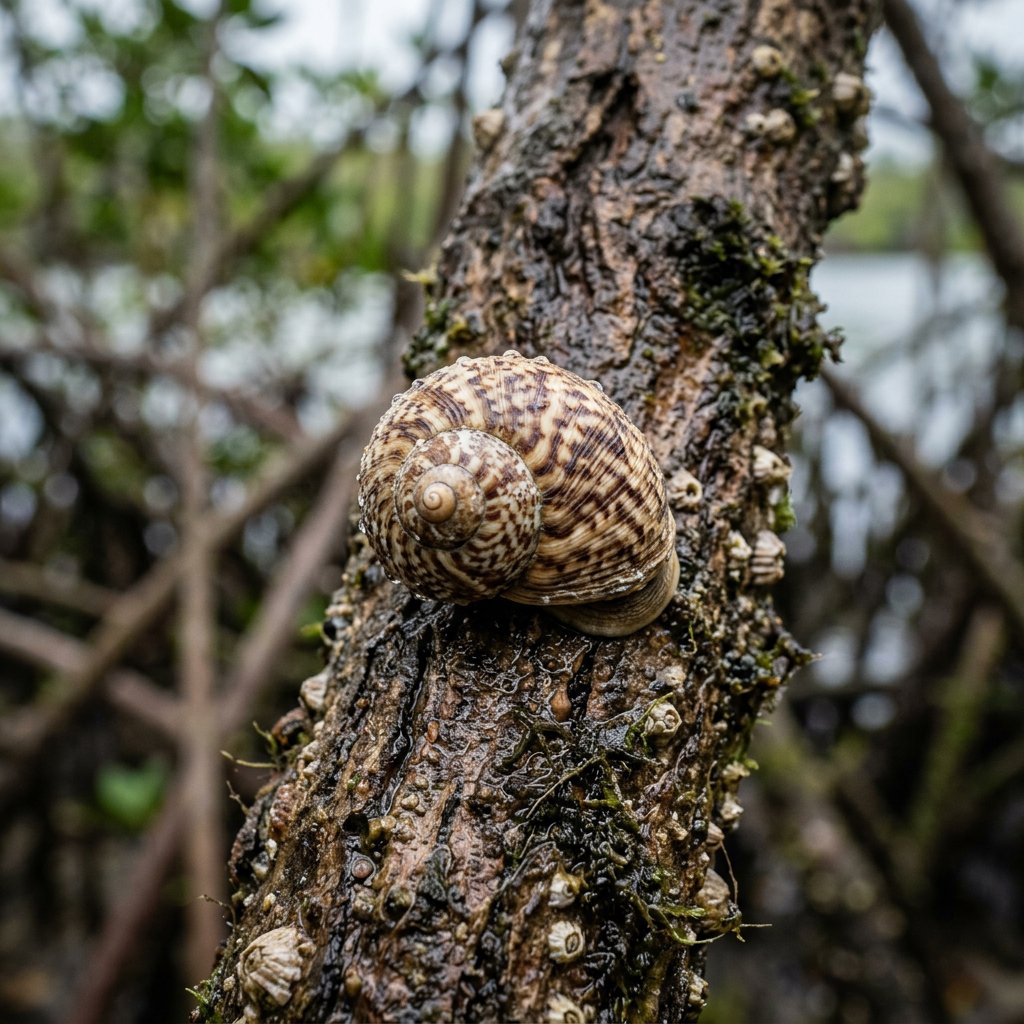
While often spotted crawling on tree trunks like a beetle or cicada, the Angulate Periwinkle is actually a remarkably hardy marine snail. Known as the "Mangrove Mountaineer," this mollusk has traded the seafloor for a life in the trees, perched high above the waves to escape hungry crabs and fish.
🔍 How to Identify
- 🐚 The Shell: Features a tall, pointed spiral shape (turbinate) with about six to seven distinct whorls.
- 🎨 Angulated Patterns: Its name comes from the beautiful, dark zigzag or "angulated" lines that decorate its tan, yellow, or grayish-brown shell.
- 📏 Compact Size: Typically grows to about 1 inch (2.5 cm) in length, making them look like small, decorative ornaments clinging to bark.
🌲 Habitat & Ecology
- 🌳 Mangrove Specialist: You will almost exclusively find them on the trunks and prop roots of Red Mangroves in tropical and subtropical coastal regions.
- 🌊 Tidal Commuter: They are masters of timing; they move up and down the tree with the tide, staying just inches above the water line to remain moist while avoiding aquatic predators.
- 🍽️ The Bark Grazer: They serve as the "gardeners" of the mangrove, using a raspy, sandpaper-like tongue (radula) to scrape algae and fungi off the tree bark.
⚠️ Safety & Interaction
- ✅ Harmless: The Angulate Periwinkle is completely non-toxic and lacks any mechanism to bite or sting humans.
- 🐚 Fragile Life: If you pick one up to admire the shell, be very gentle. They use a sticky mucus to "glue" themselves to the tree during dry spells; pulling them off too hard can damage their soft bodies.
- 🐾 Pet Safety: While they aren't poisonous, their hard shells can be a choking hazard or cause digestive upset if swallowed by a curious dog.
✨ Fun Fact
The Angulate Periwinkle is a "transition" species—it has a modified mantle cavity that acts like a lung, allowing it to breathe air. This allows it to survive out of the water for many days, a feat that would kill most other sea snails!
More Details








