Info
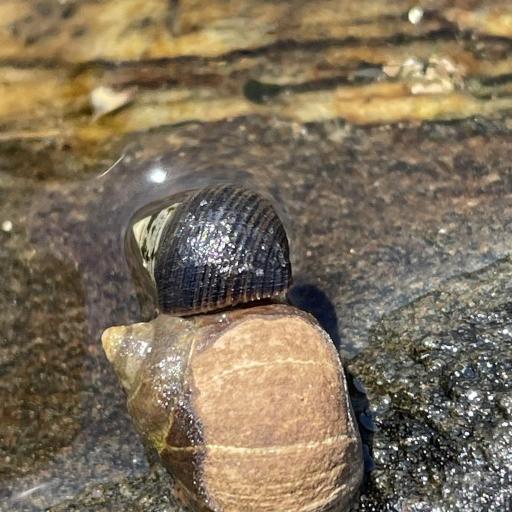
Often mistaken for a "sea bug" due to its busy movement along the shoreline, Littorina littorea is actually the Common Periwinkle. This small but mighty marine snail is a legendary figure of the North Atlantic coasts, often referred to simply as "Winkles." Whether they are being gathered for a traditional seaside snack or seen grazing on rocks at low tide, these snails are the undisputed kings of the intertidal zone.
🔍 How to Identify
- 🐚 The Shell: A robust, spiral-shaped shell that is typically dark gray, brownish-olive, or black, often marked with fine, darker spiral lines.
- 🌀 The Shape: It features a pointed "spire" and a large, rounded body whorl that ends in a wide, smooth opening (aperture).
- 🚪 The Trapdoor: Look for the operculum—a thin, leathery brown "door" the snail uses to seal itself tightly inside its shell to stay moist.
🌊 Habitat & Ecology
- 🧗 The Rock Climber: These snails thrive in the "intertidal zone," the area between high and low tide. They are incredibly hardy, capable of surviving crashing waves, baking sun, and even freezing temperatures.
- 🧹 Nature’s Scrubber: They serve as vital cleaners for the ecosystem. Using a sandpaper-like tongue called a radula, they scrape algae off rocks and seaweed, keeping the rocky shore from becoming overgrown.
⚠️ Safety & Toxicity
- ✅ Safe to Handle: The Common Periwinkle is completely harmless. They do not bite, sting, or possess any venom, making them a favorite for children exploring tide pools.
- 🥘 Consumption Warning: While a popular delicacy in Europe, never eat wild-caught periwinkles unless you are certain the water is free from pollution. They can accumulate heavy metals or toxins from "red tide" algae blooms.
✨ Fun Fact
Common Periwinkles are world-class survivalists! When the tide goes out, they secrete a specialized mucus that glues their shell to a rock and then pull their "trapdoor" shut, allowing them to survive for several days out of the water without drying out.
More Details








