Info
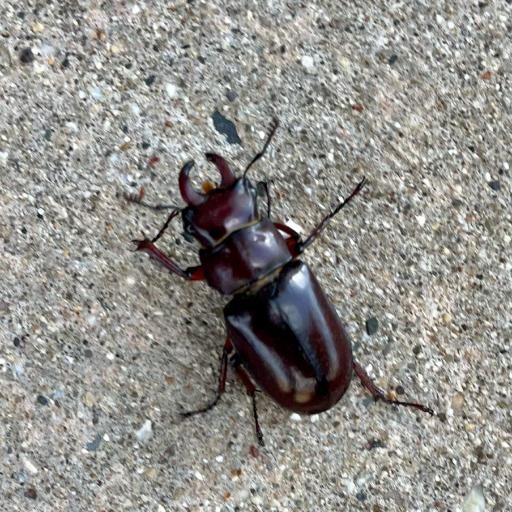
Known as the Red-legged Stag Beetle, this glossy, chestnut-colored titan is a common sight in North American woodlands and suburban backyards. Its scientific name, capreolus, translates to "little roe deer," referring to the male's impressive mandibles that resemble the antlers of a buck. While they look like they mean business, these beetles are actually peaceful recyclers of the forest floor.
🔍 How to Identify
- 🪲 The Antlers: Males possess large, curved mandibles with a single internal tooth, while females have much smaller, sharper pincers used for boring into wood.
- 🍒 Deep Coloration: Their bodies are a rich, polished reddish-brown that can appear almost black in low light, giving them a high-end "lacquered" look.
- 🦵 The Red "Thighs": A key identifying feature is the bright orange or reddish-yellow patch on the underside of their femurs (the upper part of the leg).
🌲 Habitat & Ecology
- 🪵 The Great Recyclers: As larvae (grubs), they spend up to three years living inside damp, decaying logs of oak, hickory, or maple trees, helping turn old wood back into nutrient-rich soil.
- 🌙 Night Owls: Adults are primarily nocturnal and are frequently found near porch lights or streetlamps. During the day, they hide under bark or in leaf litter to stay cool and humid.
- 🍎 Liquid Diet: Adult stag beetles don't eat solid food; they survive on tree sap, moisture from rotting fruit, and stored energy from their long larval stage.
⚠️ Safety & Toxicity
- 🛡️ Status: Generally harmless and non-aggressive. They have no venom or stinger.
- 🤏 The Pinch: If handled roughly, a male may use his "antlers" to give a weak pinch, but it is rarely enough to break the skin. Females, despite having smaller jaws, can actually deliver a slightly more painful nip because their pincers are built for crushing wood. It is best to admire them without picking them up!
✨ Fun Fact
⏳ A Long Wait: The Red-legged Stag Beetle spends about 95% of its life as a subterranean grub. After waiting 2 to 3 years in the dark, they emerge as adults to live for only a few weeks during the peak of summer to find a mate.
More Details








