Info
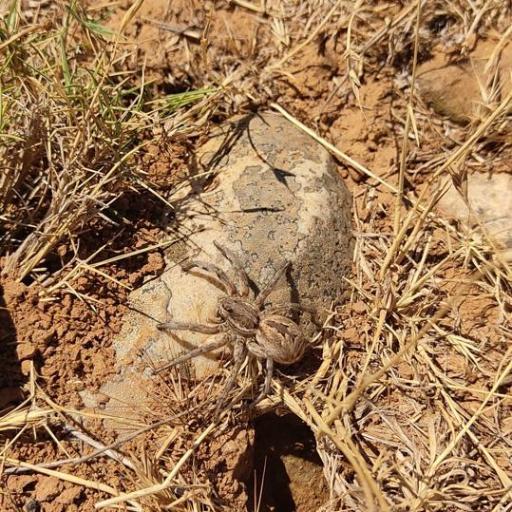
The Tarantula Wolf Spider (Lycosa tarantula) is the legendary "True Tarantula" of Southern Europe. Long before the giant, hairy spiders of the Americas were discovered, this Mediterranean hunter was the star of Italian folklore, where it was believed that its bite caused a hysterical condition called "Tarantism." The only cure? A frantic, high-energy dance known as the Tarantella, performed to sweat the venom out of the system.
🔍 How to Identify
- 👁️ The Eyes: Like all wolf spiders, it features a distinct eye arrangement—four small eyes in a bottom row, two very large eyes in the middle, and two medium eyes on top, providing excellent night vision.
- 🕷️ Body Pattern: They are typically earthy grey or light brown, decorated with dark, chevron-like stripes on the abdomen and a radial "starburst" pattern on the cephalothorax.
- 🦵 Bristly Limbs: Their legs are long, robust, and covered in fine sensory hairs that detect even the tiniest vibrations of passing prey.
🌲 Habitat & Ecology
- 🏜️ The Earth Dweller: Unlike many spiders, the Lycosa does not spin a web to catch its dinner. Instead, it lives in silk-lined burrows in the soil, often capping them with a little "turret" of grass or pebbles.
- 🌙 Nocturnal Hunter: This is an active predator. It waits at the mouth of its burrow at night, lunging with surprising speed to overpower crickets, beetles, and other ground-dwelling insects.
- 🎒 Parenting on the Go: Female wolf spiders are famous for their maternal care; they carry their large, spherical egg sacs attached to their spinnerets and later haul dozens of tiny spiderlings on their backs.
⚠️ Safety & Toxicity
- 🐝 Status: Generally harmless to humans, with a bite often compared to a mild bee or wasp sting.
- 🛡️ Behavior: They are shy and would much rather run into their burrow than fight. A bite usually only occurs if the spider is squeezed or provoked.
- 🩹 Details: While the venom is not medically significant for humans, individuals with specific allergies should exercise caution. For pets, a bite may cause localized swelling or discomfort but is rarely life-threatening.
✨ Fun Fact
The town of Taranto, Italy, is the namesake for this spider. During the 11th century, the "dancing plague" attributed to this spider was so widespread that it led to the creation of the Tarantella music genre, which remains a staple of Italian culture today!
More Details








