Info
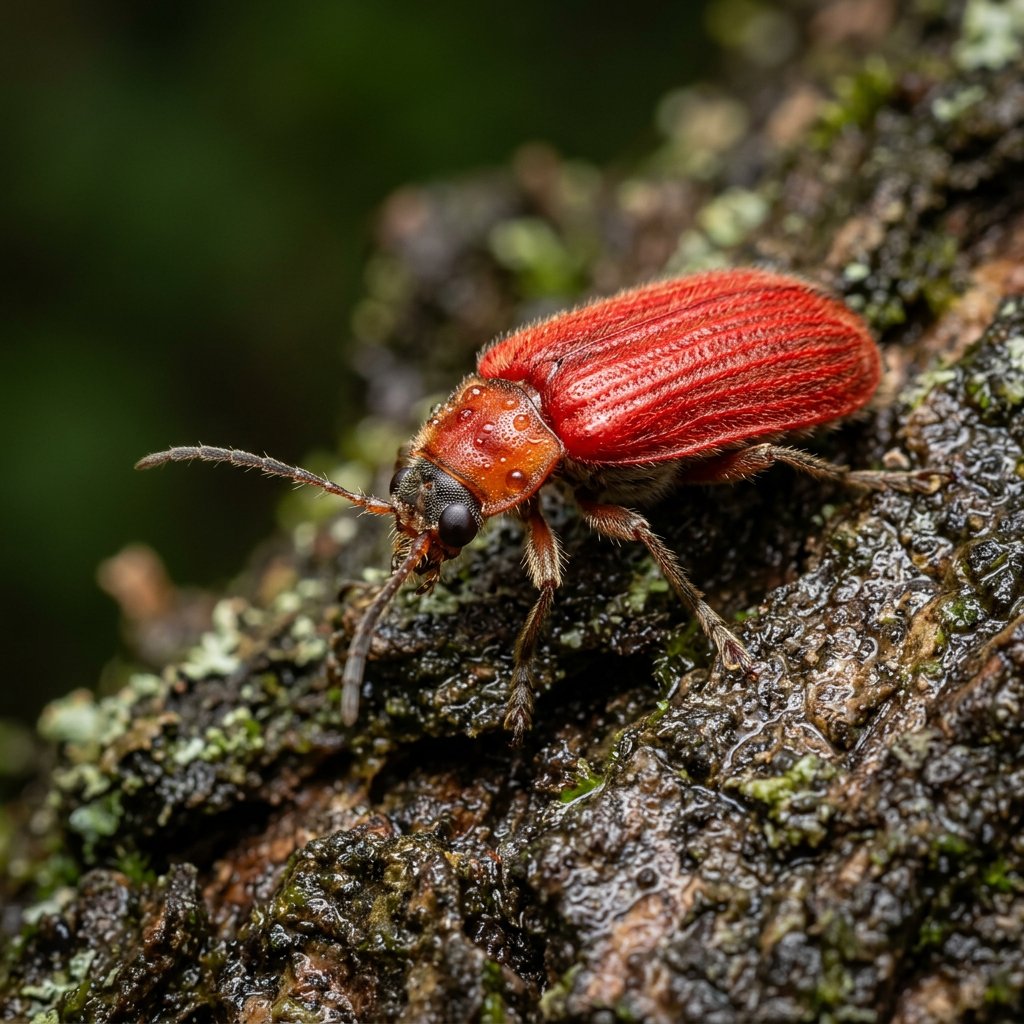
Known as the Blood-red Net-winged Beetle, this striking insect looks like a tiny, crimson knight in armor. Found across Europe and parts of Asia, its vibrant red color isn't just for show—it is a high-visibility warning to predators that this beetle is definitely not on the menu. While its elongated snout might look intimidating, it is actually a specialized tool for a very peaceful diet.
🔍 How to Identify
- 👃 The Long "Snout": Unlike many beetles, its head narrows into a distinct, beak-like rostrum which it uses to reach deep into flowers.
- 🕸️ Netted Wings: Its wing covers (elytra) feature a beautiful, raised grid pattern that looks like fine lace or a geometric net.
- 🔴 Sanguine Color: The body is a deep, saturated blood-red or orange-red, which contrasts sharply with its black legs, eyes, and antennae.
🌲 Habitat & Ecology
- 🌼 Flower Visitor: You’ll most likely spot the adults during mid-to-late summer sunning themselves on flat-topped white flowers, such as Hogweed or Elderberry, where they sip nectar and pollen.
- 🪵 Forest Resident: These beetles favor the edges of ancient woodlands. While the adults love the sun, their larvae live in damp, decaying logs, playing a vital role in breaking down old wood.
- 🎭 A Master of Mimicry: Because this beetle is chemically protected, it is part of a "mimicry ring." Other harmless insects have evolved to look exactly like the Lygistopterus sanguineus to trick birds into leaving them alone.
⚠️ Safety & Toxicity
- 🛡️ Harmless to Humans: This beetle is a "gentle giant" of the undergrowth; it does not bite, sting, or carry any diseases.
- 🤢 Chemical Defense: They produce foul-tasting chemicals (lycid acids) from their joints if threatened. This makes them incredibly bitter, causing any bird or lizard that tries to eat them to spit them out immediately.
- 🐾 Pet Safety: While not deadly, if a curious dog or cat eats one, the bitter chemicals might cause minor drooling or a temporary upset stomach.
✨ Fun Fact
The specific name sanguineus comes from the Latin word for "bloody," referring to its brilliant red hue. Despite its "tough" appearance, the adult beetle's snout is so specialized for liquids that it can't even chew solid food!
More Details








