Info
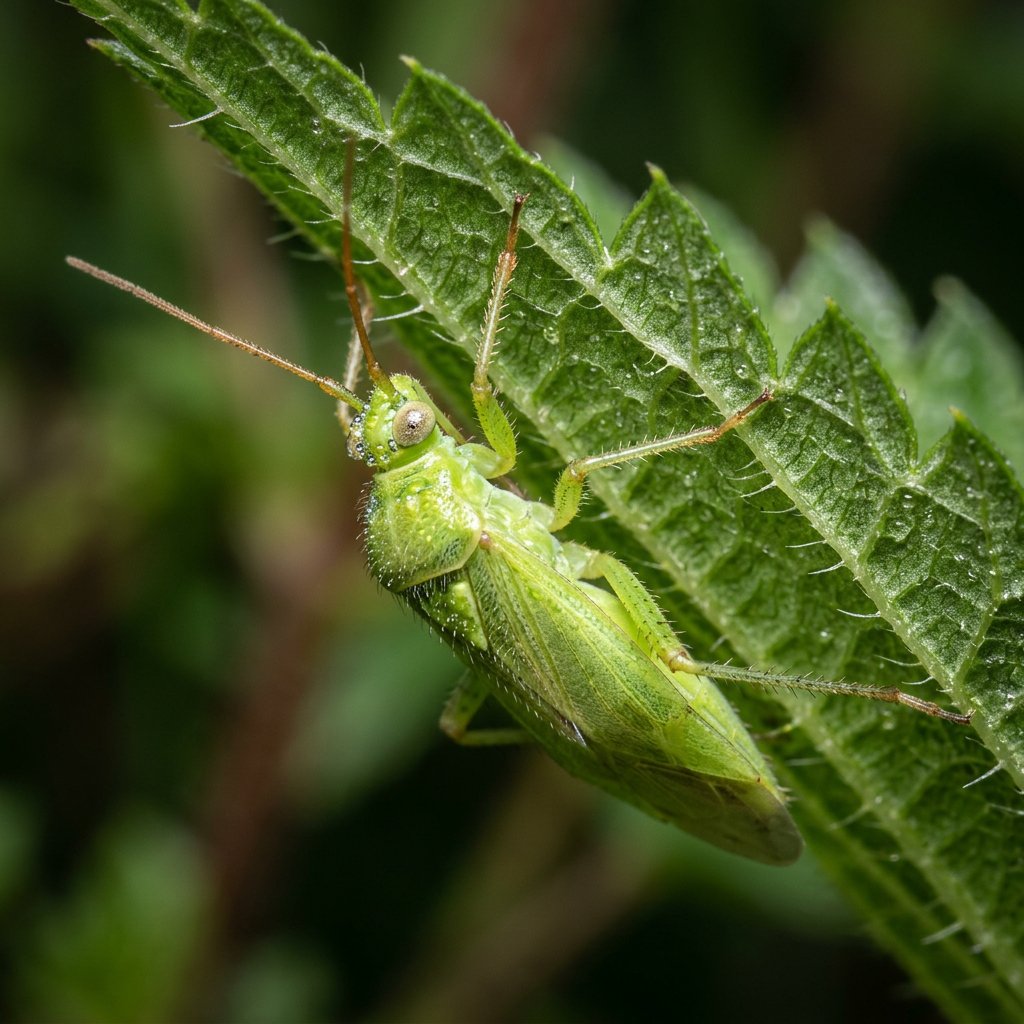
Known as the Common Green Capsid, this vibrant emerald insect is a master of camouflage within the vegetable patch. While its bright, translucent body makes it look like a harmless piece of new growth, it is a notorious "sap-sucker" that can leave your prize roses or currant bushes looking like they’ve been through a paper shredder.
🔍 How to Identify
- 🍏 Vibrant Color: A uniform, bright lime-green color across the entire body, which helps it disappear against the backdrop of fresh foliage.
- 🦟 Body Shape: It has an elongated, oval shape with long, delicate antennae and legs that allow it to sprint across leaves with surprising speed.
- ✨ The "X" Mark: Like many "true bugs," its wings overlap on its back, creating a subtle but distinct triangular or "X" pattern near the tail.
🌿 Habitat & Behavior
- 🍴 The Tatter-Maker: This insect feeds by piercing young, developing buds and leaves to drink the sap. As the leaf expands, the tiny puncture sites turn into large, irregular "tattered" holes, often mistaken for caterpillar damage.
- 🏃 Shy Personality: They are incredibly skittish. If you approach a plant they are resting on, they will quickly scuttle to the underside of the leaf or drop into the soil to vanish from sight.
- 🌳 Host Range: They are not picky eaters; you’ll find them on everything from fruit trees and berries to ornamental flowers like Dahlias and Salvia.
⚠️ Safety & Toxicity
- ✅ For Humans: They are completely harmless to people and pets. They do not possess a stinger and their mouthparts are designed for plants, not skin.
- 🥀 For Gardens: Considered a minor "foe." While they won't kill a healthy plant, they can cause "blind" shoots (where the growing tip dies) and distorted fruit, which can be frustrating for hobbyist growers.
✨ Fun Fact
When the Common Green Capsid feeds, it injects a specialized saliva that pre-digests the plant cells. It’s this toxic saliva that kills the surrounding tissue, causing the "shothole" effect that only appears days after the bug has already moved on!
More Details








