Info
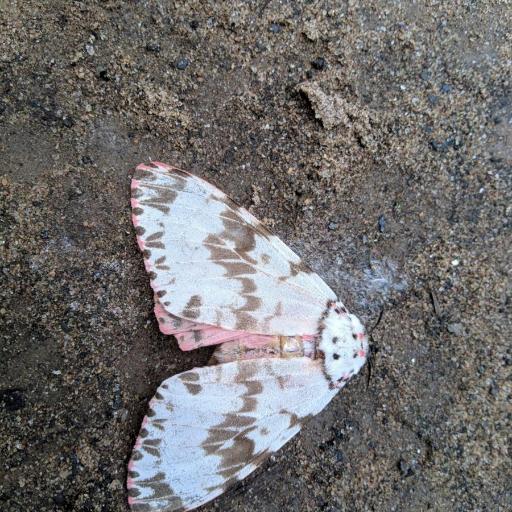
Known as the Rosy Gypsy Moth, this insect is a striking example of nature’s "beauty and the beast" dynamic. While the adult females are celebrated for their elegant, rosy-tinted wings, their larvae are famous for their voracious appetites. Primarily found in the lush forests of Asia, this moth plays a significant role in the woodland ecosystem, acting as both a heavy-duty recycler of foliage and a food source for forest birds.
🔍 How to Identify
- 🦋 Striking Wings: This species shows extreme "sexual dimorphism." Females are large and creamy-white with distinct pinkish-red hindwings, while males are much smaller, slender, and colored in mottled shades of brown and grey.
- 〰️ Zig-Zag Patterns: Look closely at the forewings; you’ll find intricate, dark zig-zag lines that help the moth blend into tree bark when its wings are folded.
- 🪶 Feathery Antennae: The males possess large, comb-like (bipectinate) antennae, which they use like high-tech sensors to track female pheromones over long distances.
🌲 Habitat & Ecology
- 🍃 The Forest Defoliator: The larvae are not picky eaters. They primarily feast on the leaves of Sal, Oak, Beech, and various fruit trees. In high-population years, they are known to completely strip the canopy of a forest.
- 🌙 Night Owls: As nocturnal creatures, the adults are most active after dusk. While the males are agile flyers, the heavy-bodied females are often found resting on tree trunks near where they emerged from their cocoons.
⚠️ Safety & Toxicity
- ✋ Handle with Caution: While the adult moths are completely harmless to touch, the caterpillars (larvae) are covered in dense, fine hairs.
- 🚫 Skin Irritation: These hairs can cause "lepidopterism"—a fancy word for a skin rash or itchy welts. It is best to observe the fuzzy caterpillars with your eyes rather than your hands, and keep curious pets away from them.
✨ Fun Fact
The female Rosy Gypsy Moth is a bit of a "heavyweight" in the moth world; her body is so laden with eggs that she rarely flies long distances, preferring to wait for the agile males to find her!
More Details








