Info
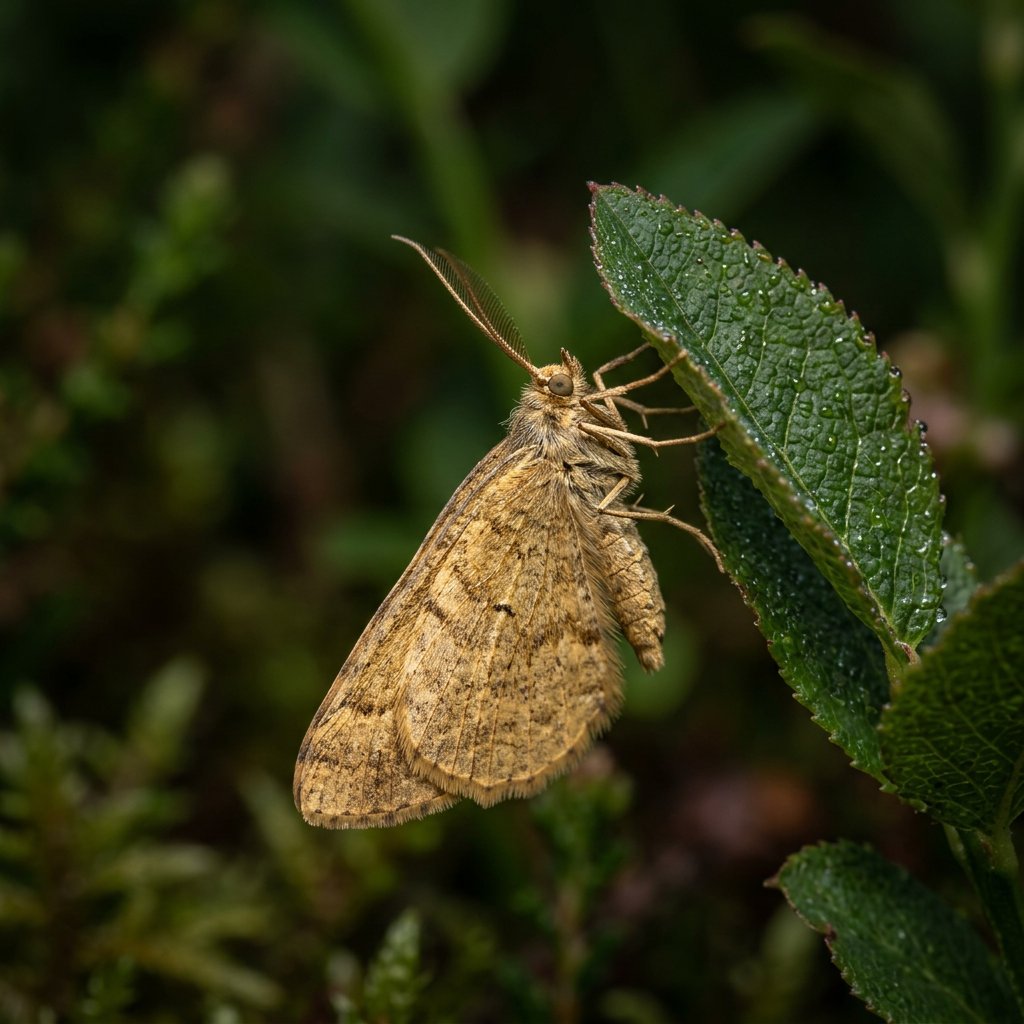
The Rannoch Looper is a delicate, warm-toned moth that looks like a fallen autumn leaf brought to life. Primarily found in the misty heathlands and northern forests, it is a favorite among nature observers because it often defies "moth logic" by flying during the day. Despite its fragile appearance, it is a hardy survivor of cold, northern climates.
🔍 How to Identify
- 🎨 Tawny Tones: The wings are a distinct ochre or orange-brown, often dusted with tiny, darker speckles that help it blend into woody environments.
- 📏 Subtle Stripes: Look for four faint, wavy dark lines crossing the forewings; these are usually more pronounced in males than in females.
- 🦋 Butterfly Stance: It typically rests with its wings spread flat or slightly tilted, rather than folded over its back, showing off its beautiful geometric patterns.
🌲 Habitat & Ecology
- 🫐 The Bilberry Specialist: This moth is a specialist; its caterpillars (the "loopers") rely almost entirely on Bilberry (Vaccinium myrtillus) or Bearberry for food.
- 🌤️ Daytime Flutter: While most moths are creatures of the deep night, the Rannoch Looper is frequently active in the afternoon sun, fluttering low over the heather and shrubs.
- 🏔️ Northern Resident: It thrives in open pine forests, moorlands, and heathery bogs, particularly in the Scottish Highlands and northern parts of North America and Europe.
⚠️ Safety & Toxicity
- ✅ Harmless Friend: The Rannoch Looper is completely safe for humans and pets. It does not bite, sting, or carry any known toxins.
- 🍃 Garden Impact: They are not considered pests. Because they are so specialized to wild heathland plants, they rarely, if ever, bother common garden vegetables or ornamental flowers.
✨ Fun Fact
The name "Looper" comes from the caterpillar's unique way of moving. Because they lack legs in the middle of their bodies, they arch their backs into a high loop to bring their rear legs forward, looking exactly like they are "measuring" the branch as they walk—which is why they are also called "Inchworms!"
More Details








