Info
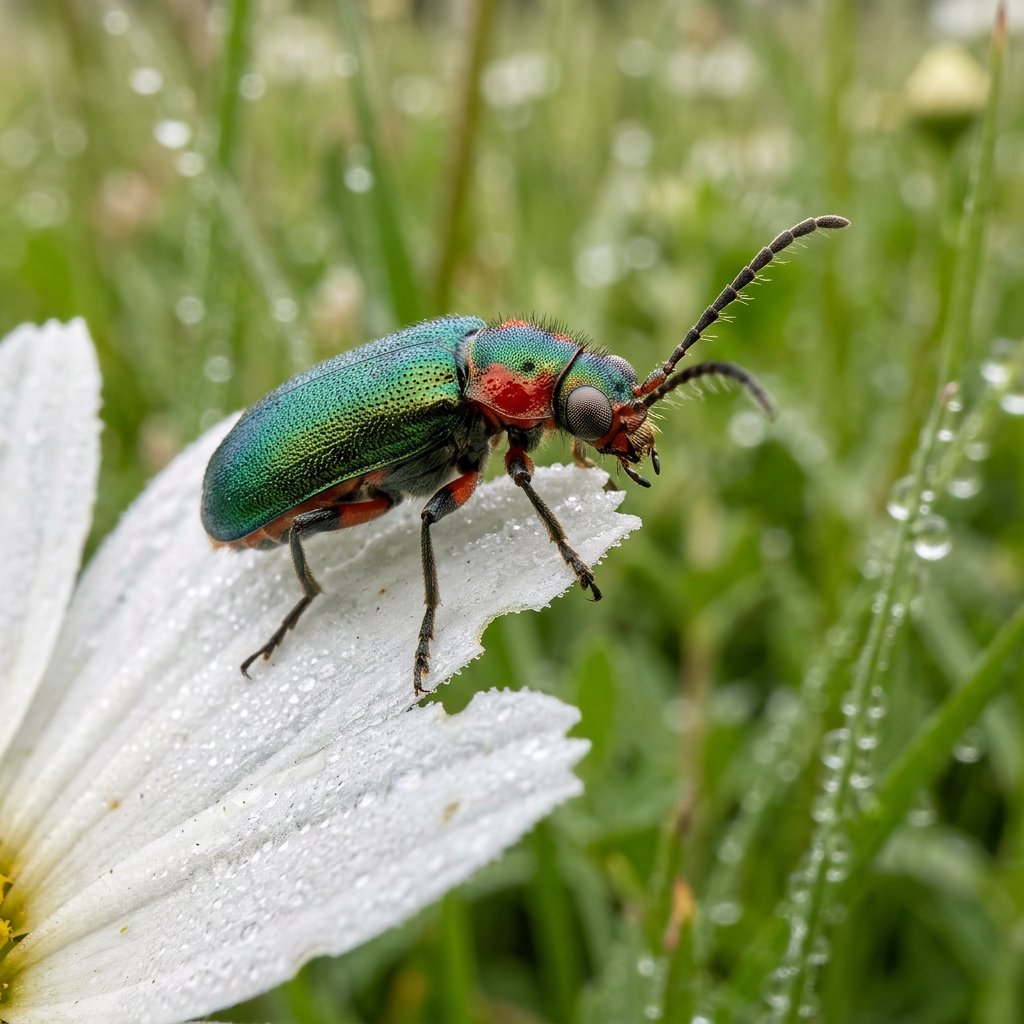
Often referred to as the Scarlet Malachite Beetle, this striking creature is actually a beneficial insect rather than a plant. Shimmering like a tiny emerald dropped in the grass, it is widely considered one of the most beautiful beetles in Europe and North America. In some regions, like the UK, it is a rare and protected "priority species," often found dancing atop meadow flowers in the early summer sun.
🔍 How to Identify
- 🪲 Metallic Sheen: The body is a brilliant, iridescent emerald green or deep bronze-green that glints in the sunlight.
- 🔴 Scarlet Tips: The most identifying feature is the bright red or scarlet patches at the tips (and sometimes the base) of the wing cases (elytra).
- 📏 Soft Texture: Unlike many "armored" beetles, its body is relatively soft and slightly elongated, reaching about 6–8mm in length.
🌲 Habitat & Ecology
- 🌼 Pollen Feeder: As an adult, this beetle is a dedicated pollinator. You’ll find them scrambling over "flat" flowers like daisies, buttercups, and hogweed, where they feast on protein-rich pollen.
- 🏚️ Thatch & Wood: Interestingly, their larvae are often found in old, decaying wood or the thatched roofs of historic cottages, where they act as tiny predators hunting other small insects.
- ☀️ Sun Lovers: They are highly active during the day, particularly in warm, calm weather between May and July. They are "friends" of the garden, assisting with pollination without harming the plants.
⚠️ Safety & Toxicity
- ✅ Harmless: The Scarlet Malachite Beetle is completely safe for humans and gardeners.
- 🛡️ Non-Aggressive: It does not possess a stinger or a painful bite. It relies on its bright "warning colors" to trick birds into thinking it might taste bad, though it is not known to be dangerously toxic to pets.
✨ Fun Fact
To win over a mate, the male Scarlet Malachite Beetle offers a "nuptial gift." He produces a special chemical secretion from glands on his head and antennae; the female must "taste" and approve of this chemical before she will agree to mate with him!
More Details








