Info
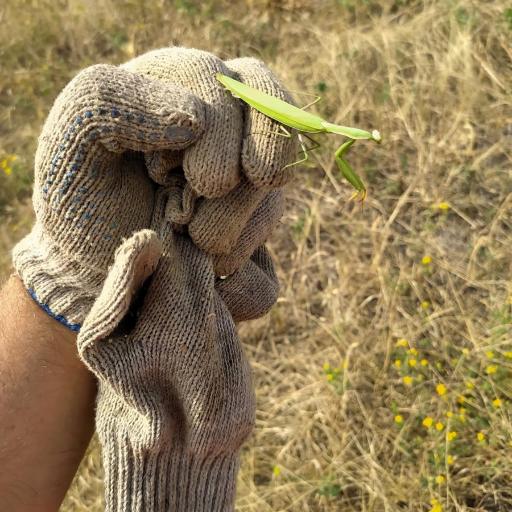
Often referred to as the "Praying Mantis," the Mantis religiosa is the quintessential garden sentinel. Looking like a cross between a martial arts master and an alien, it has earned a reputation as a patient hunter across Europe, Asia, and North America. In many cultures, seeing one is a sign of good luck, stillness, and spiritual presence.
🔍 How to Identify
- 📐 Triangular Head: A highly mobile, heart-shaped head featuring two large compound eyes that provide a wide field of vision and three smaller "simple" eyes for detecting light.
- ⚔️ Raptorial Forelegs: Thick, powerful front legs held in a "prayer" position; these are lined with sharp spines designed to snap shut like a switchblade on unsuspecting prey.
- 🎯 The "Armpit" Spot: A key identification feature is the distinctive black-and-white bullseye spot located on the inner side of the front legs (near the "armpit" area), which distinguishes it from other similar species.
🌲 Habitat & Ecology
- 🌿 The Ambush Specialist: You’ll typically find them clinging to tall grasses, shrubs, or flowering plants. They are masters of camouflage, changing their color between green and brown after molting to better match their specific environment.
- 🦟 Garden Guardian: As generalist predators, they act as a natural pest control system. They sit motionless for hours before striking with lightning speed to consume flies, moths, grasshoppers, and occasionally other mantises.
⚠️ Safety & Toxicity
- 🛡️ Harmless Ally: The European Mantis is non-venomous and does not sting. They are completely safe to have around children and pets.
- 🖐️ Pinch Warning: While not aggressive, a large adult might deliver a small "nip" with its mandibles or a prickly pinch with its forelegs if handled roughly. It is best to let them crawl onto your hand voluntarily rather than grabbing them.
✨ Fun Fact
The Mantis religiosa is the only insect known to have a "cyclopean" ear—a single ear located in the center of its chest—which allows it to detect the ultrasonic pings of bats and perform mid-air evasive maneuvers to avoid being eaten!
More Details








