Info
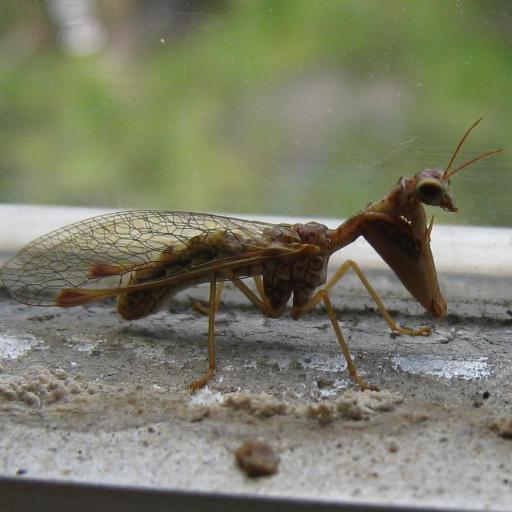
Meet one of nature's most convincing imposters: the Styrian Mantidfly. While it looks like the result of a secret laboratory experiment combining a praying mantis and a wasp, it is actually a member of the lacewing family. Often called the "Mantis-fly," this delicate predator is a master of convergent evolution, having developed raptorial front legs independently of the common mantis.
🔍 How to Identify
- 🦖 The "Mantis" Front: The most striking feature is its specialized front legs, which are folded up near its head and designed to snap shut on unsuspecting prey with lightning speed.
- 🦋 Lacewing Wings: Unlike the thick wings of a mantis, this insect possesses four large, transparent, and intricately veined wings that stay held over its back like a tent when resting.
- 🐝 Wasp Mimicry: Its body is patterned with yellow and brown bands, a clever disguise intended to trick birds and larger predators into thinking it’s a stinging wasp.
🌲 Habitat & Ecology
- 🕷️ The Spider Connection: The life of a Mantidfly is truly bizarre; the tiny larvae are "spider-boarders." They hunt for female spiders, hitch a ride on their backs, and wait for the spider to spin an egg sac so they can crawl inside and feast on the eggs.
- ☀️ Sun Seekers: You are most likely to spot an adult Mantispa styriaca in warm, sunny meadows or at the edges of deciduous forests where they sit motionless on flowers, waiting for small flies or moths to come within reach.
⚠️ Safety & Toxicity
- 🛡️ Harmless Imposter: Despite its "scary" wasp-like colors and its predatory front claws, the Mantidfly is completely harmless to humans.
- 🚫 No Sting: It lacks a stinger entirely. If handled, it might try to "pinch" with its front legs, but it cannot break human skin or inject any venom. It is a "friend" in the garden that helps control small pest populations.
✨ Fun Fact
The Mantidfly undergoes "hypermetamorphosis," meaning its larvae change shape drastically. They start as active, mobile hunters looking for a spider, but once they enter an egg sac, they turn into sedentary, grub-like creatures because they no longer need to move to find food!
More Details








