Info
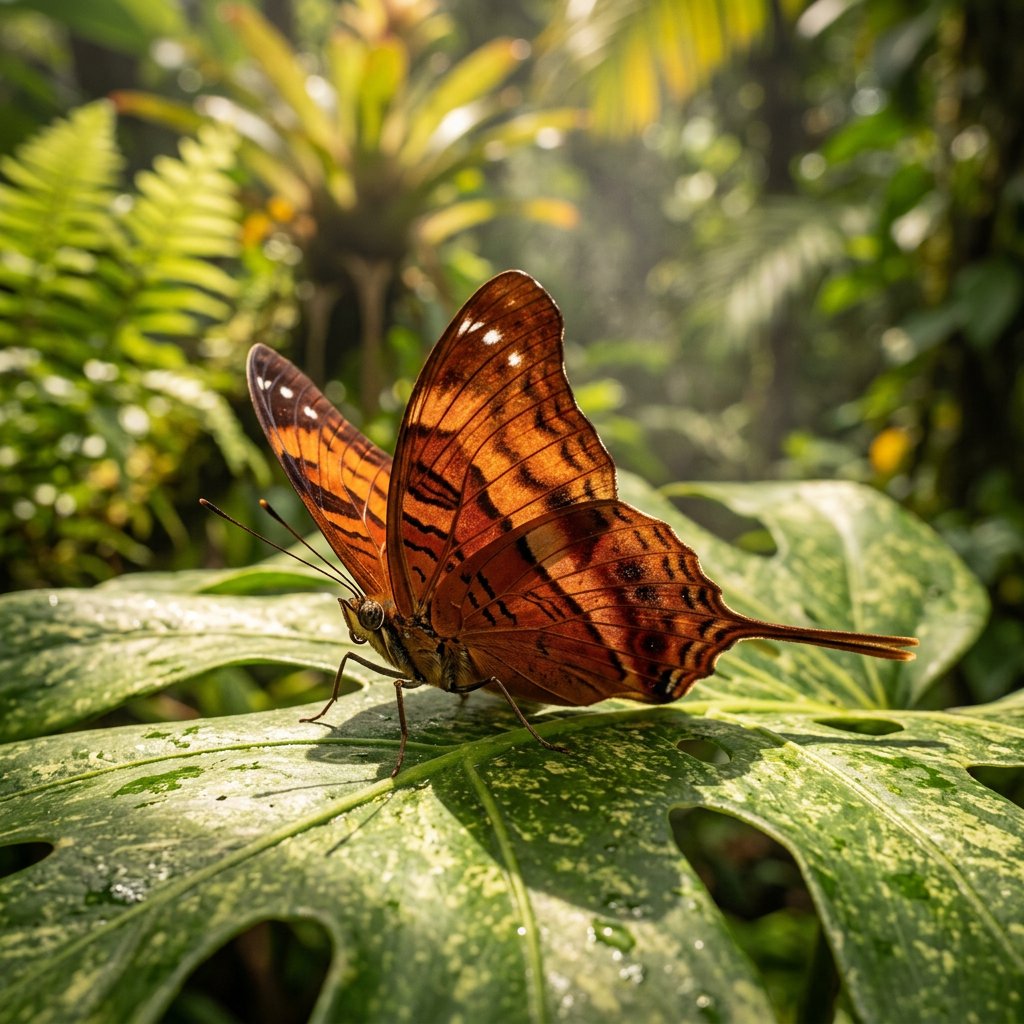
Known as the Ruddy Daggerwing, this butterfly is a masterpiece of tropical geometry. With its long, elegant wing extensions and fiery orange hue, it looks like a piece of living origami darting through the canopy. In the southern United States and Central America, it is often mistaken for a falling autumn leaf—until it takes flight and reveals its brilliant, sunset-colored upper wings.
🔍 How to Identify
- 🗡️ The "Dagger" Tails: The most striking feature is the pair of long, slender tails extending from the hindwings, resembling sharp daggers or swords.
- 🟧 Rusty Patterning: The topside is a bright ruddy orange or deep apricot, marked by three distinct, thin dark lines that run vertically across both wings.
- 🍂 Leaf Mimicry: When the wings are closed, the underside is a mottled brown and tan, complete with a "midrib" line that makes the butterfly look exactly like a dead, dried leaf.
🌲 Habitat & Ecology
- 🌳 The Fig Specialist: This insect is a "friend" to the forest but a hungry guest for fig trees. The caterpillars feed almost exclusively on the leaves of Ficus species, including the common garden fig and the massive Strangler Fig.
- 💧 Puddling Behavior: You will frequently spot males congregating on damp soil or muddy riverbanks. This behavior, called "puddling," allows them to sip essential minerals and salts that they can't get from flower nectar alone.
- 🚀 High-Speed Flier: Unlike the lazy flutter of a Monarch, the Ruddy Daggerwing is an exceptionally fast and erratic flier, often staying high in the treetops unless lured down by water or overripe fruit.
⚠️ Safety & Toxicity
- ✅ Completely Harmless: The Ruddy Daggerwing is a gentle pollinator. It does not bite, sting, or possess any chemical defenses that would harm humans.
- 🐾 Pet Safe: Unlike some butterflies that ingest toxins from milkweed, the Daggerwing is non-toxic. If a curious dog or cat happens to chase one, there is no risk of poisoning.
✨ Fun Fact
When a Ruddy Daggerwing feels threatened while resting, it doesn't always fly away immediately. Instead, it "shivers" its wings rapidly, which breaks up its outline and makes it even harder for a predator to distinguish it from a leaf fluttering in the wind.
More Details








