Info
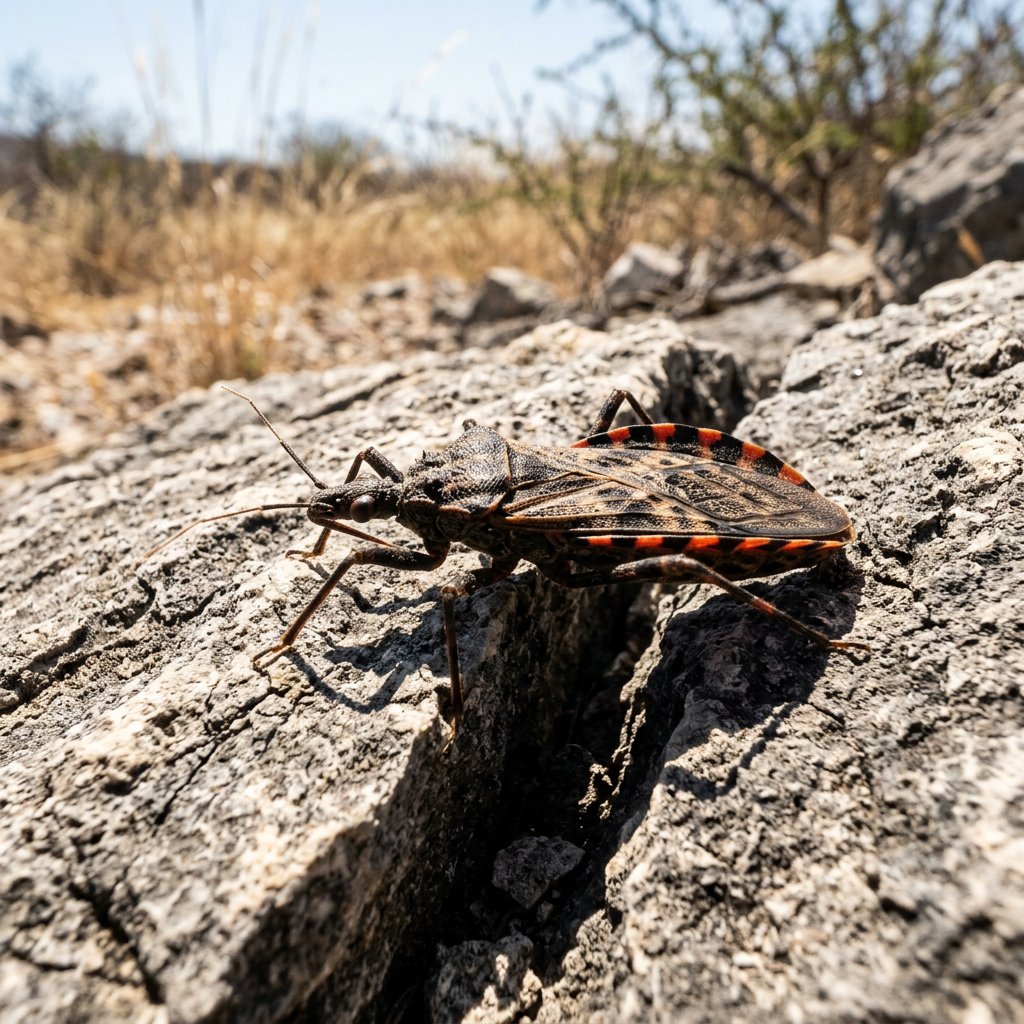
Known as one of the "Kissing Bugs," Meccus dimidiatus (often classified as Triatoma dimidiata) is a member of the assassin bug family that has earned a reputation for its nocturnal habits and stealthy nature. While they are fascinating examples of predatory evolution, they are generally considered a "foe" due to their role in transmitting health risks to humans and pets. They often hide in the cracks of adobe walls or animal nests, emerging only when the world goes quiet.
🔍 How to Identify
- 🪟 The "Cone" Nose: They possess a distinct, elongated head that tapers into a point, resembling a cone, which houses their piercing-sucking mouthparts.
- 🎨 Abdominal Markings: Their flat, shield-shaped bodies are dark brown or black, but the edges of their abdomen (the connexivum) feature striking orange or yellow rectangular patterns.
- 📐 Body Shape: Adult bugs are quite large (up to 3.5 cm) and have a flattened appearance, allowing them to squeeze into incredibly tight crevices during the daylight hours.
🌲 Habitat & Ecology
- 🦇 Blood Meal Diet: Unlike many other bugs that hunt garden pests, this species is a "hematophage," meaning it feeds exclusively on the blood of vertebrates, including dogs, livestock, and humans.
- 🏠 Domestic Dwellers: In rural or suburban areas, they are often found near "nesting" sites—this could be a woodpile, a chicken coop, or even the cracks in the walls of a home, where they stay cool and hidden.
⚠️ Safety & Toxicity
- 🚨 High Alert: These insects are primary vectors for Chagas disease, caused by the parasite Trypanosoma cruzi. Unlike a bee sting, the danger isn't in the bite itself, but in the insect's droppings, which can enter the bite wound or mucous membranes.
- 🐕 Risk to Pets: Dogs sleeping outdoors or in kennels are at high risk of infection if they eat the bugs or are bitten repeatedly. If found indoors, it is best to seal entry points and consult a professional rather than handling them with bare hands.
✨ Fun Fact
The name "Kissing Bug" sounds romantic, but it actually comes from a creepy behavior: they are attracted to the carbon dioxide we exhale, which leads them to bite humans near the lips and eyes while they sleep!
More Details








