Info
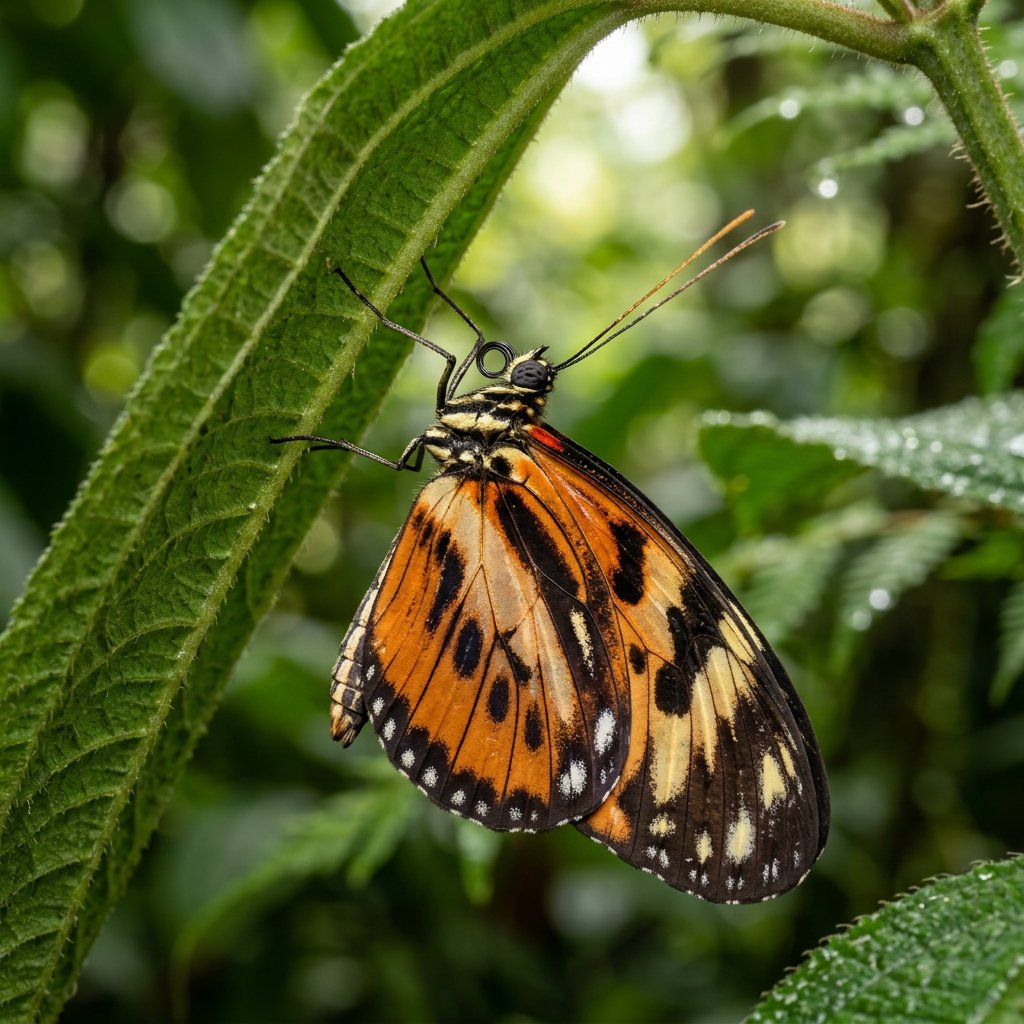
Often called the Lysimnia Tigerwing, this butterfly is a living masterpiece of the Neotropical rainforests. With its striking orange, black, and yellow stripes, it serves as a "warning sign" to predators that it is definitely not on the menu. It belongs to a fascinating group of butterflies that participate in "mimicry rings," where different species evolve to look identical so that predators learn to avoid them all at once.
🔍 How to Identify
- 🦋 Wing Pattern: Long, narrow forewings featuring a bold "tiger" pattern of bright orange and deep black, often accented by pale yellow or white spots near the tips.
- 🟡 Antennae Color: Look closely at the tips—this species is known for its distinct, long antennae that often feature bright yellow or orange clubs.
- 📏 Body Shape: A very slender, elongated abdomen and thorax, which is characteristic of the Ithomiini tribe, allowing them to weave gracefully through dense foliage.
🌲 Habitat & Ecology
- 🍃 The Nightshade Connection: As caterpillars, they are incredibly picky eaters, feeding almost exclusively on plants in the Solanum (Nightshade) family. By eating these plants, they store up toxins that stay in their bodies even after they become butterflies.
- 💧 Mineral Seekers: You’ll often find these butterflies "puddling" on damp ground or even bird droppings. They do this to extract vital minerals and nitrogen that they can't get from flower nectar alone.
- ☁️ Understory Dwellers: Unlike some butterflies that love the high canopy, the Lysimnia Tigerwing prefers the shaded, humid "basement" of the forest, flying low among the shrubs and vines.
⚠️ Safety & Toxicity
- 🟢 Status: Completely harmless to humans. They do not bite, sting, or possess any defensive hairs.
- 🚫 Chemical Defense: While they are safe to watch or have land on you, they are chemically defended. They contain pyrrolizidine alkaloids which make them taste incredibly bitter and toxic to birds and spiders.
- 🐾 Pet Safety: If a curious pet were to catch and eat one, it might cause minor stomach upset or vomiting due to the bitter toxins, but they are generally not considered deadly.
✨ Fun Fact
The Lysimnia Tigerwing is a professional "mimic." It looks so much like the Heliconius ismenius butterfly that even expert biologists sometimes have to look at the vein patterns in their wings to tell them apart! This "strength in numbers" strategy ensures that if a bird tries to eat one and hates the taste, it will leave both species alone forever.
More Details








