Info
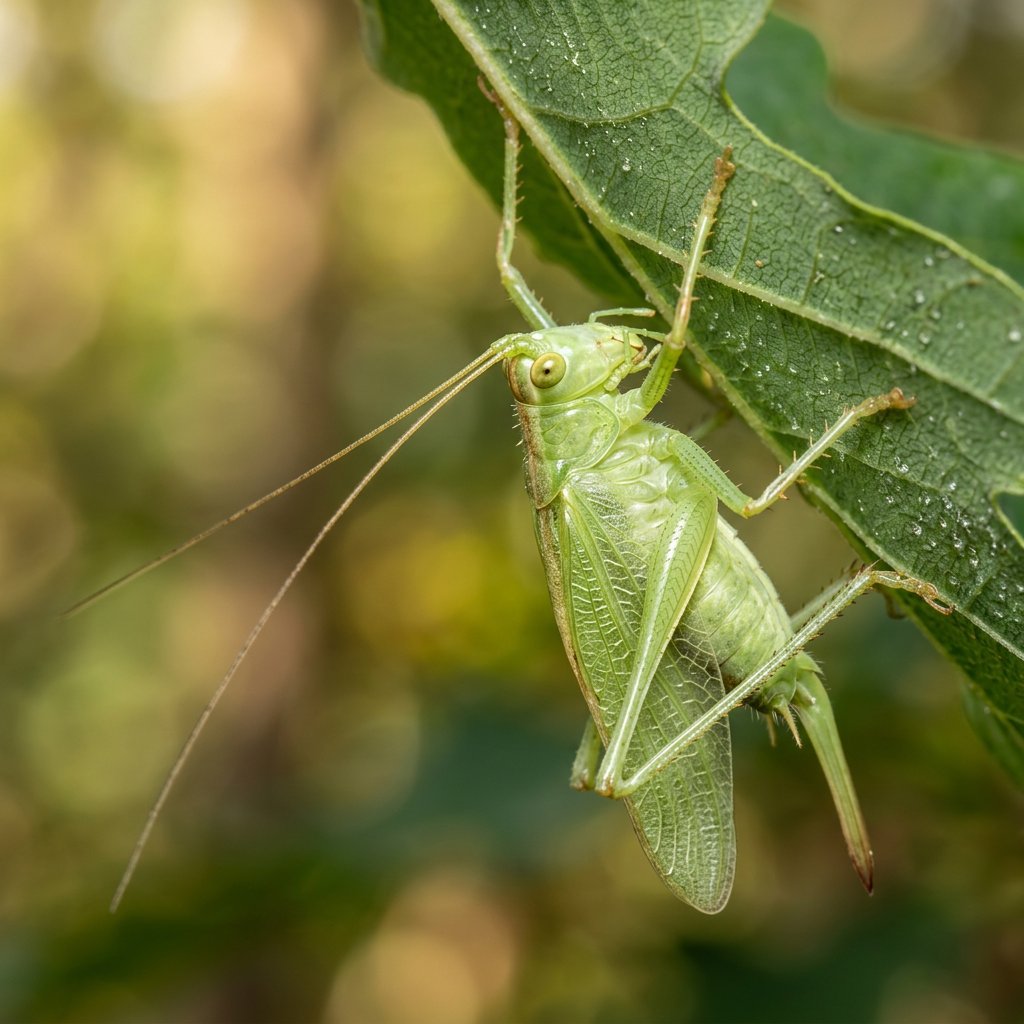
Known as the Oak Bush-cricket, this tiny, lime-green acrobat is the silent ninja of the late-summer garden. While other crickets fill the night with loud, abrasive chirps, this species prefers a secret, rhythmic approach to communication. It is a dedicated ally to gardeners, spending its nights patrolling the high canopy for pesky intruders.
🔍 How to Identify
- 🍏 Coloring: A delicate, translucent lime-green body, often featuring a subtle yellowish-orange stripe running down the center of its back.
- 📡 Antennae: Features exceptionally long, thread-like antennae that can reach up to twice the length of its actual body.
- 🪽 Wings: Both males and females possess fully developed, elegant wings that extend slightly past the end of the abdomen, though they are more likely to crawl than fly.
🌲 Habitat & Ecology
- 🌳 The High Life: As the name suggests, they are most at home in the leafy crowns of Oak, Beech, and Lime trees. They are strictly arboreal, meaning they rarely descend to the ground unless knocked down by wind or rain.
- 🐜 Natural Pest Control: Unlike many of their cousins who munch on leaves, these crickets are primarily carnivorous. They hunt small soft-bodied insects, particularly aphids and small caterpillars, making them a "friend" to your trees.
- 🌙 Nocturnal Patrol: They are rarely seen during the day as they hide under leaves to avoid birds. They become active at dusk, using their long antennae to feel their way through the dark foliage.
⚠️ Safety & Toxicity
- 🟢 Harmless Friend: The Oak Bush-cricket is completely non-toxic and lacks the powerful mandibles required to bite humans.
- 🛡️ Gentle Defense: They are not aggressive and do not possess a stinger. If they land on you, they are likely just using you as a temporary "branch" to reach a higher vantage point. They pose no threat to curious pets or children.
✨ Fun Fact
- 🥁 The Silent Drummer: Most crickets "stridulate" (rub their wings together) to sing, but the Oak Bush-cricket is physically unable to make sound this way. Instead, the male attracts mates by rapidly drumming one of his hind legs against a leaf, creating a vibration that is almost silent to human ears but loud and clear to a female cricket!
More Details








