Info
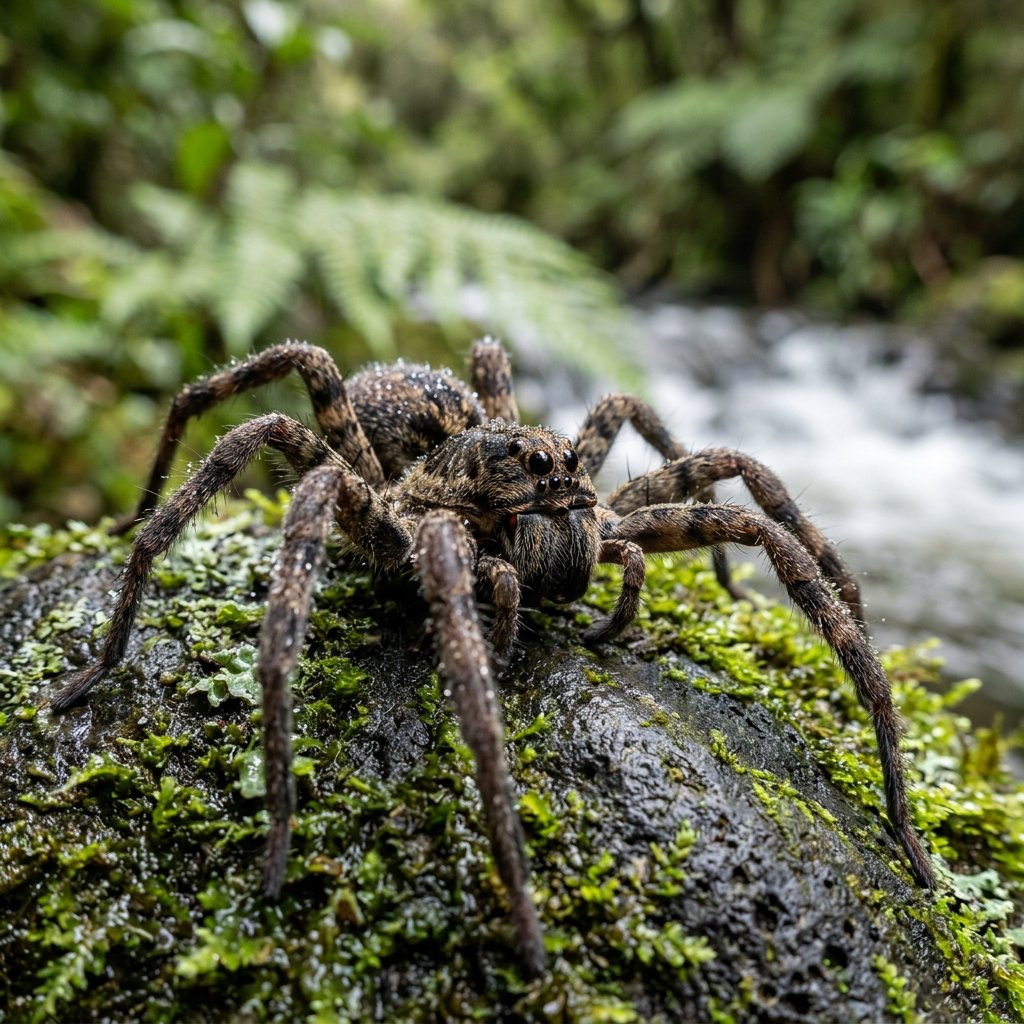
Meet the Giant Water Spider, the reigning heavyweight of the Australian creek. Known for its impressive leg span and its uncanny ability to "walk on water," this spider is a master of the wetlands. While its massive size can be startling to hikers and swimmers, this shy giant is far more interested in catching its next underwater meal than bothering humans.
🔍 How to Identify
- 🦵 Massive Leg Span: It is one of Australia’s largest spiders, with a leg span that can reach up to 18cm (7 inches), allowing it to spread its weight across the water's surface.
- 🎨 Racing Stripes: Its body is typically a mottled chocolate brown or grey, featuring two striking white or cream stripes running down the sides of its head-section (cephalothorax).
- 👁️ Hunter’s Eyes: It possesses eight eyes arranged in two rows, providing the sharp depth perception needed to strike at fast-moving prey.
🌲 Habitat & Ecology
- 💧 The Surface Skater: These spiders utilize surface tension to glide across the water like a high-speed boat. They often sit at the water’s edge with their front legs resting on the surface, acting as sensitive "motion detectors" for ripples.
- 🎣 Expert Angler: Unlike most spiders that eat flies, the Giant Water Spider is a true predator of the deep. It is known to catch and eat small fish, tadpoles, and even large aquatic insects, pulling them from the water with lightning speed.
- 🤿 Submerged Retreat: When a predator like a bird appears, this spider doesn't just run—it dives. It can stay completely submerged for long periods by trapping a thin layer of air against its body.
⚠️ Safety & Toxicity
- 🩹 Status: Non-lethal but defensive. While their size is intimidating, they are quite timid and prefer to flee or dive rather than fight.
- 🚫 The Bite: If handled roughly or accidentally stepped on, they can deliver a painful bite. The venom is not considered medically significant to humans, usually resulting in localized pain and swelling similar to a wasp sting.
- 🐾 Pets & Kids: It is best to admire them from a distance. Keep curious pets away from the water's edge in their habitat, as a bite to a sensitive nose or paw can be very distressing for an animal.
✨ Fun Fact
The Giant Water Spider carries its own "oxygen tank" underwater! It has specialized water-repellent hairs that trap a silver film of air against its abdomen, allowing it to breathe while hiding from predators deep beneath the surface for up to 20 minutes.
More Details








