Info
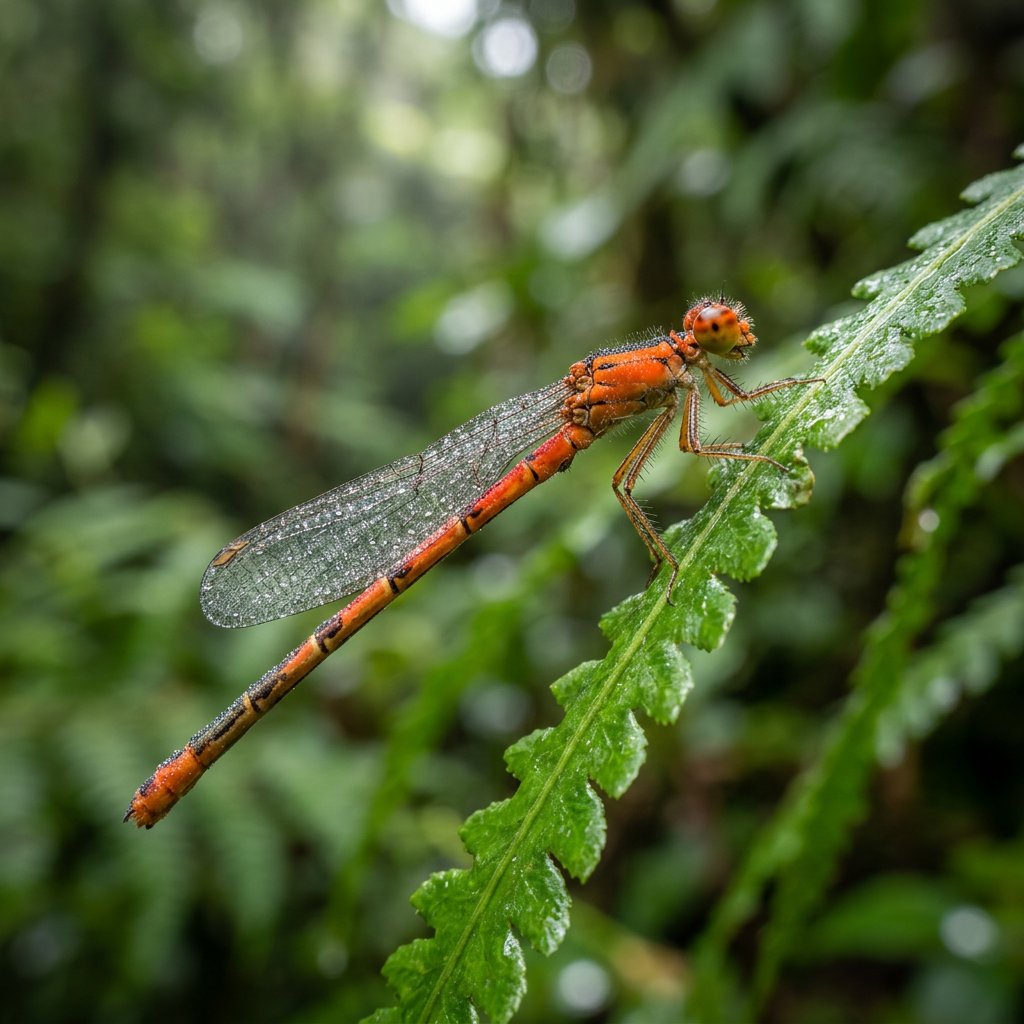
Known as the Pinao ‘ula in native Hawaiian culture, the damselflies of the Megalagrion genus are the archipelago's living jewels. These insects are a world-class example of evolution, having branched out into dozens of unique species found nowhere else on Earth. Whether flashing bright red over a mountain stream or hiding in the misty ferns of a rainforest, they are a signature of Hawaii’s natural heritage.
🔍 How to Identify
- 🎨 Brilliant Pigmentation: Males are most famous for their startling, fire-engine red bodies, while females are typically more subtle, appearing in shades of olive green, tan, or brown.
- 🦟 Needle-Like Abdomen: They possess an incredibly slender, elongated body that looks like a delicate piece of wire dancing through the air.
- 👐 Vertical Wing Rest: Unlike dragonflies that rest with wings outspread, Megalagrion damselflies hold their four translucent wings folded together vertically over their backs when perched.
🌲 Habitat & Ecology
- 💧 Water Guardians: Most species are found near pristine freshwater sources like mountain streams and hidden waterfalls, where their larvae (naiads) develop underwater.
- ⚔️ Tiny Predators: They are "mosquito hawks" of the undergrowth. Both the aquatic larvae and the flying adults are fierce predators, feeding on smaller insects and helping keep gnat populations in check.
- 🍃 Strange Homes: In a bizarre evolutionary twist, some species have abandoned open water entirely; their larvae live in the damp leaf litter of the forest floor or in the tiny pockets of water caught at the base of native lily leaves.
⚠️ Safety & Toxicity
- 🛡️ Friendly Neighbor: Despite their dart-like appearance and fast flight, they are completely harmless to humans. They do not have a stinger and lack the jaw strength to bite a person.
- 🛑 Fragile Status: These insects are highly sensitive to "hitchhiker" species like invasive ants and fish. Many Megalagrion species are now endangered, so it is important to avoid disturbing the vegetation near the streams where they live.
✨ Fun Fact
One member of this group, the Oahu Damselfly, is the only damselfly in the world whose larvae are fully terrestrial! Instead of swimming in a pond, they "crawl" through wet moss and leaf litter to hunt their prey.
More Details








