Info
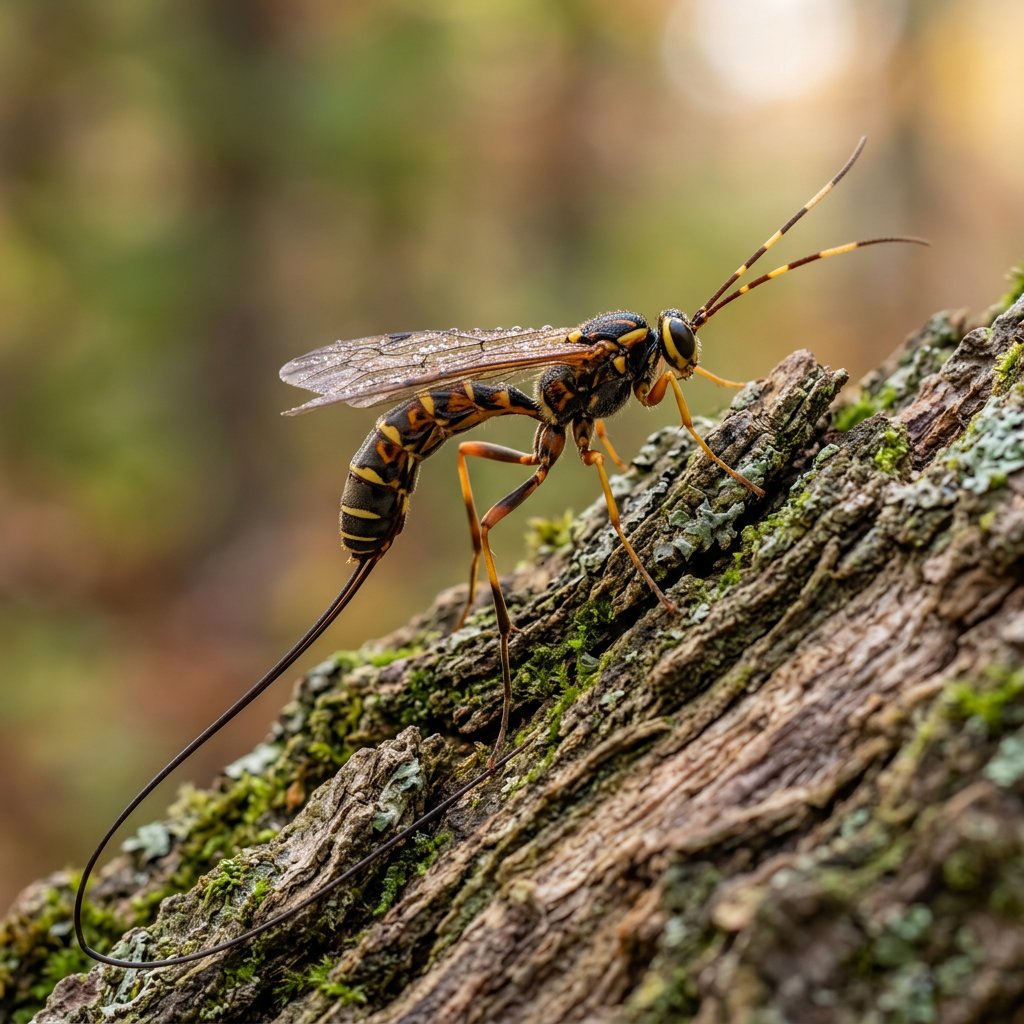
Meet the Long-Tailed Giant Ichneumon Wasp, a creature that looks like it flew straight out of a prehistoric jungle. Despite its intimidating size and the massive "stinger" trailing behind it, this insect is a harmless guardian of the forest. It is a specialized parasitoid, playing a crucial role in controlling wood-boring insect populations in North American woodlands.
🔍 How to Identify
- 🗡️ The "Tail": The most striking feature is the ovipositor, which can be up to 4 inches long—often twice the length of its actual body.
- 🎨 Body Patterning: A sleek, elongated body decorated with vibrant reddish-brown, yellow, and black stripes, making it look somewhat like a stretched-out hornet.
- 📏 Wingspan: It possesses long, translucent wings that produce a noticeable hum when it flies, usually near decaying logs or old hardwood trees.
🌲 Habitat & Ecology
- 🌳 Deadwood Detectives: You will almost always find them hovering around dead or dying deciduous trees (like Maple or Beech). They use their sensitive antennae to "listen" for the vibrations of larvae hidden deep inside the wood.
- 🎯 The Specialist: Their primary target is the larva of the Pigeon Tremex (a type of horntail). Once located, the female performs a feat of engineering, using her long tail to drill through solid wood and deposit an egg directly onto the hidden larva.
⚠️ Safety & Toxicity
- 🛡️ Status: Completely harmless to humans and pets.
- 🚫 The "Tail" Myth: While the ovipositor looks like a terrifying stinger, it is physically incapable of stinging a human. It is designed solely for drilling through wood and laying eggs. These wasps have no venom and are not aggressive.
✨ Fun Fact
The ovipositor of the Megarhyssa is actually composed of three separate filaments that slide against each other. To prevent the "drill" from breaking, the wasp’s body contains ionized manganese or zinc, effectively reinforcing its biological tools with metal to penetrate the toughest bark!
More Details








