Info
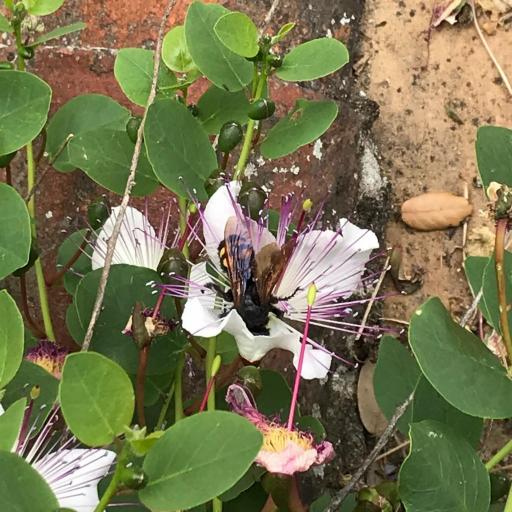
Known as the Mammoth Wasp, this massive insect is the largest wasp species in Europe. While its sheer size and deep, mechanical-sounding buzz can be intimidating, it is actually a "gentle giant" of the insect world. Often found hovering around decaying wood or summer blooms, it is a fascinating example of nature’s balance, acting as both a pollinator and a natural pest controller.
🔍 How to Identify
- 📏 Enormous Size: This is a true titan; females can reach up to 6 centimeters (nearly 2.5 inches) in length, making them significantly larger than any common hornet.
- 🎨 Vibrant Markings: Look for a sleek, hairy black body punctuated by four distinct, hairless yellow patches on the abdomen.
- 👑 The Head Test: You can easily tell the gender by looking at the face. Females have a bright yellow or orange head with short antennae, while males have a black head and much longer antennae.
🌲 Habitat & Ecology
- 🦋 Peaceful Pollinator: Despite their predatory appearance, adult Mammoth Wasps are vegetarians. They spend their days peacefully visiting large, nectar-rich flowers like Artichokes, Thistles, and Sea Holly.
- 🪲 The Beetle Hunter: This wasp has a very specific "job." The female digs through soil or rotting wood to find the larvae of the European Rhinoceros Beetle. She paralyzes the beetle grub with a sting and lays a single egg on it, which serves as a food source for her developing larva.
- ☀️ Sun Seekers: They are most active during the hottest parts of the day in mid-to-late summer, often seen in gardens, orchards, or edges of forests where dead wood is present.
⚠️ Safety & Toxicity
- 🛡️ Low Aggression: Unlike social wasps (like Yellowjackets) that defend a colony, the Mammoth Wasp is solitary. It has no nest to protect and is remarkably docile, generally ignoring humans unless it is stepped on or squeezed.
- 🩹 The Sting: While the female does possess a stinger, it is designed for paralyzing beetle larvae, not for defense. If a human is stung, the pain is typically milder than that of a common honeybee, though it may cause minor localized redness.
✨ Fun Fact
The Mammoth Wasp is so specialized that its population is directly tied to the presence of Rhinoceros Beetles. If you see these wasps in your area, it’s a biological "thumbs up" that your local environment has a healthy population of large, beneficial beetles!
More Details








