Info
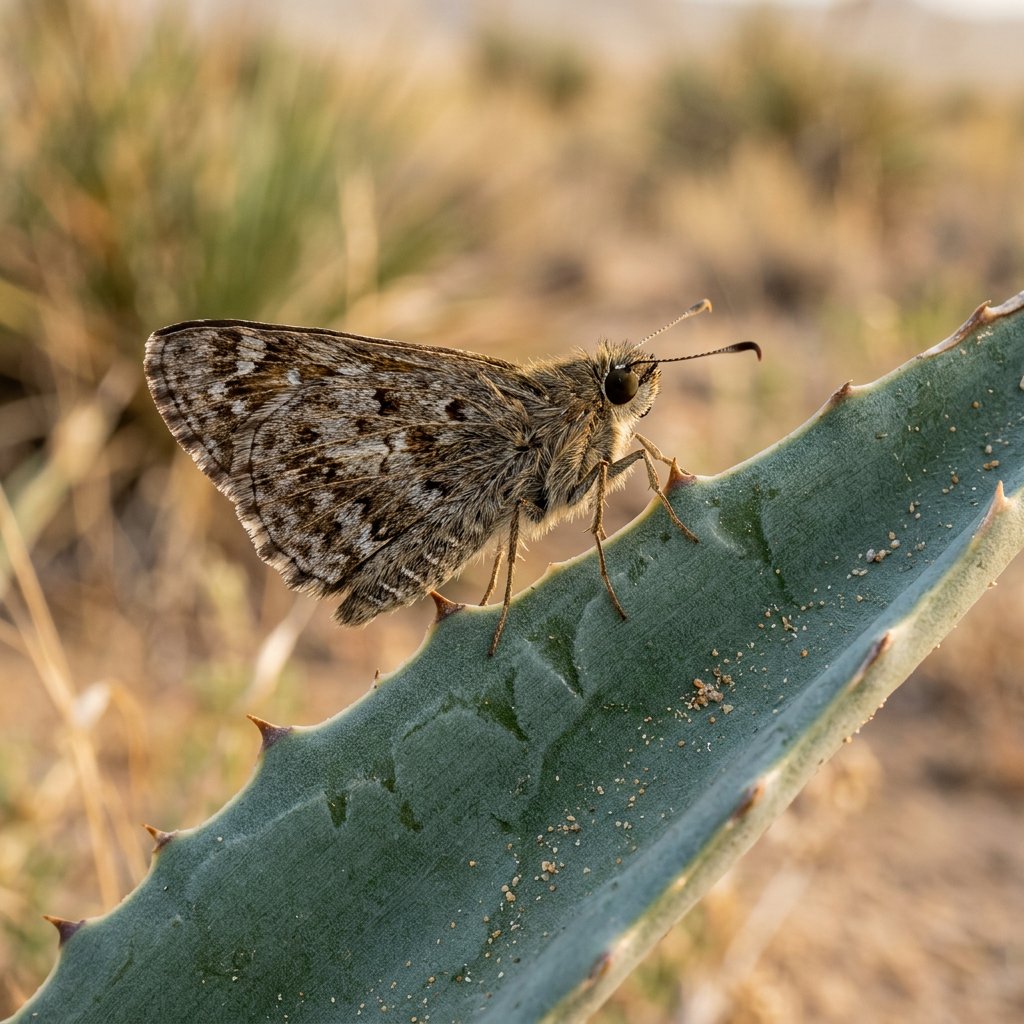
Often mistaken for a large moth due to its thick, muscular body and rapid, erratic flight, the Yucca Giant Skipper is actually a specialized butterfly. It is a desert-dwelling specialist that spends its entire life cycle tied to the iconic Yucca plant. Known for being one of the fastest flyers in the insect world, this "giant" is a fascinating example of evolutionary niche-filling in the American Southwest.
🔍 How to Identify
- 🦋 Robust Build: Unlike delicate garden butterflies, this species has a very thick, hairy, "chunky" body that is dark brown to black in color.
- 🟨 Wing Pattern: The wings are dark chocolate brown, featuring prominent creamy yellow or white spots near the outer edges and a large yellow patch on the forewings.
- 📐 Triangular Shape: When at rest, they often hold their wings in a "jet-plane" triangular shape, which helps them blend into the shadows of desert scrub.
🌵 Habitat & Ecology
- 🏠 The Yucca Connection: They are rarely found far from their host plants. The females lay eggs specifically on Yucca leaves; once hatched, the larvae bore into the plant’s heart and roots to feed.
- 🌬️ High-Speed Travelers: Adult Skippers are famous for their "skipping" flight. They move so quickly (sometimes over 30 mph) that they are often heard—a distinct whirring sound—before they are actually seen.
- 🕸️ Chimney Builders: As caterpillars, they create silk-lined tunnels deep within the Yucca. They even build a silk "chimney" at the entrance to prevent flooding and to keep predators out of their subterranean home.
⚠️ Safety & Toxicity
- ✅ Harmless Observer: Despite their intimidating size and "armored" look, Yucca Giant Skippers are completely harmless to humans and pets. They do not bite or sting.
- 🌱 Garden Impact: While they are a "foe" to the structural integrity of a prize Yucca plant, they rarely kill the host. They are a natural part of the desert ecosystem and are usually considered a sign of a healthy, biodiverse landscape.
✨ Fun Fact
Unlike most butterflies that spend their days sipping nectar from various flowers, the adult Yucca Giant Skipper has a very short lifespan and almost never feeds! They rely entirely on the fat reserves they built up as caterpillars.
More Details








