Info
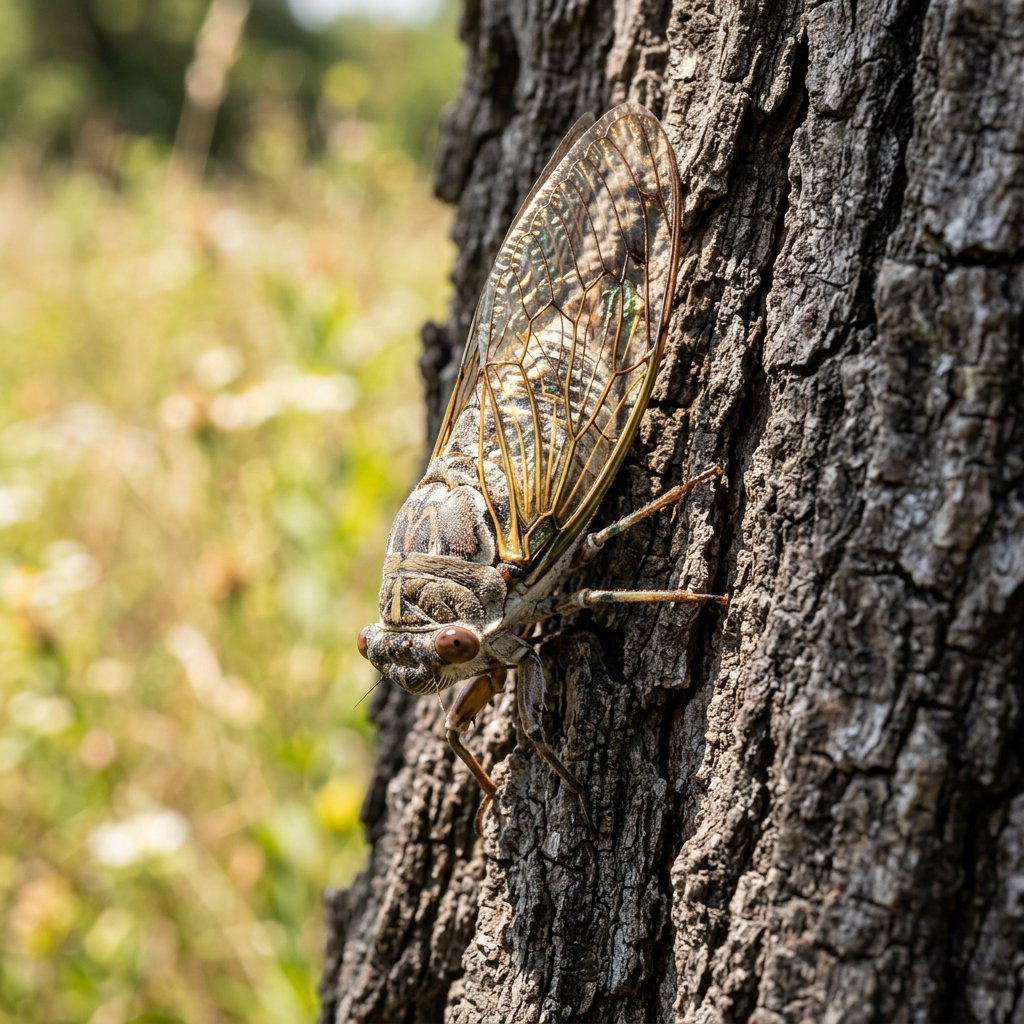
The Giant Grassland Cicada, often known by its scientific name Megatibicen dorsatus, is the booming soundtrack of the American prairie. Known for its impressive size and the "frosted" white patterns on its back, this insect is a harmless giant that signifies the peak of summer heat. While their loud, rhythmic buzzing can be startling, these insects are gentle giants of the tallgrass ecosystem.
🔍 How to Identify
- 🎨 The "Frosted" Look: One of its most striking features is the heavy white "pruinosity" (a flour-like dust) along the sides of the abdomen and thorax, contrasting against a dark brown or black body.
- 📏 Robust Size: These are among the larger cicada species, featuring a thick, heavy-set body and wings that can span significantly wider than their length.
- 🕸️ Transparent Wings: Their wings are clear with prominent green or brownish veins, held in a tent-like shape over their back when at rest.
- 🎭 Ornate Thorax: Look for intricate green, tan, or reddish-brown patterns on the "shield" behind the head, which often resemble a cryptic map or camouflage.
🌲 Habitat & Ecology
- 🌾 Prairie Dwellers: Unlike many cicadas that prefer dense forests, Megatibicen dorsatus thrives in grasslands, meadows, and areas where scattered trees meet the open prairie.
- 🎶 The Summer Drone: The males produce a loud, dry, oscillating buzz to attract females. They use specialized organs called "tymbals" located on their abdomen to create this iconic vibrating sound.
- 🌱 Subterranean Life: Before they emerge to sing, the nymphs live underground for several years, sipping sap from the roots of grasses and trees. They only emerge to transform into adults for a few weeks of sun and song.
⚠️ Safety & Toxicity
- 🛡️ Harmless Giant: Despite their large size and intimidating "buzz" when handled, they are completely non-toxic and do not bite or sting.
- 🐶 Pet Safety: They are safe for curious dogs or cats. While a pet might try to eat one, the crunchy exoskeleton is the only concern, as it can occasionally cause minor digestive upset if eaten in large quantities.
- 🌳 Garden Impact: They do very little damage to established plants. While females may slit small twigs to lay eggs, it is rarely enough to harm a healthy tree or shrub.
✨ Fun Fact
The white "powder" on their bodies isn't just for show—it is actually a type of wax that helps the cicada regulate its body temperature and prevent water loss during the scorching hot afternoons when they are most active!
More Details








