Info
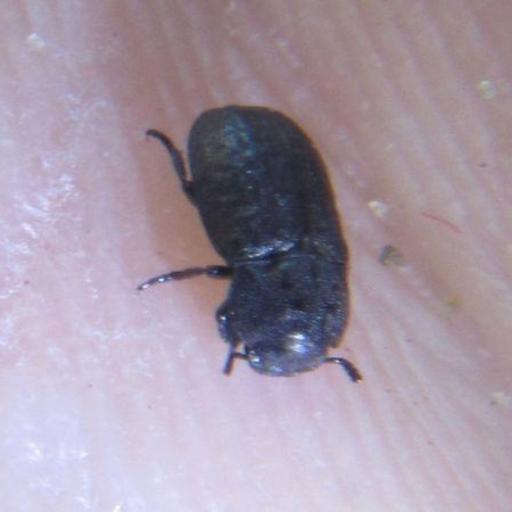
The Melanimon tibialis, often referred to as a "Sandy Darkling Beetle," is a master of camouflage in the sandy underworld. Small, dark, and incredibly hardy, this beetle is a vital recycler that thrives where other insects might struggle to find moisture. While it might look like a simple black bug at first glance, its specialized body is a marvel of evolutionary engineering for life in the dunes.
🔍 How to Identify
- 🪲 Body Shape: A compact, oval-shaped beetle, usually measuring between 3 to 4 millimeters. Its body is robust and slightly cylindrical.
- 🌑 Texture & Color: Deep matte black or very dark brown. If you look closely, the wing cases (elytra) have distinct rows of tiny pits or "punctures" that give it a rugged, non-reflective appearance.
- ⛏️ The "Shovel" Legs: Its name tibialis refers to its front legs (tibiae), which are noticeably widened and thickened. These act like miniature spades, perfectly adapted for digging through loose sand.
🌲 Habitat & Ecology
- 🏖️ Sand Specialist: This beetle is "psammophilous," meaning it is a sand-lover. You will rarely find it in heavy clay; instead, it populates coastal dunes, sandy heaths, and loose riverbanks.
- 🍂 The Tiny Janitor: As a scavenger, it plays a crucial role in its ecosystem. It feeds primarily on detritus—tiny fragments of decaying plant matter and organic debris hidden beneath the sand’s surface.
- ☁️ Subterranean Life: To avoid the drying heat of the sun, it spends much of its time buried just beneath the surface or hiding under the roots of beach grasses and leaf litter.
⚠️ Safety & Toxicity
- ✅ Harmless: The Melanimon tibialis is completely safe for humans and pets. It does not bite, sting, or carry any known diseases.
- 🛡️ Defense Mechanism: Like many darkling beetles, its primary defense is simply "playing dead" or relying on its tough exoskeleton and camouflage to blend into the shadows of the soil.
✨ Fun Fact
The widened front legs of this beetle are so effective that it can disappear beneath the sand in a matter of seconds if it senses a predator nearby, essentially "swimming" through the grains to safety!
More Details








