Info
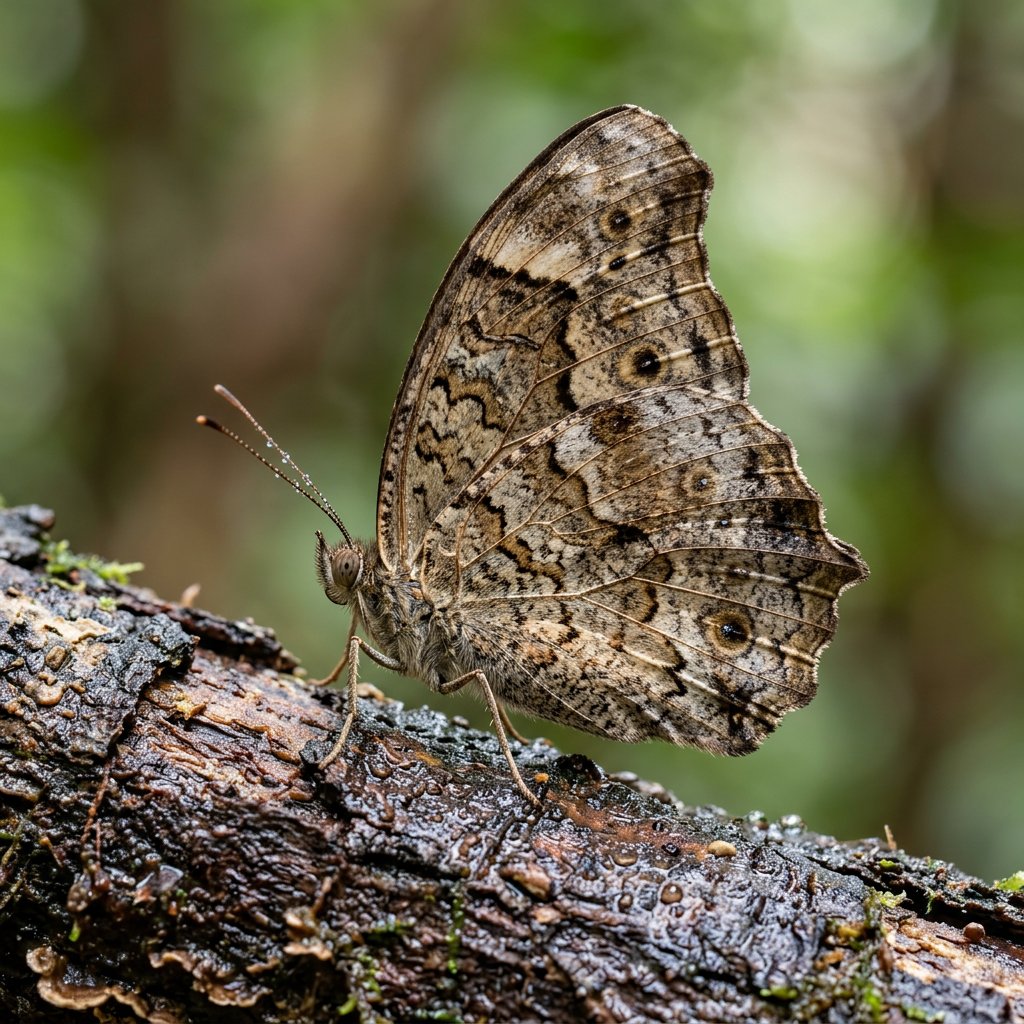
Known as the "Master of Disguise," the Dark Evening Brown is a ghost of the twilight hours. Unlike typical sun-loving butterflies, this species thrives in the shadows of dense forests and becomes most active just as the sun begins to set. Its incredible ability to mimic a withered leaf makes it nearly invisible to predators—and hikers—alike.
🔍 How to Identify
- 🍂 The Leaf Mimic: When its wings are closed, the underside looks exactly like a dead, brown leaf, complete with "veins," fungal-like spots, and jagged edges.
- 👁️ Hidden Eyespots: The upper side of the wings is a rich, velvety chocolate brown. In the "wet season" form, it displays striking orange-ringed eyespots designed to startle any bird that gets too close.
- 📐 Angular Silhouette: The forewings have a distinct "hooked" or falcate tip, which breaks up its outline and helps it blend into the forest floor debris.
🌲 Habitat & Ecology
- 🌑 The Night Owl: You won't find this butterfly visiting bright garden flowers in the midday heat. It is crepuscular, meaning it prefers the dim light of dawn and dusk, often resting in deep shade during the day.
- 🍎 A Different Diet: Instead of sipping flower nectar, the Dark Evening Brown prefers the "forest floor buffet." It feeds primarily on fermenting fallen fruit, oozing tree sap, and occasionally nutrients from damp soil.
- 🎋 Bamboo Dweller: Their caterpillars are specialized feeders, usually found munching on various grasses and bamboo. They are masters of stealth themselves, being bright green and perfectly shaped to look like a blade of grass.
⚠️ Safety & Toxicity
- 🛡️ Harmless Friend: The Dark Evening Brown is completely non-toxic and possesses no sting or bite. It is a "friend" to the garden and a fascinating subject for photography.
- 🐾 Pet & Child Safe: Because they do not produce toxins, they pose no threat to curious pets or children. Their only defense is their incredible camouflage and erratic, "jerky" flight pattern used to confuse predators.
✨ Fun Fact
This butterfly is a "seasonal shapeshifter." Depending on whether it hatches in the wet or dry season, its appearance changes drastically. The dry-season form is larger and better at leaf-mimicry, while the wet-season form has much larger eyespots to distract active predators during the humid months!
More Details








