Info
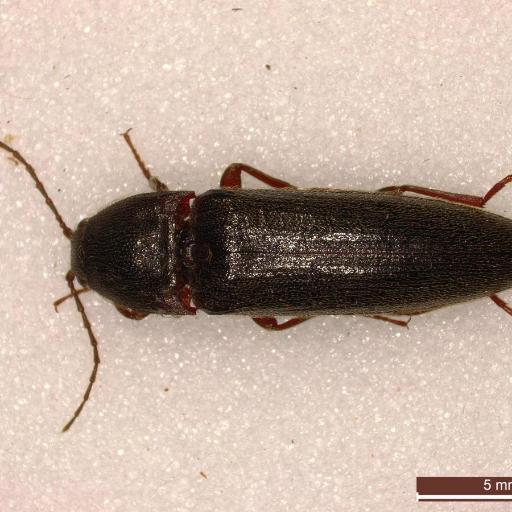
Known as the Hairy Click Beetle, Melanotus villosus is a marvel of biological engineering. This sleek, dark-colored beetle is famous for its "built-in spring" that allows it to launch itself into the air with a distinct clicking sound. While they might look like plain brown beetles at first glance, they are the acrobats of the undergrowth, using their unique anatomy to escape predators or flip themselves upright.
🔍 How to Identify
- 🪲 Body Shape: It has an elongated, bullet-shaped body that is typical of the Elateridae family, tapering slightly toward the rear.
- 🧥 Hairy Texture: As the name villosus suggests, its dark brown or black exoskeleton is covered in very fine, short, yellowish-grey hairs, giving it a slightly matte or "dusty" appearance.
- 📡 Serrated Antennae: It features relatively long, saw-toothed (serrate) antennae that it uses to navigate and find mates in the dark.
- ⚙️ The Prosternal Spine: If you look closely at its underside, you can see a "peg" that fits into a "socket," which is the mechanism responsible for its famous jumping "click."
🌲 Habitat & Ecology
- 🪵 Woodland Dweller: This beetle is a forest fan. You will most likely find adults resting on the bark of ancient trees, especially Oak, Beech, and Pine, or hiding under loose bark during the day.
- 🍂 The Wireworm Phase: Before becoming a beetle, the larvae—known as "wireworms"—live for several years in rotting wood or soil. They play a vital role in the ecosystem by breaking down decaying timber and recycling nutrients back into the earth.
- 🌙 Night Owl: Adults are primarily nocturnal and are frequently attracted to artificial lights, which is how they often end up wandering into homes or onto porches.
⚠️ Safety & Toxicity
- ✅ Harmless Guest: The Hairy Click Beetle is entirely harmless to humans. They do not possess a stinger, and their mandibles are far too weak to pierce human skin.
- 🛡️ Startle Response: The only "scary" thing about them is the sudden snap sound they make. This is a defensive move intended to startle a bird or lizard into dropping them, not an attack.
- 🐶 Pet Safety: They are non-toxic to cats and dogs, though the hard shell might make for a crunchy (and confusing) snack.
✨ Fun Fact
The "click" of a click beetle is one of the fastest movements in the animal kingdom! When the beetle releases its internal spring, it can experience a force of up to 400Gs—that’s over 40 times the acceleration a fighter pilot experiences during a high-speed maneuver.
More Details








