Info
Often called the "Jewels of the Maya," the Melipona are the world’s most famous stingless bees. For centuries, they have been revered as sacred messengers in Central and South America, producing a rare, runny honey that tastes more like a citrus elixir than a typical sweetener. Unlike their common honeybee cousins, they have traded their stingers for a much gentler way of life.
🔍 How to Identify
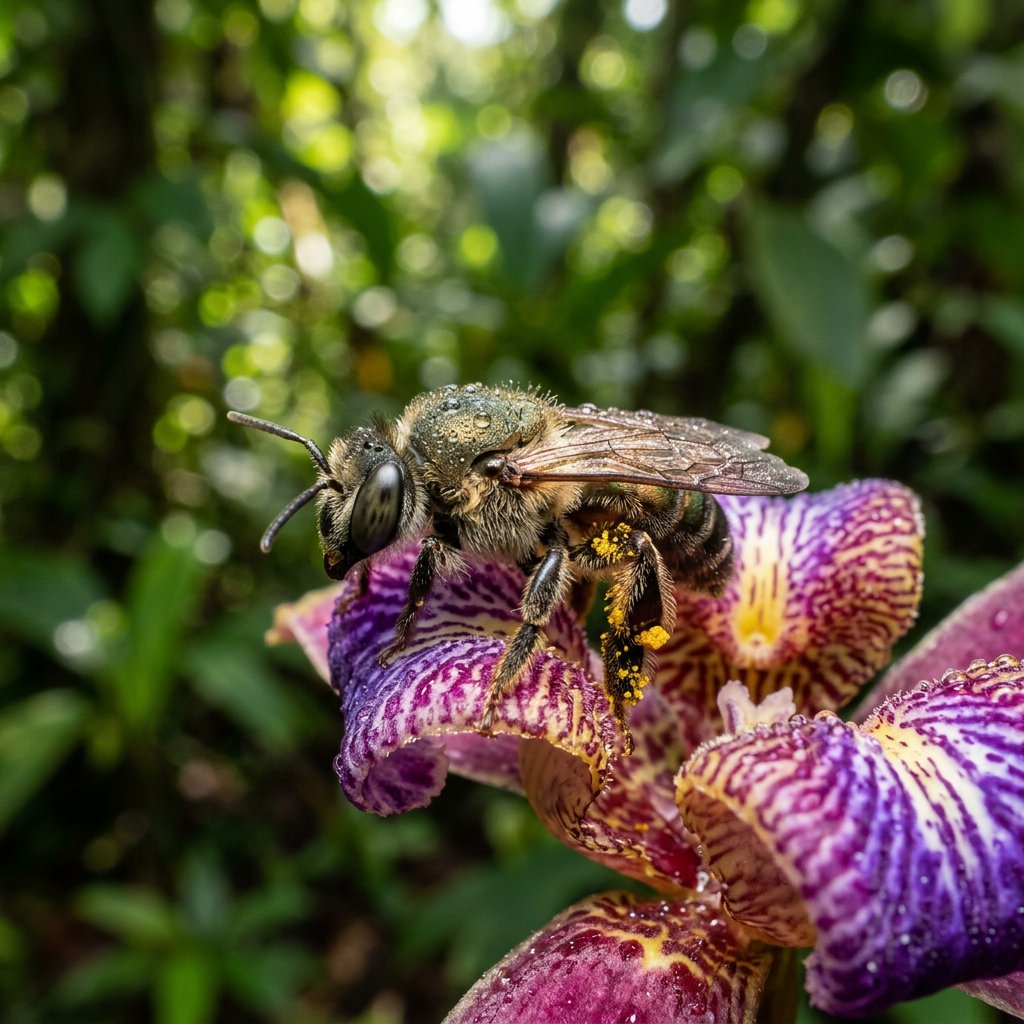
- 🐝 Compact Build: These bees are generally smaller and more robust than European honeybees, often appearing "stocky" or somewhat rounded in flight.
- 👀 Soulful Eyes: Many species feature large, prominent eyes and subtle metallic highlights or golden hairs on their thorax.
- 🚫 Missing Stinger: If you look closely at the abdomen, you will notice the absence of a pointed stinger; the rear end is blunt and harmless.
🌲 Habitat & Ecology
- 🏺 Sacred Nests: In the wild, they prefer the hollows of ancient tropical trees. In traditional Mayan culture, they are kept in horizontal hollow logs called jobones, sealed at the ends with clay.
- 🌺 The Vanilla Connection: They are specialized pollinators for many tropical orchids and fruits. Before humans learned to pollinate vanilla by hand, these bees were the primary workers responsible for your favorite spice.
- 🍯 Wax Pots: Unlike common bees that use hexagonal combs, Melipona build small, grape-like wax pots to store their honey and pollen, which gives their honey its unique, fermented flavor profile.
⚠️ Safety & Toxicity
- 🛡️ Completely Stingless: These bees are physically incapable of stinging. They are one of the safest insects to observe closely in a garden or forest setting.
- 🦷 Defensive "Nipper": While they can’t sting, they aren't totally defenseless. If you disturb their nest, they may swarm and "bite" with tiny mandibles or crawl into your hair and ears to annoy you into leaving.
- 🐾 Pet & Kid Safe: Because they lack a venomous sting, they pose zero risk to curious pets or children, making them the ultimate "friendly" bee.
✨ Fun Fact
The ancient Mayans held a massive festival twice a year to honor the god Ah-Muzen-Cab (the Bee God). They believed the bees were a gift from the heavens, and to this day, some traditional keepers still "whisper" news of the family to the hives to keep the bees happy.
More Details








