Info
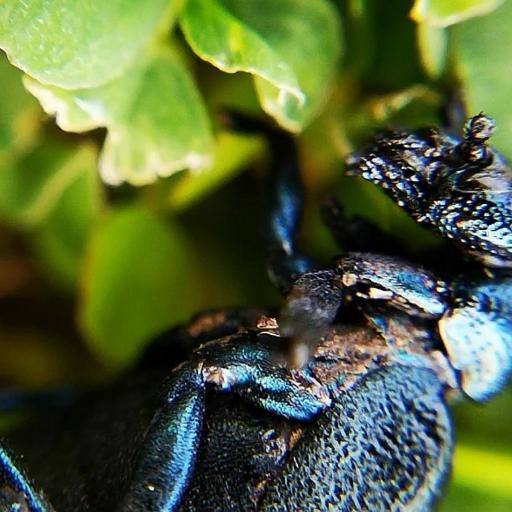
Known as the Black Oil Beetle, this curious creature looks like it is wearing a coat two sizes too small. Often found ambling through sunny meadows or along coastal paths in the spring, it is famous for the "oily" substance it secretes when it feels threatened. While it might look like a giant, flightless ant, it is actually a vital indicator of a healthy, bee-rich ecosystem.
🔍 How to Identify
- 🖤 The "Short" Wings: Unlike most beetles, its wing cases (elytra) are very short and overlap at the base, leaving the large, segmented abdomen completely exposed.
- 🌑 Color & Texture: It has a deep, matte black body that often shimmers with a subtle violet or royal blue iridescence when caught in the sunlight.
- 🐜 Body Shape: Females have massive, bloated abdomens—especially when full of eggs—which they drag slowly along the ground, making them appear quite clumsy.
🌲 Habitat & Ecology
- 🌼 The Bee Connection: These beetles have one of the most complex life cycles in the insect world. Their larvae, called triungulins, climb onto flowers and hitch a ride on solitary bees to get into their nests, where they feast on the bee's eggs and pollen stores.
- 🌱 Herbivorous Adults: While the babies are nest-raiders, the adults are gentle herbivores. You will often find them munching on soft grasses, buttercups, or even dandelion leaves in wildflower meadows.
⚠️ Safety & Toxicity
- 🧴 Chemical Defense: If you pick one up or disturb it, the beetle will "reflex bleed," oozing a foul-smelling, yellow oily liquid from its joints.
- 🚫 Blistering Agent: This oil contains cantharidin, a potent chemical that can cause painful skin blistering and irritation. It is best to observe these beetles with your eyes, not your hands.
- 🐾 Pet Safety: Keep curious dogs away; ingesting these beetles can cause significant mouth irritation or digestive distress due to the cantharidin.
✨ Fun Fact
The Black Oil Beetle is a master of the "long game." A single female can lay up to 40,000 eggs in the soil, hoping that at least a few of the tiny larvae will successfully hitch a ride on the specific species of bee they need to survive!
More Details








