Info
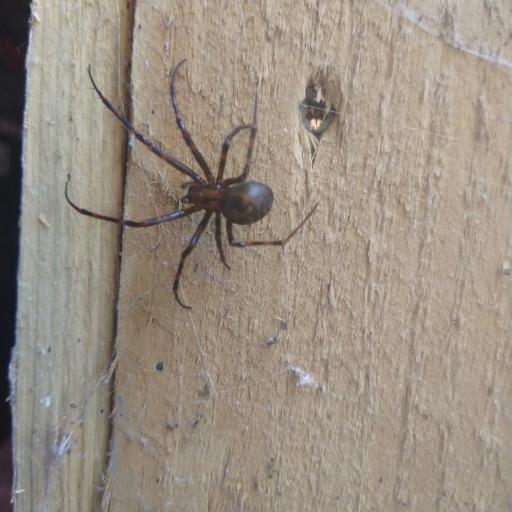
Often called the European Cave Spider, Meta menardi is the "gentle giant" of the underworld. These impressive arachnids are the architects of the shadows, preferring the permanent dampness of caves, old railway tunnels, and Victorian-era cellars. While their size and preference for darkness can be intimidating, they are fascinating creatures that play a vital role in controlling the population of woodlice and beetles in hidden ecosystems.
🔍 How to Identify
- 🕷️ Glistening Body: They possess a remarkably shiny, "greasy" appearance. The cephalothorax (head section) is typically a reddish-brown, while the abdomen varies from olive-brown to dark mahogany with blackish markings.
- 🦵 Banded Legs: Their legs are long, robust, and prominently ringed with dark bands, giving them a striped appearance that helps them blend into rocky crevices.
- 🧶 Silk Lanterns: One of the most distinct identifiers isn't the spider itself, but its egg sac. These large, teardrop-shaped white silk cocoons hang from the ceiling like miniature lanterns.
🌲 Habitat & Ecology
- 🔦 Photophobic Nature: These spiders are strictly photophobic, meaning they actively avoid light. You will rarely find them in open gardens; they stick to the "twilight zone" of entrances to underground spaces where the temperature is stable.
- 🕸️ Ambush Tactics: Unlike garden spiders that weave intricate vertical webs, the Cave Spider creates a small, horizontal orb web. They often hang upside down on the walls, waiting for crawling insects like woodlice or moths to stumble into their reach.
⚠️ Safety & Toxicity
- 🛡️ Non-Aggressive: Despite their formidable size (a leg span of up to 5cm), they are incredibly shy and will usually retreat into a crack if disturbed by a flashlight.
- 🐝 The Bite: While they are capable of biting if handled roughly or squeezed, their venom is not medically significant. A bite is generally described as being similar to a mild bee sting, causing localized redness and minor swelling.
- 🐾 Pet Safety: They pose no real threat to cats or dogs, though curious pets might get a "pinch" if they corner one in a basement.
✨ Fun Fact
The European Cave Spider was famously the "Spook of the Year" in 2012 (European Spider of the Year). Interestingly, the spiderlings are actually attracted to light when they first hatch—this "glitch" in their DNA forces them to leave their dark birth cave to find new habitats before their adult instinct to hide from the sun kicks in!
More Details








