Info
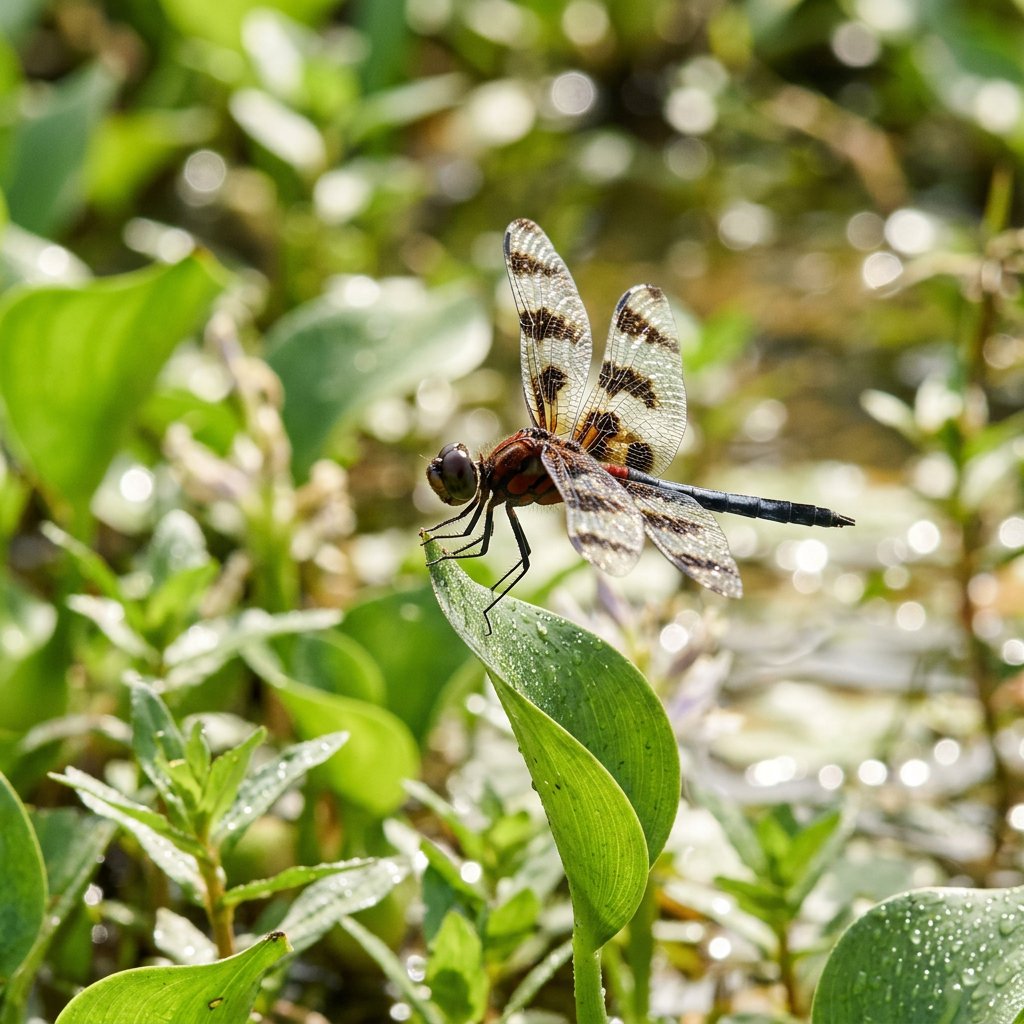
Known as the Hyacinth Glider, this golden-bronze dragonfly is a master of the breeze. It earns its name from its favorite resting spot: the floating leaves of Water Hyacinth. Often found darting over ponds and canals across the Americas, it is a graceful aerial acrobat that brings a touch of metallic shimmer to any waterside garden.
🔍 How to Identify
- 🪽 Wing Patches: The most reliable giveaway is the pair of dark, reddish-brown "saddlebags" at the very base of its broad hindwings.
- 🎨 Golden Bronze: Its body is usually a warm golden-brown or bronze color, which can appear almost metallic or "rusty" depending on how the sun hits its abdomen.
- 📐 The Perch: Look for them clinging to the tips of vertical reeds or floating stems; they often sit at a distinct angle rather than lying flat against a surface.
🌲 Habitat & Ecology
- 🌊 Hyacinth Specialist: These dragonflies are rarely found far from still or slow-moving water. They have a specific biological preference for floating vegetation like Water Hyacinth or Water Lettuce, where they lay their eggs.
- 🦟 Mosquito Control: Like all dragonflies, the Hyacinth Glider is a gardener’s best friend. They are voracious predators of "nuisance" insects, catching mosquitoes, gnats, and small flies mid-air.
- 🌬️ Effortless Gliding: Unlike many smaller dragonflies that flutter constantly, this species uses its broad hindwings to catch wind currents, allowing it to hang nearly motionless in the air while scanning for prey.
⚠️ Safety & Toxicity
- ✅ Completely Safe: The Hyacinth Glider is a "friend" to humans. It does not sting, and it is not venomous.
- 🛡️ Non-Aggressive: While its speed can be intimidating, it has no interest in people or pets. It does not carry diseases and is a sign of a healthy aquatic ecosystem.
✨ Fun Fact
The Hyacinth Glider is a true "hitchhiker" of the insect world. Because its larvae live among the hanging root systems of floating plants, the species has successfully expanded its territory across entire continents by simply drifting downriver with the vegetation!
More Details








