Info
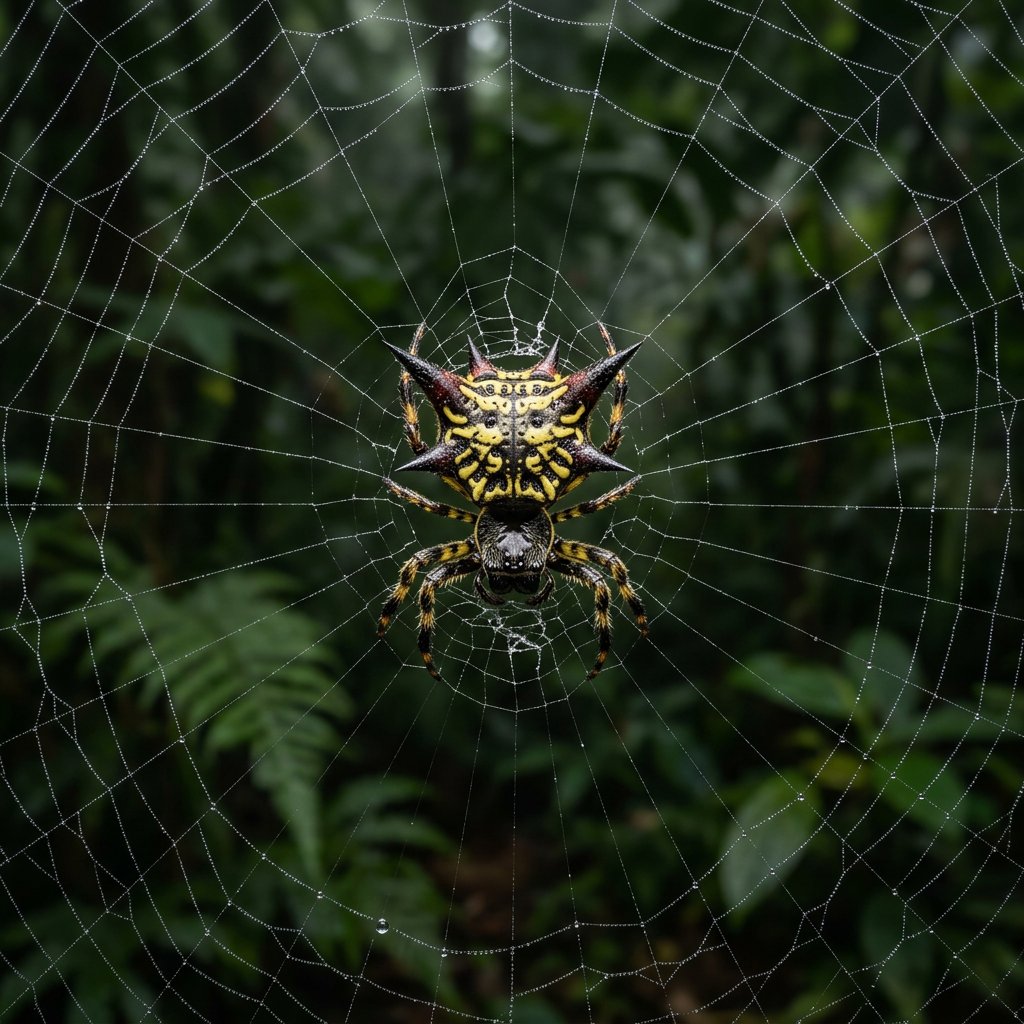
Often called the Spiny Orb-weaver or the Long-spined Micrathena, this spider looks like a tiny piece of geometric armor suspended in mid-air. With its bizarre, crown-like spikes and bright colors, it appears more like a decorative jewel than a predator. While its "thorny" appearance might look intimidating to a hiker walking through the woods, this spider is a peaceful forest architect that provides excellent pest control.
🔍 How to Identify
- 📍 The Six Spines: Its most striking feature is the six sharp, black-tipped spines protruding from a hardened, shell-like abdomen. Two small spines point forward, two point sideways, and two large ones flare out from the rear.
- 🎨 Vibrant Contrast: The abdomen is typically a bright sulfur-yellow or creamy white, marked with intricate black or dark brown spots and ridges.
- 🕷️ Elongated Form: Unlike the common garden spider which is often round, Micrathena sexspinosa has a distinctively long, boxy body shape that helps it blend into forest debris.
🌲 Habitat & Ecology
- 🕸️ Eye-Level Webs: These spiders are famous for building large, circular (orb) webs across forest paths, often right at eye level. They prefer the shaded understory of humid forests and dense gardens.
- 🪰 The Fly-Catcher: They are highly beneficial "friends" to humans. Their diet consists almost entirely of small flying insects like gnats, mosquitoes, and flies that get tangled in their sticky, vertical webs.
- ☀️ Daylight Hunters: Unlike many spiders that hide until dusk, the Spined Micrathena is diurnal. You will often see the female sitting proudly in the very center of her web during the heat of the day.
⚠️ Safety & Toxicity
- 🛡️ Harmless Armor: Despite the "scary" spikes, this spider is not aggressive. The spines are a passive defense mechanism intended to make the spider a painful, unswallowing meal for birds and lizards.
- 🐝 Low Medical Risk: Their venom is very weak and is not considered dangerous to humans or pets. If handled roughly, they might bite, but the sensation is usually less painful than a bee sting and results only in minor, temporary redness.
✨ Fun Fact
The "Six-Spined Micrathena" is a master of heavy-duty silk; their webs are remarkably strong for their size. Scientists have observed that the female often leaves a "trapdoor" or a gap in the center of the web so she can quickly dive to the forest floor if a predator approaches!
More Details








