Info
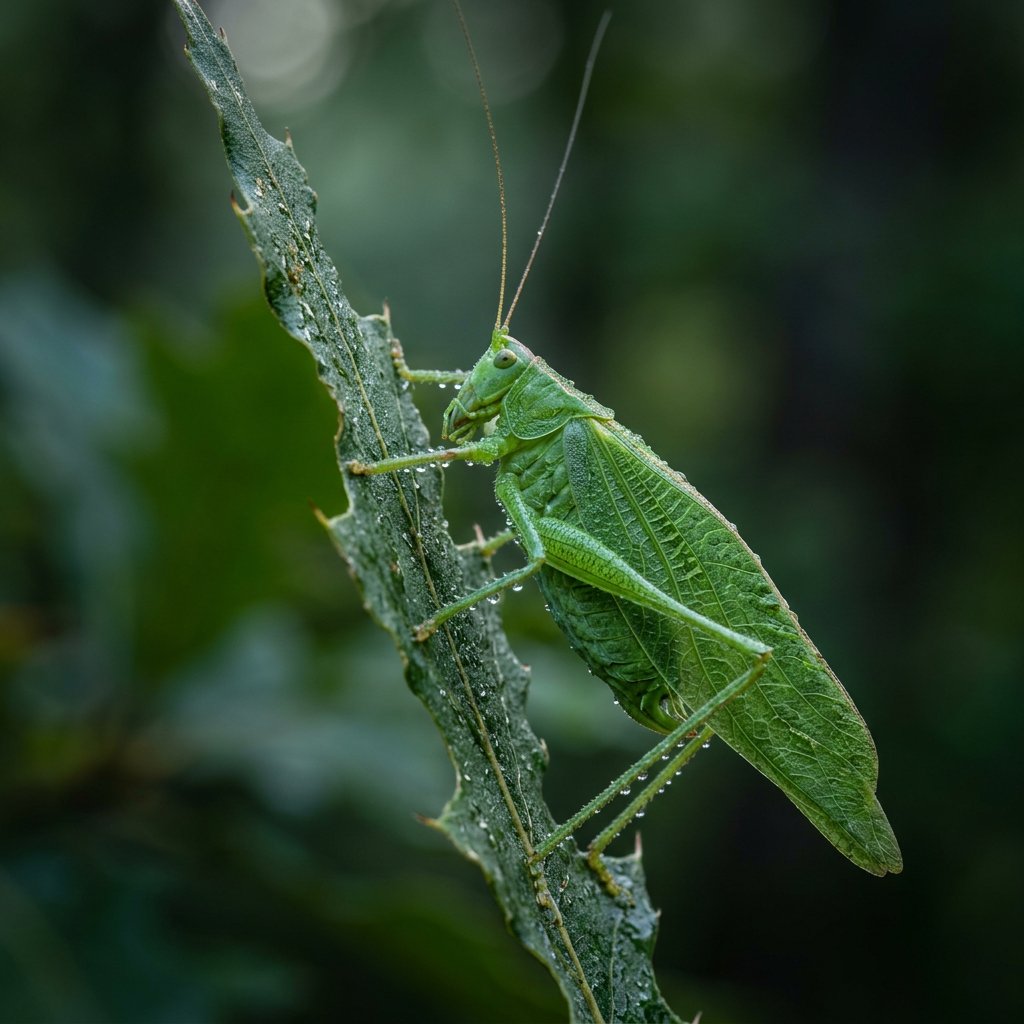
Often called the Greater Angle-wing Katydid, this insect is a true master of camouflage, masquerading as a fresh green leaf to hide from hungry birds. It is a gentle giant of the nocturnal world, known more for its rhythmic "ticking" songs than its visibility. Finding one in your garden is usually a treat, as they are iconic symbols of the height of summer and autumn.
🔍 How to Identify
- 🍃 Wing Mimicry: Their forewings are broad, flat, and leaf-shaped, featuring a complex network of "veins" that perfectly mimic the texture of a real leaf.
- 📏 Stature: They are relatively large insects, often reaching over 2 inches in length, with a vibrant, lime-green body that blends seamlessly with foliage.
- 🧵 Long Antennae: Unlike grasshoppers, katydids possess incredibly long, hair-thin antennae that often exceed the length of their entire body.
🌲 Habitat & Ecology
- 🌳 High-Rise Living: They prefer the canopy of deciduous trees and tall shrubs, such as Oak, Citrus, and Maple, where they spend their days perfectly still to avoid predators.
- 🎶 The Night Choir: Males produce a sharp, mechanical "tic-tic-tic" sound by rubbing their wings together (stridulation) to signal to females during the evening hours.
- 🍽️ Dietary Habits: While they are herbivores that munch on leaves, they are solitary and rarely appear in high enough numbers to cause significant damage to garden plants.
⚠️ Safety & Toxicity
- ✅ Harmless Neighbor: The Greater Angle-wing Katydid is completely non-toxic and lacks a stinger, making it safe to have around children and pets.
- 🤏 Gentle Handling: While they are docile, if they are squeezed or handled very roughly, they may deliver a small, harmless "nip" with their mandibles. They would much rather use their powerful back legs to jump away.
✨ Fun Fact
👂 Leg Ears: Katydids don’t hear with their heads! Their ears (called tympana) are actually located on their front legs, just below the "knees," allowing them to "listen" by waving their legs to catch sound vibrations.
More Details








