Info
Often called the Southern Harvester Termite, these busy insects are the architects of the African landscape. Unlike the termites that quietly devour your house's floorboards, these foragers are more like "nature’s lawnmowers," spending their lives harvesting grass and seeds to store in their complex underground granaries.
🔍 How to Identify
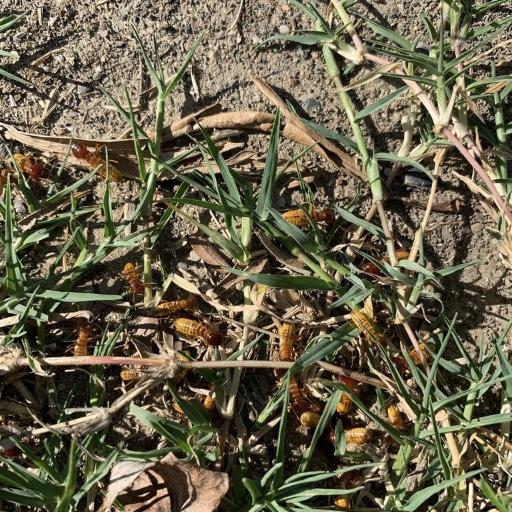
- 🏰 The Soldiers: Easily recognized by their disproportionately large, bulbous orange-brown heads and dark, curved mandibles used for defense.
- 🐜 The Workers: These have soft, creamy-white to greyish bodies and are the ones you’ll most likely see out in the open, carrying bits of dry vegetation.
- 🪽 The Alates: During the rainy season, winged "kings and queens" emerge; they have dark, elongated bodies and four smoky-grey wings that they shed shortly after landing.
🌲 Habitat & Ecology
- 🌾 Grass Harvesters: Their primary role is ecological recycling. They collect dead grass and plant litter from the surface, dragging it into their mounds to feed the colony. This makes them vital for soil aeration and nutrient cycling.
- 🏜️ Heuweltjies (Earth Mounds): In certain regions, their activity creates massive, fertile circular mounds known as "heuweltjies." These patches of nutrient-rich soil often support different plant life than the surrounding desert, creating a "leopard spot" pattern visible from space.
- ☀️ Daytime Foraging: Unlike many termite species that hide from the sun, the Southern Harvester is often active during the day, especially when the weather is mild, popping out of small "foraging holes" in the ground.
⚠️ Safety & Toxicity
- 🛡️ Non-Toxic: These insects do not possess any venom or stings. They are completely harmless to humans and pets in terms of toxicity.
- 👄 Mechanical Bites: The soldier caste can deliver a sharp, mechanical pinch with their mandibles if you poke at them, but it is a simple defensive move and not dangerous.
- 🏡 Garden Impact: While they won't eat your house, they can be a nuisance in a well-manicured garden or lawn, where they may create bare patches by "harvesting" your grass.
✨ Fun Fact
Carbon dating has revealed that some of the "heuweltjies" (mounds) inhabited by Microhodotermes viator in South Africa have been continuously occupied for over 30,000 years, making them some of the oldest active biological structures on the planet!
More Details








