Info
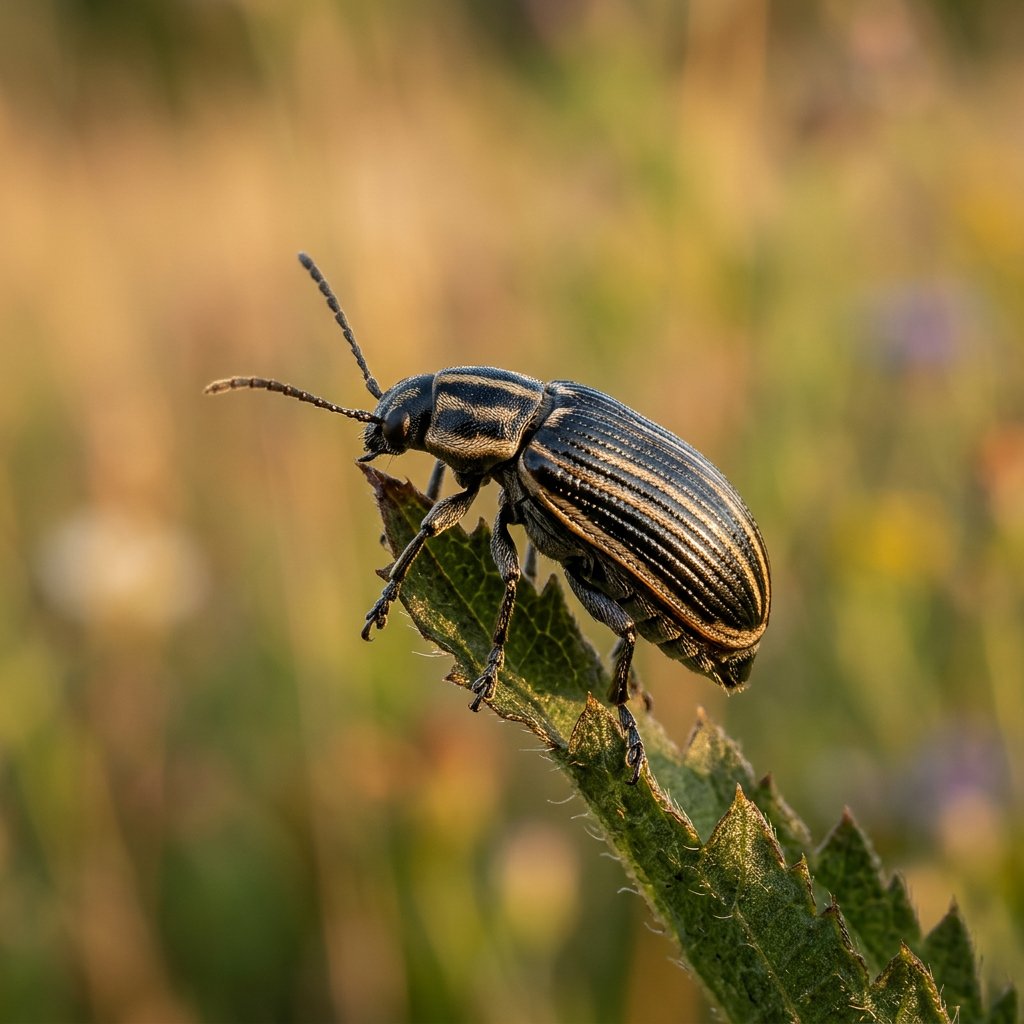
Often called the Pitted Leaf-mining Beetles, the Microrhopala are tiny, rectangular architects of the meadow. While they might look like miniature armored tanks, they are mostly famous for the intricate "mines" or tunnels their larvae carve inside the leaves of wildflowers. If you spot a goldenrod plant with strange brown blotches, you might just have found the nursery of this fascinating beetle.
🔍 How to Identify
- 🪲 The "Golf Ball" Texture: Their wing covers (elytra) are covered in deep, organized pits or punctures, giving them a rugged, non-reflective appearance compared to other shiny beetles.
- 🎨 Bold Coloration: Most species are a striking combination of deep black or metallic blue, often accented with vibrant red or orange stripes running down the sides of their bodies.
- 📏 Rectangular Frame: Unlike the round, dome-shaped ladybugs, these beetles have a distinctly elongated and flattened shape, which helps them maneuver through dense foliage.
🌲 Habitat & Ecology
- 🌻 Host Plant Specialists: These beetles are most commonly found in open fields, prairies, and gardens where Goldenrod (Solidago) or Asters grow. They are highly specialized and rarely wander far from their favorite food sources.
- 🏠 Inside the Leaf: Unlike many insects that eat the outside of a plant, Microrhopala larvae live between the upper and lower layers of a single leaf. This "leaf mining" behavior protects them from predators and harsh weather while they feast on the plant's internal tissues.
- 🍂 Lifecycle: Adults typically emerge in late spring or summer to mate and lay eggs directly onto the leaves, ensuring their young have an immediate meal upon hatching.
⚠️ Safety & Toxicity
- 🛡️ Status: Completely harmless to humans and pets.
- 👄 Biting/Stinging: They do not possess a stinger and their mandibles are far too small to bite humans. They rely on their tough, pitted shells and camouflage for protection.
- 🌱 Garden Impact: While they are technically a "pest" because they consume leaf tissue, they rarely cause enough damage to kill a plant. They are a natural part of the meadow ecosystem and usually don't require chemical intervention.
✨ Fun Fact
The Microrhopala larvae are so thin and specialized for their "mining" lifestyle that their entire bodies are flattened like a pancake, allowing them to live comfortably in a space thinner than a piece of cardboard!
More Details








