Info
Often called Sack-bearer Moths, members of the Mimallonidae family are the master architects of the insect world. These moths are famous not for their adult beauty, but for their industrious larvae, which construct elaborate portable "houses" out of silk and leaf fragments. They are the ultimate survivalists, blending perfectly into the forest floor or tree bark as if they were nothing more than a stray bit of dried foliage.
🔍 How to Identify
- 🏠 The Portable Case: In their larval stage, they are found inside a tough, silk-lined tube or "sack" covered in bits of leaves. If you see a small bundle of debris moving on a branch, it’s likely a Sack-bearer.
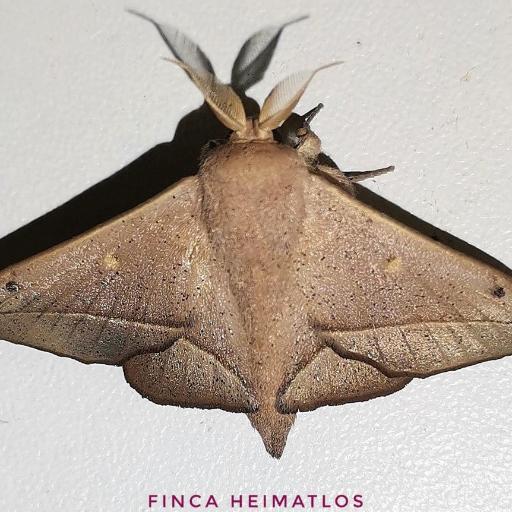
- 🍂 Dead-Leaf Mimicry: Adult moths are usually shades of brown, tan, or gray with fine, dark lines running across their wings. This helps them disappear against dead leaves and bark.
- 📐 Unique Wing Posture: When resting, adults often hold their wings in a distinctive roof-like shape, sometimes with the edges of their wings slightly scalloped or hooked, mimicking a torn leaf.
🌲 Habitat & Ecology
- 🍃 Selective Eaters: The larvae are herbivores that specialize in specific host plants, often feeding on oaks, guavas, or melastomes depending on the region. They are rarely considered pests, as they don't usually appear in high enough numbers to damage a garden.
- 🛠️ Engineering Marvels: The caterpillar spends its entire life inside its sack, only poking its head out to eat or move. As it grows, it simply "adds a room" to its home by expanding the silk tube with new material.
⚠️ Safety & Toxicity
- ✅ Status: Harmless Neighbor.
- 🧤 Details: Mimallonidae moths and caterpillars do not bite or sting. While they are safe to observe, it is generally best not to handle the caterpillars with bare hands, as the fine hairs of many moth larvae can occasionally cause mild skin irritation for sensitive individuals.
✨ Fun Fact
Unlike many other moths, adult Sack-bearers have no functional mouthparts. They do all their eating as caterpillars and live their entire adult lives on the energy they stored as youngsters, focusing entirely on finding a mate.
More Details








