Info
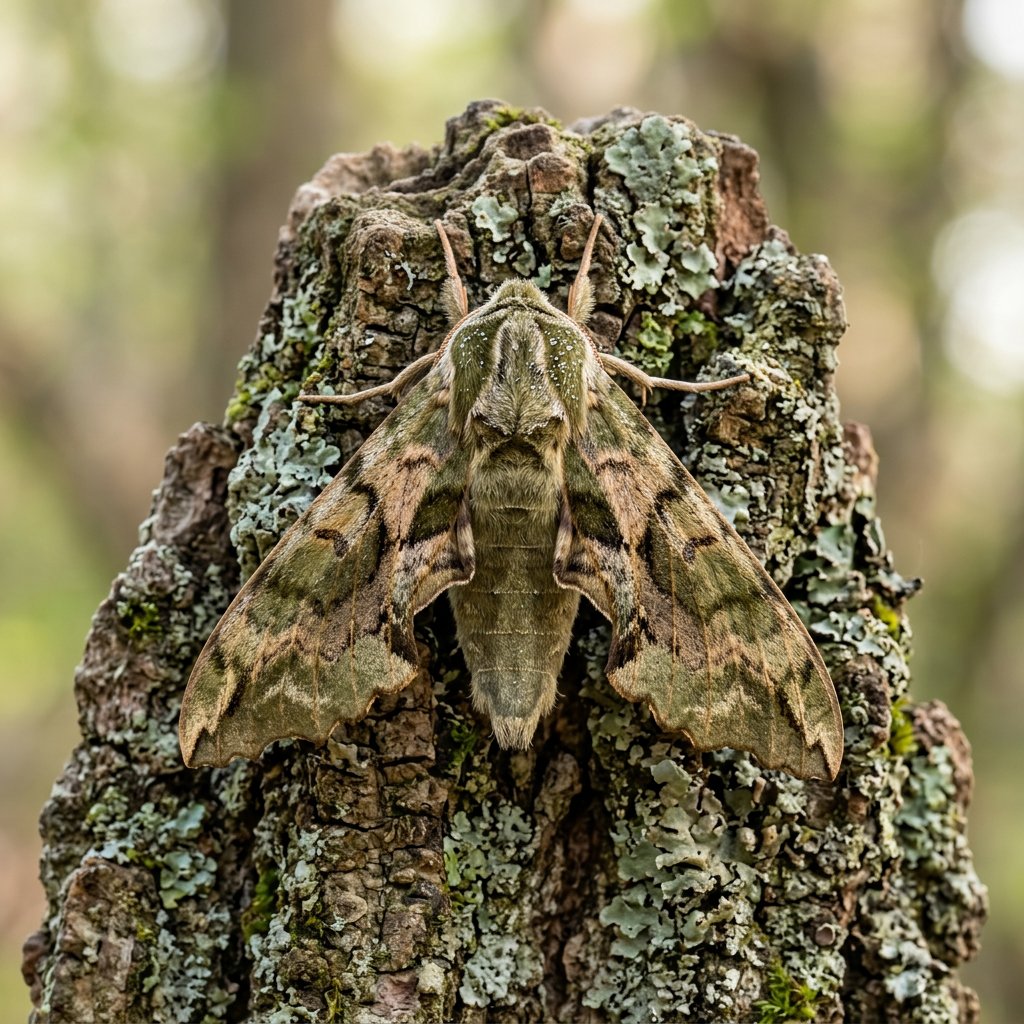
Often called the Lime Hawk-moth, Mimas tiliae is a true master of disguise, frequently mistaken for a stray, jagged leaf clinging to a tree trunk. With its elegant, scalloped wing edges and rich palette of mossy greens and earthy browns, it is one of the most sophisticated-looking moths you might encounter in a suburban garden or woodland edge.
🔍 How to Identify
- 🦋 The Wings: Features highly distinctive "scalloped" or jagged edges, unlike the smooth lines of most other moths.
- 🎨 Color Variation: Typically displays olive-green bands on a paler background, though individuals range from pinkish-buff to deep chocolate brown to blend with local foliage.
- 🐛 The Caterpillar: A stout, lime-green larva with yellow diagonal stripes and a signature blue or purple "horn" at the rear.
🌲 Habitat & Ecology
- 🌳 The Namesake Tree: As the name suggests, they are almost always found near Lime (Linden) trees, though they occasionally visit Birch, Alder, or Elm.
- 🌙 The Short Life of an Adult: Remarkably, the adult moths do not have functioning mouthparts. They cannot eat or drink; they live for only a few weeks on energy stored from their caterpillar phase, focusing entirely on finding a mate.
- 🍂 Metamorphosis: When the caterpillar is ready to become a moth, it changes from bright green to a dull purplish-brown before trekking down the tree trunk to pupate in the soil below.
⚠️ Safety & Toxicity
- ✅ Status: Completely harmless to humans and pets.
- 🛡️ Gentle Giants: Despite their large size and the "scary" horn on the caterpillar’s tail, they possess no sting, venom, or biting mandibles. They rely entirely on camouflage for protection.
✨ Fun Fact
The Lime Hawk-moth is famous among entomologists for its "polymorphism"—meaning it can look drastically different depending on its environment. Some are nearly red, while others are dark forest green, ensuring they stay hidden whether they are resting on a fresh spring leaf or autumn bark.
More Details








