Info
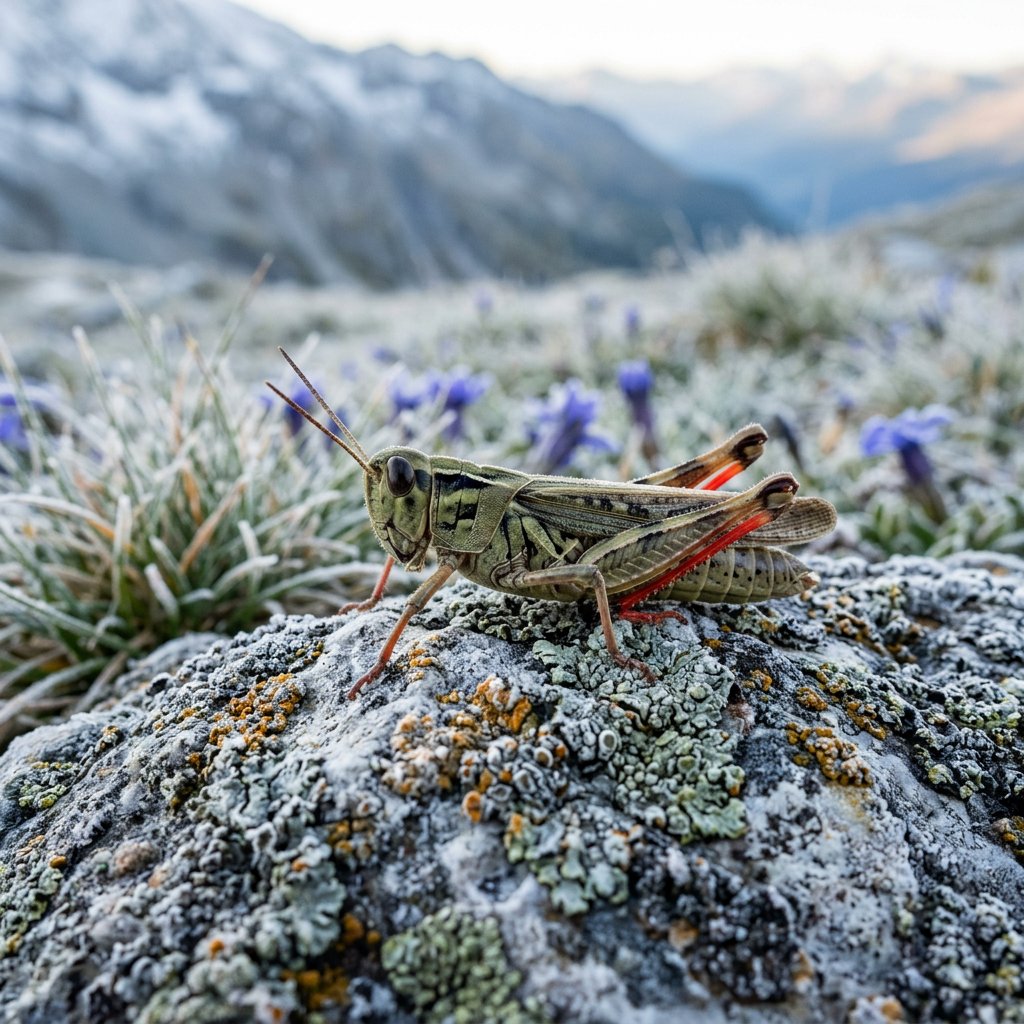
The Green Alpine Grasshopper is like a tiny, emerald gem of the high mountains. Often found sunbathing on alpine wildflowers, these charming insects are a hallmark of European mountain summers. Unlike the "scary" swarming locusts of the lowlands, these are solitary mountain dwellers that prefer the cool, crisp air of the peaks and are considered a sign of a healthy, high-altitude ecosystem.
🔍 How to Identify
- 🟢 Vibrant Coloration: Their bodies are a striking, saturated lime green, occasionally leaning toward yellow-green in older individuals.
- 🪶 Stunted Wings: A key giveaway is their "brachypterous" nature—their wings are tiny, scale-like pads that do not cover the abdomen, meaning they cannot fly.
- 🏁 Bold Markings: Look for a distinct black longitudinal stripe that runs from the eye along the side of the thorax, giving them a "racing stripe" look.
- 🦵 Colorful Legs: The underside of their powerful jumping hind legs often features a surprise flash of reddish or pinkish-orange.
🌲 Habitat & Ecology
- 🏔️ The High Life: They are strictly mountain dwellers, typically found at altitudes between 1,000 and 2,500 meters in sunny meadows, rocky slopes, and subalpine scrub.
- 🥗 Gourmet Diet: These grasshoppers are generalist herbivores, enjoying a diet of various mountain herbs, shrubs, and wildflowers rather than agricultural crops.
- ☀️ Basking Behavior: Because the mountains are cold, they are "thermophilous." You will often find them sitting perfectly still on dark rocks or broad leaves, soaking up the sun's energy to power their next hop.
⚠️ Safety & Toxicity
- ✅ Harmless Neighbor: The Green Alpine Grasshopper is completely non-toxic and lacks any form of stinger or venom.
- 🚫 Gentle Nature: They are shy and will almost always choose to hop away rather than confront a human. While they have mandibles for chewing plants, they are not aggressive and will not bite unless severely mishandled.
- 🐾 Pet Safety: They pose no threat to curious dogs or cats, though their presence is a reminder to keep pets on trails to protect the fragile alpine vegetation.
✨ Fun Fact
Because they live in such windy environments, the Green Alpine Grasshopper has almost entirely lost the ability to fly. Evolution decided that being a good climber was much safer than being caught by a mountain gust and blown off a cliff!
More Details








