Info
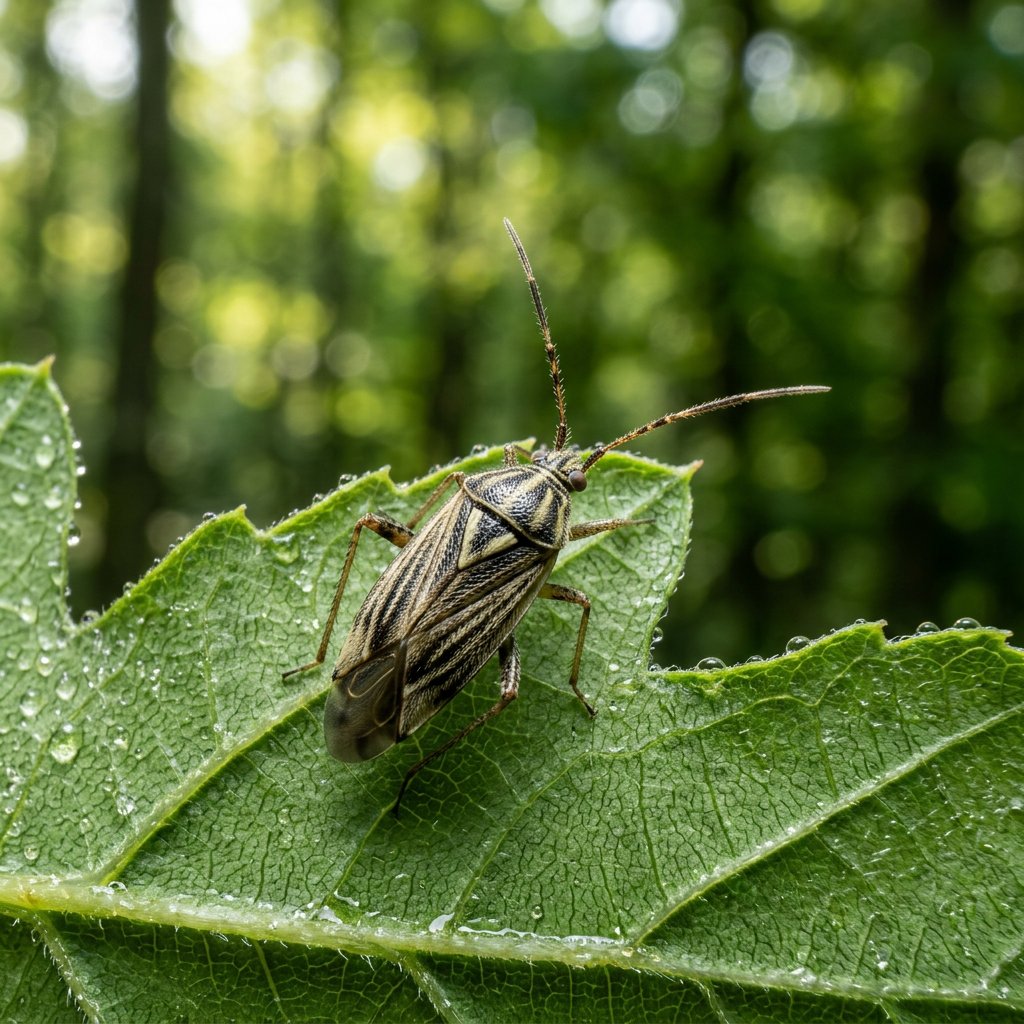
Meet the Fine-streaked Bug, a striking member of the mirid family that looks like it’s dressed for a high-contrast masquerade. With its "long-legged" elegance and bold yellow-on-black patterns, it is often mistaken for a wasp at a quick glance, a clever bit of natural mimicry that keeps predators at bay.
🔍 How to Identify
- 🎨 High Contrast Pattern: Its body is primarily jet black, adorned with vivid yellow or orange-yellow markings, particularly on the "shoulders" and the tips of the wings.
- 📏 The "Streaks": True to its name (striatus), the wings feature delicate longitudinal grooves or streaks that give it a textured, sophisticated appearance.
- 🦵 Elongated Limbs: It possesses notably long, slender antennae and legs, which allow it to move with surprising agility across leaves and twigs.
🌲 Habitat & Ecology
- 🌳 The Tree Dweller: Unlike many bugs that stay low in the grass, this species is an arboreal specialist. You are most likely to spot it on deciduous trees, with a particular fondness for Oak, Hawthorn, and Hazel.
- 🍽️ A Beneficial Predator: While it occasionally sips plant sap, it is primarily a hunter. It is a friend to gardeners, as it actively stalks and consumes aphids, psyllids, and small caterpillars that might otherwise damage the foliage.
⚠️ Safety & Toxicity
- 🛡️ Status: Harmless and non-aggressive.
- ✋ Details: The Fine-streaked Bug has no stinger and is not known to bite humans. If handled roughly, it might emit a faint odor to discourage you, but it poses absolutely no threat to curious children or household pets.
✨ Fun Fact
Despite its delicate appearance, the Fine-streaked Bug is a fast-acting "liquidator." It uses its needle-like rostrum to pierce the soft bodies of its prey, injecting enzymes that turn the insides of an aphid into a nutritional soup, which it then sucks out in a matter of minutes!
More Details








