Info
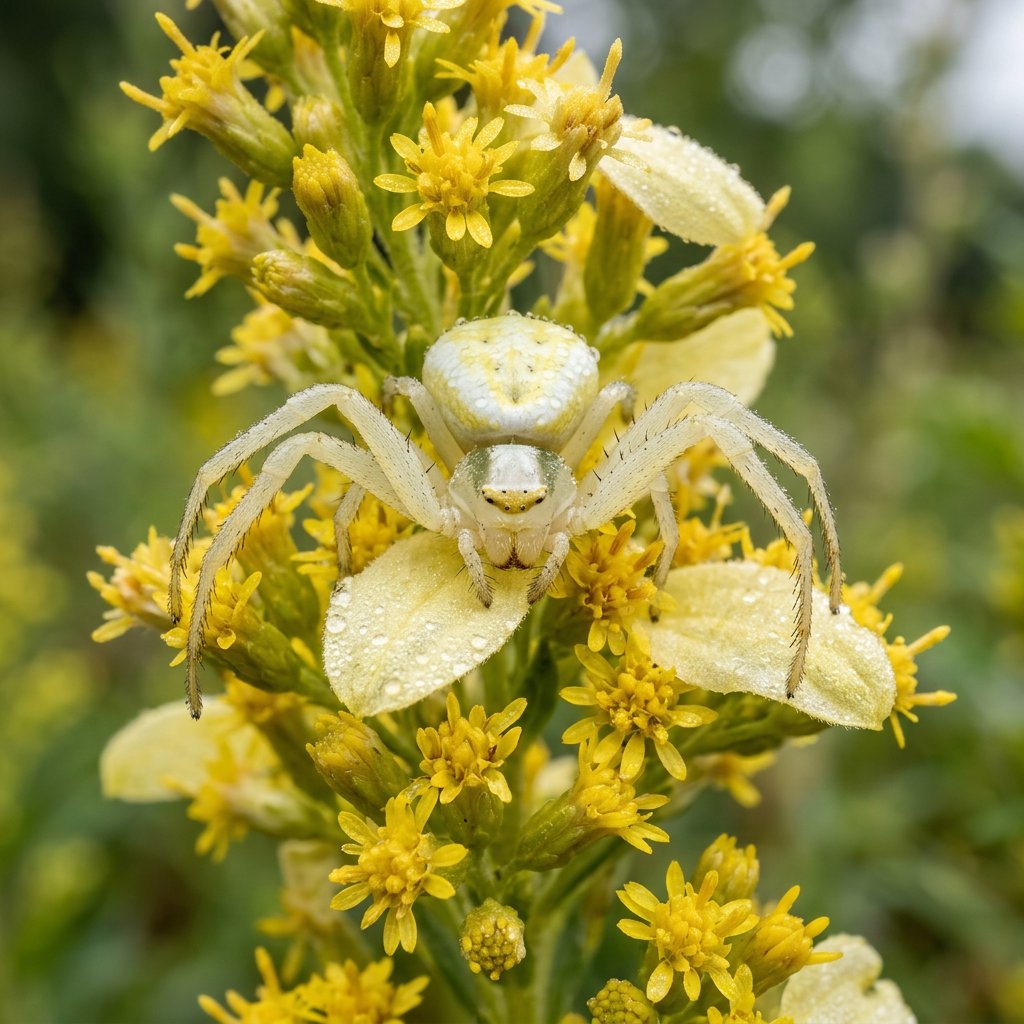
Known as the White-banded Crab Spider, this tiny hunter is the ultimate master of garden camouflage. Often found sitting perfectly still at the center of a flower, it mimics its environment so well that both its prey and unsuspecting gardeners often miss it entirely. Unlike many spiders, it doesn't build a web to catch its food; it relies on patience, speed, and a little bit of color-changing magic.
🔍 How to Identify
- 🦀 Crab-like Stance: Its first two pairs of legs are much longer and stronger than the back legs, which it holds out to the sides just like a crab.
- ⚪ The White Band: Its most defining feature is a distinct white ridge or "shelf" located just below its eyes, which helps distinguish it from other similar crab spiders.
- 🎨 Color Shifting: Depending on the flower it calls home, its body can range from snowy white to bright yellow, often decorated with red or brown markings on the sides of its abdomen.
🌲 Habitat & Ecology
- 🌸 Flower Power: You’ll almost always find them perched on bright, pollen-rich flowers like Goldenrod, Daisies, or Asters, waiting for a pollinator to land.
- 🐝 Silent Ambush: Instead of using silk to trap prey, they use their powerful front legs to grab insects—including bees and butterflies much larger than themselves—and deliver a quick, paralyzing bite.
- 🏡 Garden Ally: They are considered beneficial residents of the garden, as they help control fly populations and other small pests, though they occasionally snag a friendly pollinator.
⚠️ Safety & Toxicity
- 🟢 Non-Aggressive: These spiders are very shy and would much rather hide under a petal than interact with a human.
- 🐜 Minor Risk: While they do have venom to subdue their prey, it is not medically significant to humans or pets. A bite is rare and usually results in nothing more than slight, temporary redness, similar to a mosquito bite.
✨ Fun Fact
The White-banded Crab Spider is a slow-motion chameleon! While it can change its body color from white to yellow to match a flower, the process isn't instant—it actually takes between 10 to 25 days to complete the transformation.
More Details








