Info
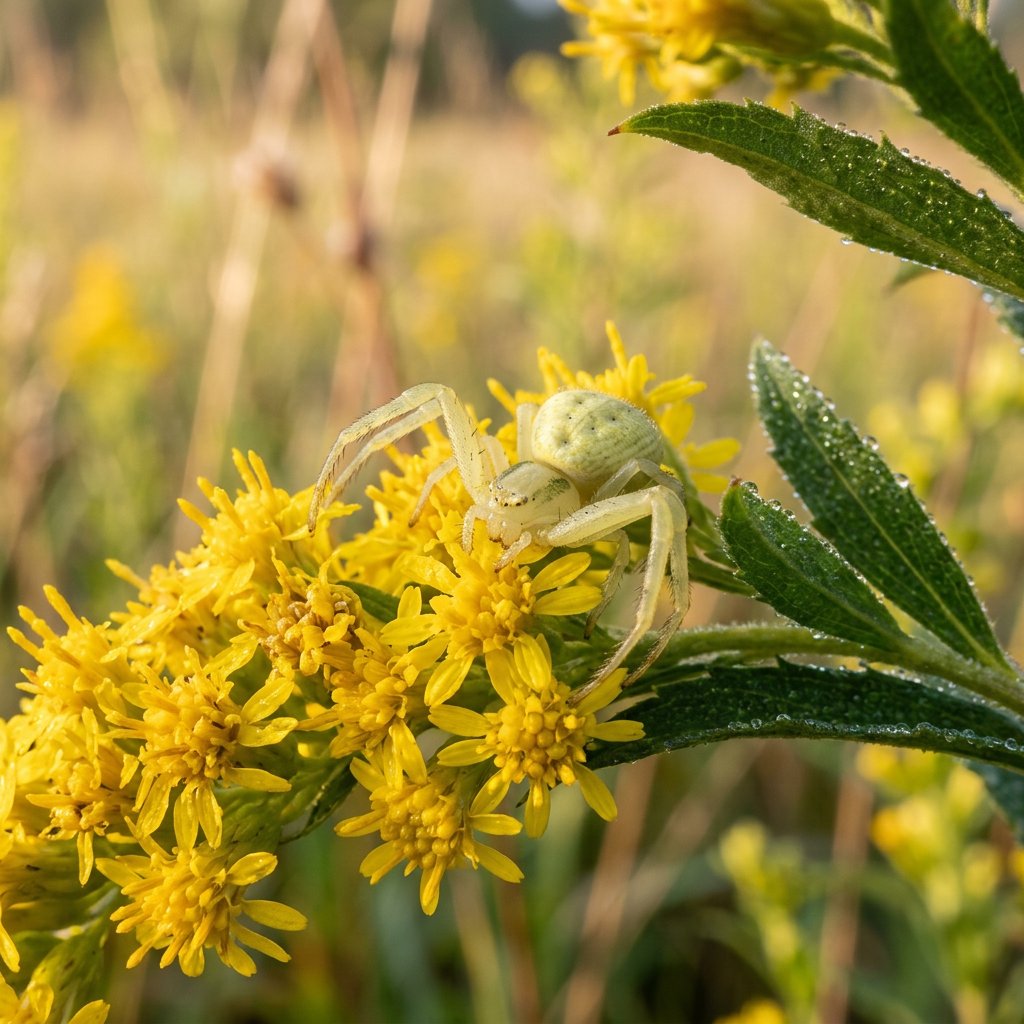
Often called the "Flower Crab Spider," these tiny ninjas are the masters of the garden ambush. Unlike typical spiders that spin sticky webs to catch a meal, Misumenops relies on the art of disguise and lightning-fast reflexes. They are frequently found sitting motionless inside bright blooms, perfectly camouflaged and waiting for an unsuspecting insect to land.
🔍 How to Identify
- 🦀 Crab-like Stance: Their first two pairs of legs are significantly longer and stronger than the back legs, usually held out to the sides in a wide, crab-like "open arms" posture.
- 🎨 Camouflage Colors: They are typically vibrant lime green, lemon yellow, or creamy white, often possessing small reddish or brown markings on their abdomen.
- 📐 Flattened Body: Their bodies are relatively flat and wide, allowing them to squeeze into tight crevices within flower petals or under leaves.
🌲 Habitat & Ecology
- 🌸 The Sit-and-Wait Strategy: These spiders are "active hunters" without webs. They spend their lives on flowers or green foliage, grabbing pollinators like flies, bees, and small butterflies mid-sip.
- 🌿 Garden Protector: While they occasionally snag a beneficial bee, they are excellent at keeping garden pests like aphids and leafhoppers in check.
- 🍂 Seasonal Travelers: You will mostly spot them in late spring and throughout the summer when flowers are in full bloom and prey is abundant.
⚠️ Safety & Toxicity
- 🛡️ Harmless Resident: Misumenops is considered "friend" rather than "foe." They are not aggressive and will almost always choose to hide or run away if a human approaches.
- 👄 Low-Risk Bite: While they do possess venom (to paralyze their insect prey), it is not medically significant to humans. Their tiny fangs rarely pierce human skin, and if they do, the result is usually no worse than a mild gnat bite.
- 🐾 Pet Safe: These spiders are non-toxic to curious cats and dogs who might stumble upon them in the garden.
✨ Fun Fact
- 🌈 Slow Motion Color Shift: Some species related to Misumenops can actually change their body color from white to yellow (and back again) over the course of several days to better match the specific flower they have chosen as their hunting ground!
More Details








