Info
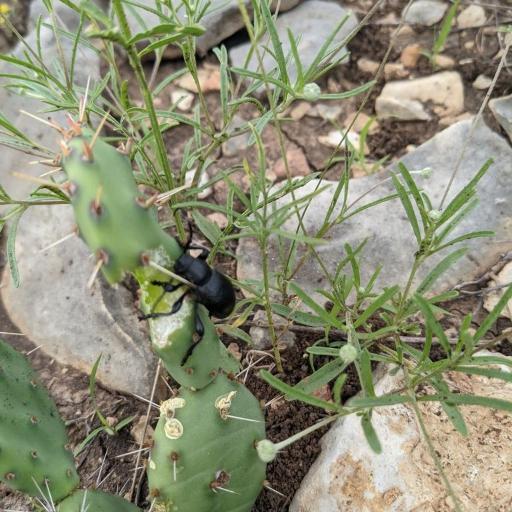
Meet the "Desert Tank." Often found lumbering across the arid landscapes of the American Southwest and Mexico, the Moneilema (Cactus Longhorn Beetle) is a specialized insect that has traded the power of flight for a heavy-duty armor suit. These beetles are the ultimate cactus enthusiasts, spending their entire lives in a slow-motion dance with prickly pears and cholla.
🔍 How to Identify
- 🖤 The Body Armor: Large, bulbous, and usually a deep, polished black or matte charcoal. Their exoskeleton is exceptionally thick, giving them the appearance of smooth, walking stones.
- 📡 Longhorn Antennae: True to their family name, they possess thick, segmented antennae that curve backward, used to "smell" their way to the nearest cactus in the dark.
- 🚫 Fused Wings: In a unique evolutionary twist, their wing covers (elytra) are fused together. This means they cannot fly, making them strictly ground-dwellers.
🌵 Habitat & Ecology
- 🍽️ Cactus Specialist: These beetles are high-fiber foodies. Both the larvae and adults feed exclusively on cacti. While the adults nibble on the pads, the larvae bore into the stems, occasionally causing a cactus to collapse if the infestation is heavy.
- 🎭 The Great Imposter: To avoid being eaten by birds, they mimic the Eleodes (Stink Beetle). Predators see a slow-moving black beetle and assume it will spray a foul-smelling chemical, so they give the harmless Moneilema a wide berth.
⚠️ Safety & Toxicity
- 🛡️ Status: Non-venomous and generally harmless to humans and pets.
- 🦷 Details: They have no stinger and no toxic spray. However, their mandibles are designed to crunch through tough, fibrous cactus skin. If you pick one up and it feels threatened, it can deliver a surprisingly strong pinch. It’s best to observe these "tanks" without touching.
✨ Fun Fact
Because they are flightless and rarely travel far from the cactus where they were born, separate populations of Moneilema on different desert "islands" (isolated hills) can evolve unique physical traits, much like the famous finches of the Galápagos!
More Details








