Info
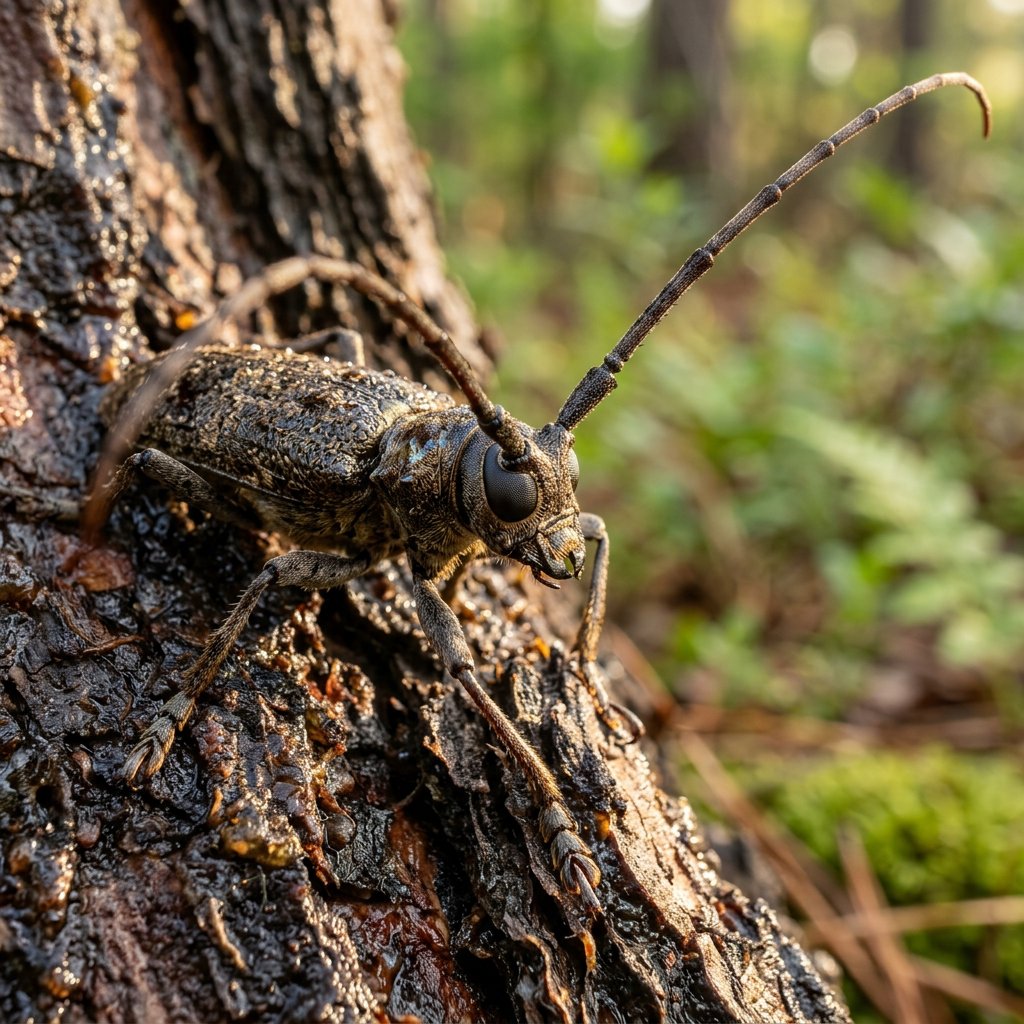
Often referred to as the Carolina Pine Sawyer, this beetle is a long-horned marvel of the pine forests. You’ll likely hear them before you see them; they make a distinctive clicking or rasping sound when disturbed and are famous for antennae that can reach several times their body length. While they look like something out of a sci-fi movie, they play a vital role in recycling dead wood back into the forest soil.
🔍 How to Identify
- 🪲 The "Long Horns": Its antennae are its most striking feature—in males, they can be over twice the length of the body, while females have slightly shorter, thicker ones.
- 🤎 Mottled Camouflage: The body is a cylindrical shape, colored in shades of reddish-brown and grey with "peppered" white spots that help it blend perfectly against pine bark.
- ⚪ The White Shield: Look for a distinct, small white triangular spot (the scutellum) located right between the "shoulders" where the wing covers meet.
🌲 Habitat & Ecology
- 🌲 Pine Specialists: As the name suggests, they are deeply tied to pine trees. They are drawn to the scent of resin from stressed, dying, or recently fallen timber where they lay their eggs.
- 🪵 Nature's Recycler: The larvae, known as "roundheaded borers," spend their lives tunneling through wood. This process breaks down logs, though it can make them a nuisance for the timber industry.
- 🪱 Unintentional Hitchhikers: These beetles are the primary transporters of the Pine Wood Nematode. While the beetle itself doesn't kill healthy trees, the microscopic worms they carry can cause "Pine Wilt" disease.
⚠️ Safety & Toxicity
- 🛡️ Status: Generally harmless to humans and pets. They possess no stinger and are not venomous.
- 🤏 The "Nip" Factor: Because they have powerful mandibles designed for chewing through solid wood, they can give a surprisingly strong pinch if handled roughly. It is best to admire them without picking them up.
- 🏠 Home Safety: While they may hitch a ride inside on firewood, they do not eat seasoned house timber or furniture. They require the moisture of raw, unseasoned pine to survive.
✨ Fun Fact
When threatened, the Carolina Pine Sawyer rubs parts of its thorax together to create a "squeaking" or "hissing" sound. This defensive music, known as stridulation, is designed to startle predators like birds or curious humans!
More Details








