Info
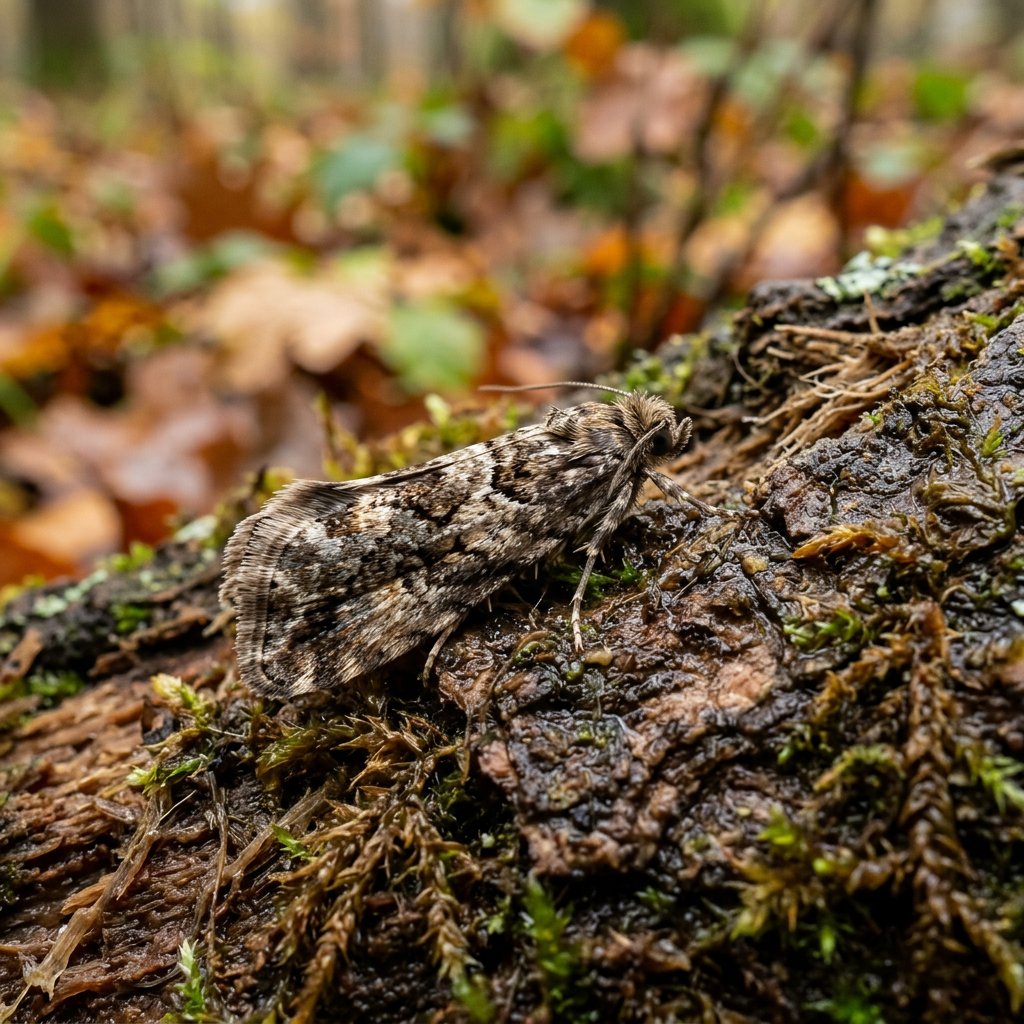
Often referred to as the Weaver's Clothes Moth, Monopis weaverella is a subtle but fascinating recycler in the insect world. While it might look like a simple shadow flitting through the night, this moth carries a "secret window" on its wings and plays a vital role in cleaning up nature’s leftovers, from abandoned bird nests to discarded fur.
🔍 How to Identify
- 🪟 The "Window" Spot: Its most defining feature is a distinct, pale, translucent cream-white spot located right in the center of each dark forewing.
- 🌑 Mottled Texture: The wings are a deep, charcoal brown or blackish-bronze, often looking slightly speckled or metallic when caught in the right light.
- 🧔 Tufted Head: Like many of its close relatives, it has a noticeably "shaggy" or hairy head, usually covered in pale yellow or ochre scales that look like a tiny wig.
🌲 Habitat & Ecology
- 🪹 The Nest Scavenger: Unlike many moths that eat leaves, the larvae of the Weaver's Clothes Moth are specialized scavengers. They are most commonly found in the nests of birds (like owls or pigeons) and the burrows of mammals, where they feast on feathers and fur.
- 🦉 Role in the Wild: They act as nature's clean-up crew. By breaking down keratin—a tough protein found in hair and feathers that most animals can't digest—they help return essential nutrients to the soil.
⚠️ Safety & Toxicity
- 👐 Harmless to Humans: This moth is completely safe. It does not bite, sting, or secrete any toxins. It is a gentle creature that is safe to encounter or gently relocate if it flies indoors.
- 🧶 Fabric Risk: While it prefers "wild" protein sources like feathers in a nest, it can occasionally be a minor pest to natural fibers like wool or silk if it enters a home. However, it is far less common in wardrobes than its notorious cousin, the Common Clothes Moth.
✨ Fun Fact
The specific name weaverella was given in honor of Richard Weaver, a 19th-century insect collector, but it also perfectly describes the larvae's habit of spinning silken "tunnels" or webs as they move through their food source!
More Details








