Info
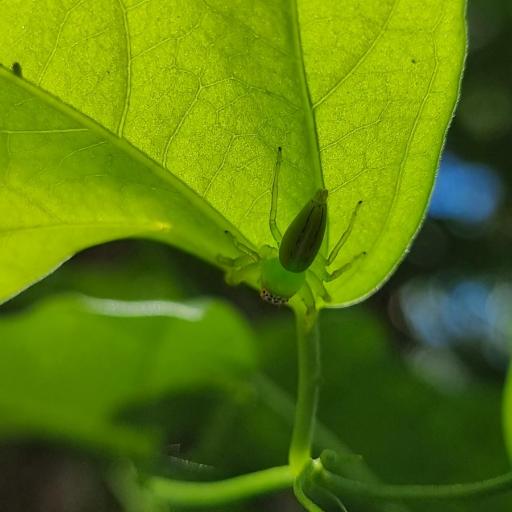
Often called the Northern Green Jumping Spider, this emerald jewel of the spider world is more like a tiny, inquisitive kitten than a creepy-crawly. With its massive front eyes and expressive movements, it is a favorite among macro photographers and garden observers across Australia and New Guinea. Despite its spider status, its bright colors and "bearded" face make it one of the most charismatic inhabitants of the backyard.
🔍 How to Identify
- 🎨 Vibrant Coloring: Most of the body is a striking, uniform emerald or lime green, which provides the perfect camouflage against living leaves.
- 👀 Primary Eyes: Like all jumping spiders, it has two enormous, forward-facing central eyes that give it incredible depth perception and a curiously "human" gaze.
- 🧔 The Male "Mask": Males are easily distinguished by a fringe of long black hairs and white "sideburns" around their face, resembling a bushy beard—the trait that inspired its species name.
🌲 Habitat & Ecology
- 🍃 Diurnal Hunters: You won't find these spiders waiting in a web. They are active during the day, using their superhuman eyesight to stalk flies and moths before pouncing on them with feline precision.
- 🕸️ Silk Retreats: While they don't use silk to catch food, they weave sturdy silk "tents" or nurseries between folded leaves. This is where they sleep, molt, and protect their eggs from predators.
⚠️ Safety & Toxicity
- 🟢 Status: Generally harmless and non-aggressive. They are curious by nature and will usually jump away or hide if they sense a human nearby.
- 🤏 The Bite: Bites are extremely rare and usually only occur if the spider is pinched or squashed. The venom is considered mild for humans, typically causing only localized pain or minor swelling similar to a small bee sting.
✨ Fun Fact
Male Mopsus mormon are the ultimate ballroom dancers! To win over a female—who is significantly larger and often hungry—the male performs a complex "shaking dance," waving his front legs and vibrating his abdomen in a rhythmic display to prove he is a mate and not a snack.
More Details








