Info
Meet the "Sage Skipper," a charming little aviator that bridges the gap between the elegance of a butterfly and the fuzzy sturdiness of a moth. Found fluttering across the sun-drenched slopes of the Mediterranean and Southern Europe, this insect is a total friend to the gardener, acting as a dedicated pollinator for wild herbs. While its stout, hairy body might make it look like a tiny moth at first glance, its daytime activity and clubbed antennae reveal its true butterfly identity.
🔍 How to Identify
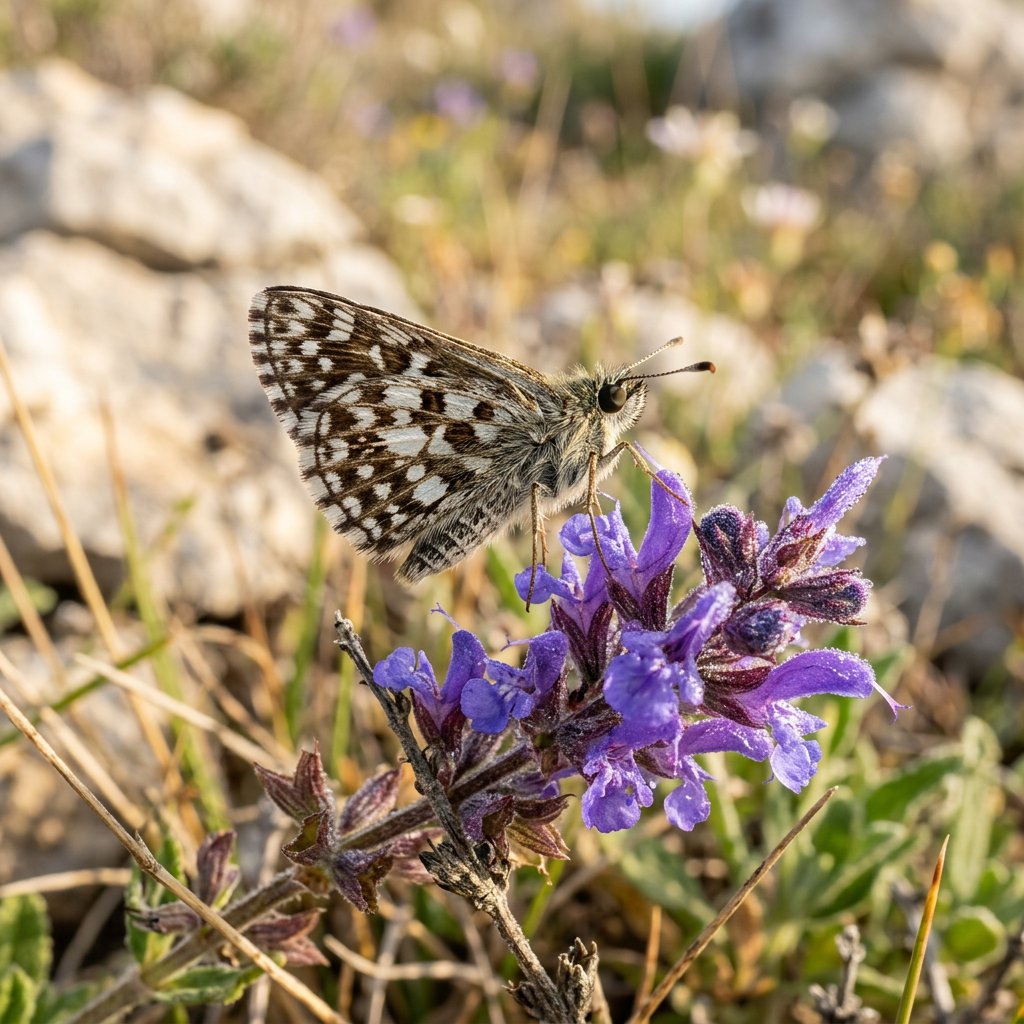
- 🦋 Checkered Wings: The upper wings are a marbled chocolate-brown or olive-grey, decorated with distinct white square-shaped spots that look like a delicate mosaic.
- 🧶 Fuzzy Torso: It has a notably thick, "heavyset" body covered in fine greyish hairs, which helps it retain heat during cooler mornings.
- 📐 The "Skipper" Stance: When resting on a flower, it often holds its wings at a unique "half-open" angle, resembling a tiny fighter jet preparing for takeoff.
🌲 Habitat & Ecology
- 🌿 Host Plant Specialist: This butterfly is deeply tied to plants like Jerusalem Sage (Phlomis) and other members of the mint family. The females carefully tuck their eggs into the flower buds so the emerging caterpillars have an immediate food source.
- ☀️ Sun-Drenched Meadows: You won't find these in deep, dark forests. They thrive in hot, dry, rocky environments and open grasslands where the sun hits the soil directly.
- 🏃 Erratic Flight: They are famous for their "skipping" flight pattern. They move so fast and unpredictably that they are often just a blur of brown and white to the human eye.
⚠️ Safety & Toxicity
- ✅ Status: Completely harmless. The Sage Skipper is a non-aggressive pollinator that poses no threat to humans or animals.
- 🛡️ No Stingers: Unlike bees or wasps, this insect has no stinging apparatus or biting mandibles. It is safe for curious children and pets to observe closely in the garden.
✨ Fun Fact
The Sage Skipper is a master of "thermoregulation." Because it needs a high body temperature to fly, it uses the dark pigments at the base of its wings like tiny solar panels, absorbing the sun’s rays to "rev its engine" before taking flight!
More Details








