Info
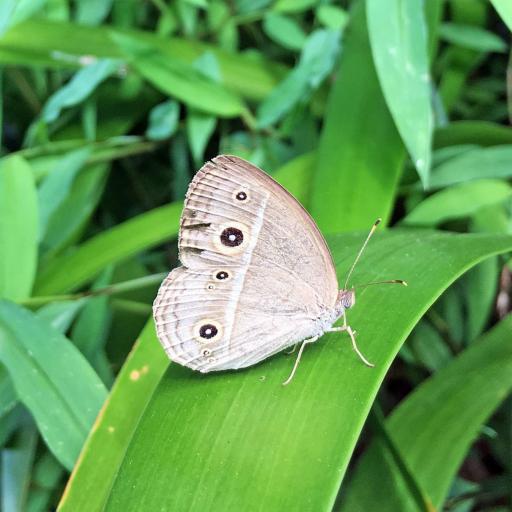
The Chinese Bushbrown (Mycalesis gotama) is a master of camouflage, often mistaken for a fluttering dried leaf. This subtle beauty is a "quiet friend" of the garden, preferring the cool shadows of the undergrowth over the bright spotlight of open flower beds. In East Asian folklore, its ghostly, jerky flight pattern is sometimes associated with the shifting shadows of the forest floor.
🔍 How to Identify
- 👁️ The Ocelli: Its most striking feature is the row of concentric "eyespots" (ocelli) on the underside of its wings, which feature a dark center and a creamy outer ring.
- 🍂 Earth Tones: The wings are a muted, velvety brown, bisected by a thin, pale vertical line that mimics the midrib of a dead leaf.
- 🦋 Low Flight: It rarely flies high, instead skipping along the ground or through tall grasses with a distinctive, "bouncing" rhythm.
🌲 Habitat & Ecology
- 🌾 Grassland Resident: You’ll typically find them in damp, shaded areas near rice paddies, forest edges, or overgrown gardens where their favorite grasses (Poaceae) grow.
- 🍎 Unique Palate: Unlike many butterflies, the Chinese Bushbrown isn't a frequent nectar drinker. It prefers to sip on tree sap, fermenting fallen fruit, or moisture from damp soil.
- 🛡️ Survival Strategy: The eyespots are a clever "decoy." They trick birds into pecking at the expendable edges of the wings rather than the butterfly’s vulnerable head or body.
⚠️ Safety & Toxicity
- ✅ Harmless Friend: This insect is completely non-toxic and lacks any stinging or biting capabilities. It is a peaceful addition to any natural space.
- 🐾 Pet & Child Safe: Because it does not possess irritating hairs or chemical defenses, it poses no risk to curious pets or children who might try to get a closer look.
✨ Fun Fact
The Chinese Bushbrown is a "seasonal shapeshifter." Butterflies born in the peak of summer have large, bold eyespots to scare off predators, while the generation born in the cooler autumn months has tiny, almost invisible spots to better blend in with the brown, decaying winter foliage.
More Details








