Info
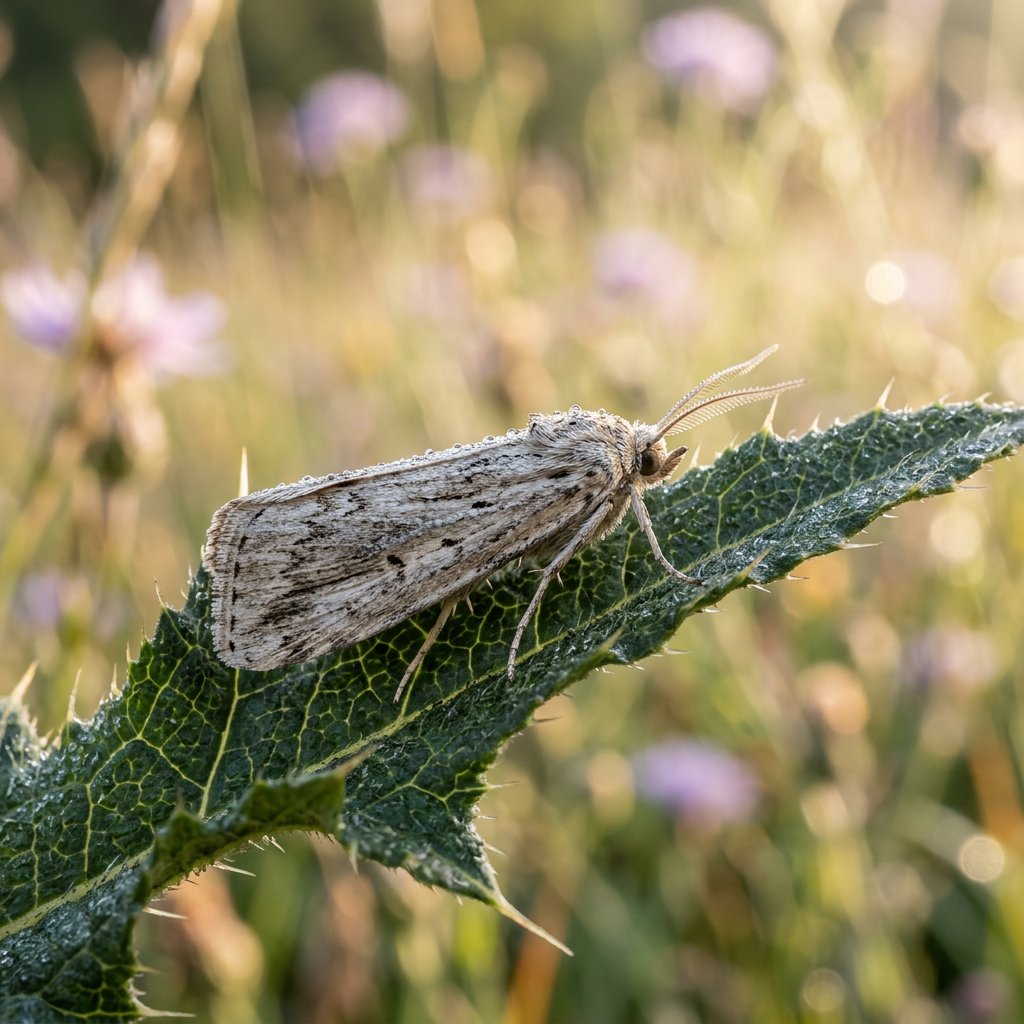
The Thistle Ermine (Myelois circumvoluta) is a striking, snow-white moth that looks like it belongs in a high-fashion boutique rather than a prickly weed patch. Often found resting quietly on thistle leaves, its pristine white wings decorated with neat black polka dots make it one of the most elegant "micro-moths" in the garden. While it may look delicate, it is a hardy specialist that relies entirely on the rugged thistle for its survival.
🔍 How to Identify
- ⚪ The Wings: Brilliant white forewings speckled with distinct, small black dots. When at rest, it rolls its wings tightly around its body, creating a sleek, tubular shape.
- 🎭 The Mimicry: It is often mistaken for the "True Ermine" moths (Yponomeuta), but it is generally larger and has a more robust, "snout-like" head typical of the Pyralid family.
- 🐛 The Larvae: If you find a thistle stem with a small hole and some "sawdust" (frass) leaking out, the buff-colored, dark-headed caterpillar is likely hiding inside.
🌲 Habitat & Ecology
- 🌿 Thistle Specialist: This moth is a dedicated fan of Thistles (Cirsium and Carduus species). The adults are often found camouflaged against the silvery undersides of thistle leaves during the day.
- 🏗️ Internal Architect: Unlike many caterpillars that eat leaves, the Thistle Ermine larvae are "borers." They spend their lives tunneling through the center of thistle stems or munching on the developing seeds inside the flower head, protected from birds and predators.
- 🌙 Night Flyer: While they are easily spotted resting during the day, they are most active at night, fluttering around meadows and waste grounds in search of mates and fresh host plants.
⚠️ Safety & Toxicity
- ✅ Harmless: The Thistle Ermine is completely safe for humans and pets. It does not bite, sting, or possess any irritating hairs.
- 🦋 Garden Status: It is generally considered a "neutral" insect. While the larvae feed on thistles, they rarely cause enough damage to be considered a pest, and the adults serve as a minor part of the nocturnal pollination cycle.
✨ Fun Fact
Despite its name and "polka-dot" appearance, the Thistle Ermine isn't actually related to the "True Ermine" moths. This is a classic case of convergent evolution, where two different groups of moths evolved the same black-on-white pattern because it effectively mimics bird droppings from a distance, keeping them safe from hungry predators!
More Details








