Info
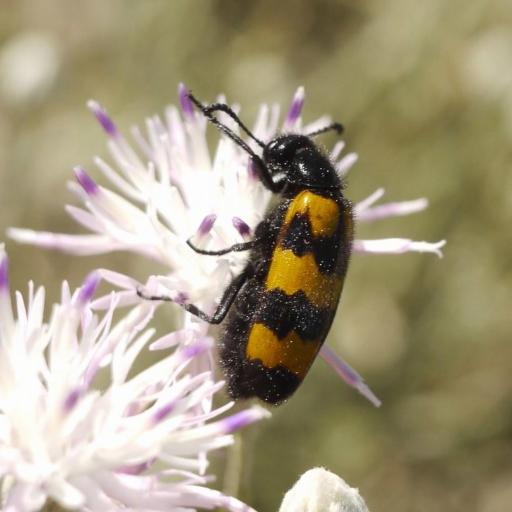
Known as the Variable Blister Beetle, this striking insect is a walking masterpiece of "look but don't touch." Its high-contrast patterns serve as a bold warning to birds and predators that a painful chemical defense awaits anyone brave enough to take a bite. While they are fascinating to observe in a sun-drenched meadow, they carry a secret weapon that has been known to scientists and farmers for centuries.
🔍 How to Identify
- 🪲 Variable Pattern: The wing covers (elytra) are jet black with three wavy bands of bright yellow or orange. As the name suggests, these bands can vary significantly in thickness and shape from one beetle to the next.
- 🌑 Black Forebody: The head and thorax are a deep, matte black, which provides a sharp contrast that makes the colorful bands on the body "pop" to the human eye.
- 📏 Robust Shape: They have a soft-bodied but sturdy appearance, typically growing between 7 to 20 millimeters in length with a somewhat cylindrical, elongated body.
🌲 Habitat & Ecology
- 🌻 Flower Grazers: You will most often find adults perched atop wildflowers, especially those in the pea (Fabaceae) or rose families. They are voracious eaters of pollen and petals, occasionally acting as a minor nuisance in ornamental gardens.
- 🥚 Hidden Mercenaries: While the adults eat flowers, the larvae are actually beneficial to farmers. They live underground and hunt for the egg pods of grasshoppers, helping to naturally control grasshopper populations.
- ☀️ Sun Lovers: These beetles are most active during the hottest parts of the day, particularly in the Mediterranean region, Southern Europe, and Central Asia.
⚠️ Safety & Toxicity
- 🧪 Chemical Defense: These beetles produce a potent blistering agent called cantharidin. When they feel threatened, they "reflex bleed" this toxin from their leg joints.
- 🚫 Handling Warning: Never pick these beetles up with bare hands. Contact with the skin can cause painful, fluid-filled blisters that look and feel like a chemical burn.
- 🐾 Pet & Livestock Risk: Keep curious pets away. Ingesting even a few of these beetles can be extremely dangerous or even fatal for dogs, cats, and horses (especially if the beetles are accidentally crushed into livestock hay).
✨ Fun Fact
The "variabilis" part of its name is no exaggeration; the pattern on their backs is so inconsistent that 19th-century biologists accidentally gave this single insect dozens of different scientific names, thinking they had discovered many different species!
More Details








